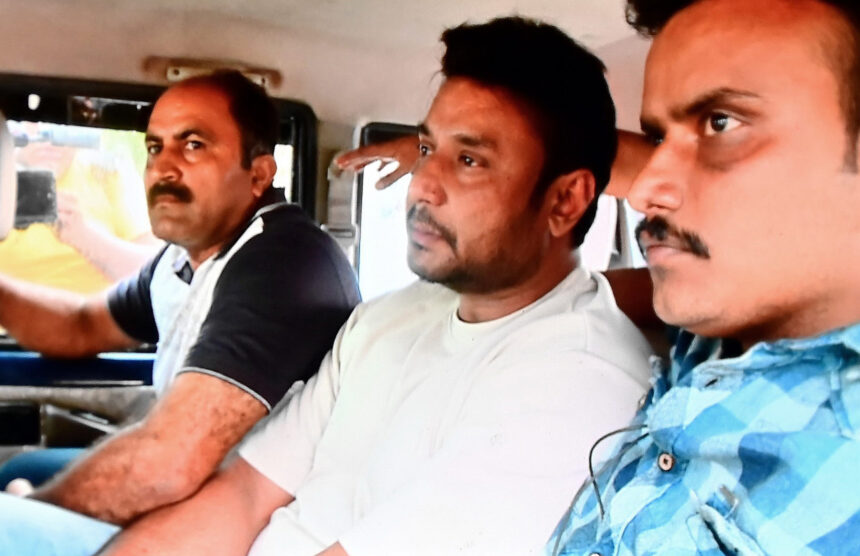
In a significant legal development, the Supreme Court of India has cancelled the bail granted to Kannada film actor Darshan in the high-profile Renukaswamy murder case, citing the seriousness of the offence and concerns about the actor’s potential influence over the investigation and trial process. The apex court’s ruling not only overturns the earlier order of the Karnataka High Court but also underscores the judiciary’s zero-tolerance approach towards granting bail in cases involving grave criminal charges, especially where there is a risk of evidence tampering or undue advantage due to the accused’s social or financial status.
SC Slams High Court’s ‘Mechanical’ Approach in Granting Bail
The Supreme Court bench, headed by Justice JB Pardiwala, delivered the ruling on Thursday, making it clear that the Karnataka High Court’s earlier decision to release Darshan on bail failed to meet the legal threshold required for such a serious criminal matter. According to the apex court, the High Court’s order appeared to have been passed in a “mechanical” manner, without adequately considering the gravity of the allegations or the potential impact of the accused’s release on the ongoing investigation. Justice Pardiwala, while reading the judgment, issued a stern warning that the judiciary will not tolerate any preferential treatment for influential individuals in custody. The bench observed: “The day we come to know that the accused is provided a five-star treatment, the first step would be to suspend the jail superintendent.”
This strong statement from the bench highlights the court’s determination to ensure that all accused, irrespective of their celebrity status or public profile, are treated equally under the law and that the criminal justice process is not compromised by external influences. The decision came after the Karnataka government moved the Supreme Court, challenging the bail granted to Darshan and other accused persons in the case. The state government argued that releasing Darshan on bail in such a “serious case” was inappropriate and could potentially obstruct justice.
Evidence Against Darshan and State’s Argument for Bail Cancellation
The Karnataka government, in its written submissions to the Supreme Court, laid out a detailed account of the evidence gathered during the investigation, which it claimed directly linked Darshan to the murder of Renukaswamy. The state argued that the High Court had overlooked crucial material while granting bail.
Among the key evidence cited were:
- Forensic Findings: Soil samples recovered from the footwear of the accused matched the soil at the crime scene, strengthening the prosecution’s case that they were present at the location.
- Bloodstain Evidence: Clothes worn by the accused were found to have traces of Renukaswamy’s blood, confirmed through forensic testing.
- Autopsy Report: The post-mortem examination concluded that the victim, 33-year-old Renukaswamy, died of “shock haemorrhage” resulting from multiple blunt force injuries.
The prosecution has maintained that the murder was premeditated and carried out with extreme brutality. It also raised concerns that Darshan’s celebrity status could be used to intimidate witnesses, tamper with evidence, or otherwise hinder the judicial process if he remained out on bail. Darshan was initially arrested following the murder but was granted bail by the Karnataka High Court in December last year. The High Court’s order was met with widespread criticism from legal experts and sections of the public who questioned whether all accused would have received similar treatment under similar circumstances.