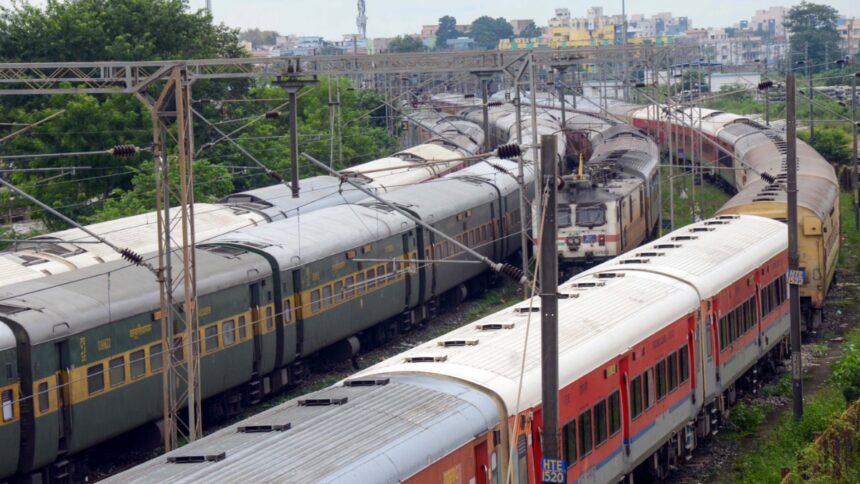
Indian Railways is witnessing a clear shift in passenger travel preferences, with a record 81 crore reserved bookings in 2024-25, marking a 65% increase since 2014-15. This surge reflects evolving commuter priorities post-pandemic, with cleaner coaches, health safety, and guaranteed seating prompting a steady migration from unreserved to reserved classes.
Rising Demand for Reserved Travel
In 2024-25, daily reserved travel averaged 22 lakh passengers, up from 13 lakh in 2014-15. In comparison, unreserved travel dropped to 236 crore annual bookings, a 30% decline from its 324 crore peak in 2014-15, showing a gradual shift despite unreserved passengers still outnumbering reserved travellers.
The trend indicates that while affordability and availability continue to attract masses to unreserved coaches, the post-pandemic environment has accelerated interest in reserved travel. Officials attribute this to improved hygiene, digital ticketing, and the rise of comfortable options like Vande Bharat trains, which are influencing commuter choices, especially among solo travellers, women, and the elderly who prioritise safety and comfort during long journeys.
Passenger Revenue Sees Consistent Growth
Revenue from passenger operations has also grown significantly, rising from Rs 42,190 crore in 2014-15 to Rs 75,500 crore in 2024-25. Daily earnings increased from Rs 116 crore in 2014-15 to Rs 207 crore in 2024-25, with a consistent upward trajectory barring the pandemic years.
Flexi fare, Tatkal, and Premium Tatkal schemes have contributed around 6% to the total passenger revenue since 2019-20, supporting the revenue growth. Most passenger earnings—nearly 95%—come from non-suburban passengers, with sleeper and second-class mail and express services forming a significant portion of the revenue.
Factors Driving the Shift
Railway officials link the steady rise in reserved bookings to increasing middle-class incomes, affordable ticket pricing, and a conscious choice for better travel experiences. As of April 2024, 70% of Indian Railways’ 79,000 coaches remain non-AC sleeper and general coaches, but there is a visible push towards reserved travel, supported by improved seat management and sufficient train services.
Cleaner coaches, digital ticketing, and seamless travel experiences are making reserved classes more appealing, while improved road infrastructure and better incomes have given commuters more choices, including driving or taking buses for short distances. However, for long-distance travel, reserved train travel is emerging as the preferred mode due to the security and comfort it offers.
With these evolving travel patterns, Indian Railways is aligning its services with commuter needs, aiming to transform into a comfortable, commuter-first transport system while continuing to serve millions daily across its extensive network.