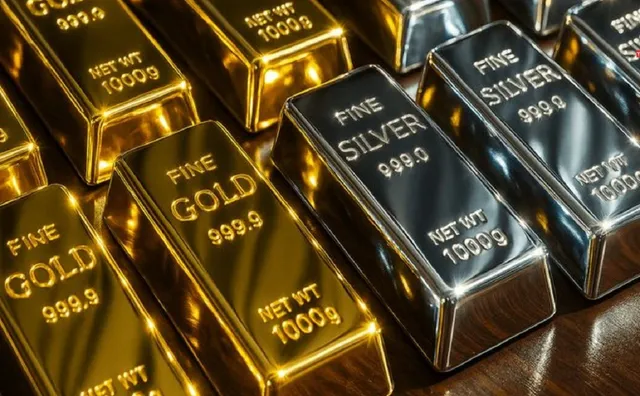
The Indian precious metals market experienced notable price corrections over the past two days, with silver losing significant value and gold registering a modest decline. On February 13, 2026, silver traded at ₹2.42 lakh per kilogram, reflecting a steep drop of nearly ₹24,000 in just two trading sessions. Meanwhile, 24-carat gold declined to ₹1.51 lakh per 10 grams, marking a continuation of the downward trend that began earlier this week. Analysts attribute the recent dip to a combination of global market adjustments, profit-booking by investors, and broader economic factors impacting commodity trading. Despite this short-term correction, both metals continue to show robust gains on a year-to-date basis, highlighting their long-term appeal as safe-haven assets and instruments for wealth preservation. Investors and market participants are closely monitoring trends, with a focus on both domestic demand and global price movements, as fluctuations in precious metals often have implications for investment strategies, import-export dynamics, and retail market activity.
Silver Prices Slide Dramatically Amid Profit-Taking and Market Corrections
Silver has experienced a pronounced decline over the last two days, shaking investor confidence in short-term market stability. On February 11, silver was priced at ₹2,66,449 per kilogram, reaching a high level after weeks of steady gains. By February 12, the price had already corrected to ₹2,59,133 per kilogram, and on February 13, it dropped further to ₹2,41,945 per kilogram, marking a total decrease of ₹24,504 in just two days. Market experts suggest that this sharp movement is partly driven by profit-taking among traders who had invested during the recent rally and sought to realize gains amid uncertain global economic conditions. The volatility in silver prices also reflects fluctuations in global industrial demand, given silver’s dual role as both a precious metal and an industrial commodity. Industrial usage in electronics, solar panels, and manufacturing continues to influence pricing dynamics, while investor sentiment often reacts sharply to macroeconomic indicators such as inflation, interest rates, and currency fluctuations. The steep drop, while alarming for short-term holders, also creates potential opportunities for long-term investors looking to acquire silver at discounted rates compared to its recent highs.
Historically, silver prices have been highly sensitive to global economic cues, and India’s domestic market is influenced by import duties, currency exchange rates, and local demand from jewelry manufacturers and investors. The recent correction comes after silver had previously surged to record highs on January 29, when it touched ₹3,85,933 per kilogram. This peak level represented a culmination of strong year-on-year gains, extensive investor interest, and heightened demand from both industrial and retail buyers. Despite the current downturn, silver has gained ₹28,713 in 2026 so far, rising from ₹2,30,420 at the end of December 2025 to ₹2,41,945, demonstrating its enduring appeal as a long-term investment vehicle. Analysts recommend monitoring short-term market trends while keeping in mind the overall upward trajectory of silver over recent months and years.
Gold Experiences Moderate Decline While Maintaining Year-to-Date Gains
Gold, the traditional safe-haven metal, also witnessed a modest correction in parallel with silver’s decline. On February 13, 24-carat gold traded at ₹1,52,751 per 10 grams, down ₹2,899 from the previous day’s ₹1,55,650. While this decrease is less dramatic than silver’s, it reflects similar investor behavior, including profit-booking and market adjustments after a prolonged rally. Gold had also reached record levels earlier this year, hitting ₹1,76,121 per 10 grams on January 29, 2026, which underscored heightened demand among both domestic and international buyers. Analysts note that gold continues to be favored by investors during periods of economic uncertainty, geopolitical tension, and currency volatility, providing both a hedge against inflation and a secure store of value.
In the context of 2026 performance, gold has risen ₹22,455 from ₹1,33,195 at the end of 2025 to ₹1,52,751, reinforcing its reputation as a stable long-term investment. The incremental decline over the past two days should be interpreted as a short-term market correction rather than a fundamental reversal of the growth trajectory. Factors such as changes in global interest rates, fluctuations in the U.S. dollar, and international demand for bullion continue to exert influence over domestic gold prices. Additionally, gold’s appeal in India is supported by cultural factors, festivals, weddings, and traditional investment practices, which consistently drive demand across retail and institutional segments.
Market analysts emphasize the importance of informed investment decisions, advising buyers to consider certified gold with BIS hallmarks to ensure authenticity and quality. The Bureau of Indian Standards hallmarking system provides an alphanumeric code that certifies the purity and carat of the gold, safeguarding investors against potential fraud or adulteration. With gold prices continuing to attract both short-term speculators and long-term investors, adherence to certification and authenticity guidelines remains critical for safe investment practices.
Historical Trends Highlight Massive Gains in 2025 and the Current Rally
The current corrections come after a remarkable year for precious metals in 2025, during which both gold and silver achieved unprecedented gains. Gold surged by approximately 75 percent over the year, rising from ₹76,162 per 10 grams on December 31, 2024, to ₹1,33,195 per 10 grams by the end of 2025, reflecting strong investor sentiment, inflation hedging behavior, and global market dynamics. Similarly, silver experienced a phenomenal rally, gaining 167 percent during the same period, climbing from ₹86,017 per kilogram to ₹2,30,420 per kilogram. This historic surge attracted widespread attention from both domestic buyers and international investors, cementing India’s position as a key market for precious metals.
The year-on-year gains, coupled with strong demand from jewelry manufacturers, industrial sectors, and investors, have reinforced precious metals as critical components of diversified investment portfolios. While short-term corrections such as those observed over the past two days may trigger concern among some investors, historical data suggests that long-term accumulation remains a prudent strategy. Seasonal trends, festival-related purchases, and the continuous demand for silver in industrial applications contribute to sustained interest in both metals, ensuring that market momentum persists despite intermittent fluctuations.
Factors Driving the Recent Decline in Prices
Several interrelated factors have contributed to the recent decline in silver and gold prices. Firstly, global commodity markets have experienced moderate adjustments, influenced by changes in macroeconomic indicators, such as U.S. Federal Reserve rate decisions, inflation data, and broader financial market sentiment. Secondly, domestic factors, including investor profit-taking after sustained rallies, supply-side adjustments, and variations in import duties, have created short-term volatility in Indian prices. Thirdly, fluctuations in the Indian rupee against the U.S. dollar play a crucial role, as precious metals are typically imported commodities priced in dollars, with currency movements directly impacting local market rates.
Analysts also point to behavioral patterns among retail investors and institutional traders. Periods of rapid appreciation often trigger partial sell-offs as market participants seek to secure profits, leading to temporary dips in prices. Such corrections are natural components of a dynamic market and do not necessarily indicate a reversal in long-term trends. Furthermore, heightened media coverage and commentary on recent price peaks can amplify investor sentiment, reinforcing short-term volatility while encouraging caution among prospective buyers.
Despite the two-day correction, market experts remain cautiously optimistic about the future trajectory of gold and silver in India. Both metals continue to offer substantial year-to-date gains, with silver up ₹28,713 and gold up ₹22,455 since the start of 2026. The underlying fundamentals, including persistent demand for jewelry, investment appeal, industrial consumption for silver, and broader macroeconomic trends, support a positive long-term outlook. Analysts recommend monitoring market sentiment, global price cues, and domestic demand patterns, while maintaining a disciplined approach to buying and selling, especially during periods of heightened volatility.
The recent dip presents potential opportunities for strategic buyers, particularly those seeking to enter the market at lower price points without compromising the long-term value of precious metals. Investors are advised to maintain a diversified portfolio, balance short-term speculative activities with long-term holding strategies, and prioritize certified and hallmarked products to mitigate risks associated with authenticity and purity. With global and domestic demand continuing to exert influence, the market for gold and silver in India is expected to remain active, offering both challenges and opportunities for traders, investors, and end-users alike.
As India’s economy continues to navigate domestic growth, inflationary pressures, and global trade developments, precious metals remain a key hedge and a reflection of investor confidence. Gold and silver serve not only as financial assets but also as instruments of cultural, social, and industrial significance, reinforcing their centrality in the Indian market. While temporary corrections may generate short-term concern, historical trends and ongoing demand dynamics suggest that both metals will retain their relevance and value over the medium to long term.