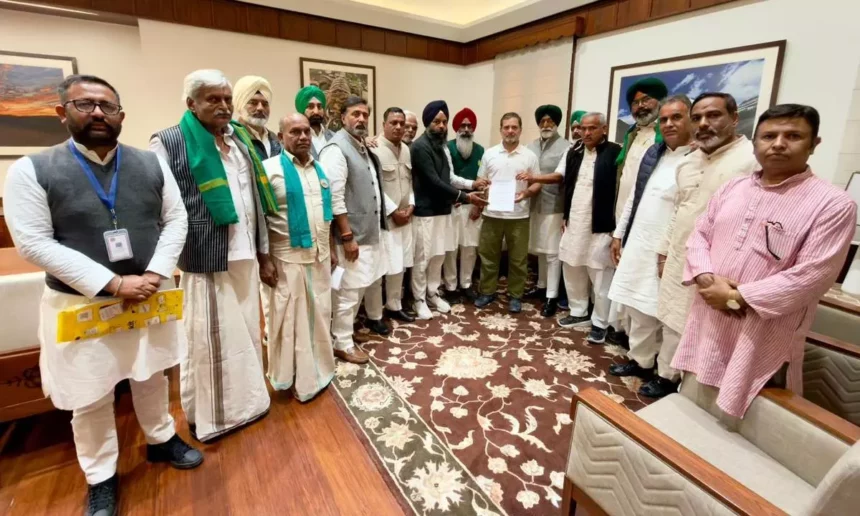
In a significant political development, Rahul Gandhi met with representatives of farmer unions from across India on February 13, 2026, to discuss the growing opposition to the India-U.S. trade deal. The meeting highlighted the deep concerns of agricultural communities over the potential economic, social, and environmental impacts of the agreement, with leaders from multiple crop sectors—including corn, soyabean, cotton, fruits, and nuts—voicing their apprehensions about the livelihoods of millions of farmers. The discussion focused on strategies to raise public awareness, mobilize support, and coordinate nationwide movements to safeguard domestic agriculture while emphasizing the critical role of elected representatives in advocating for the interests of farmers. The interaction between Rahul Gandhi and the delegation underscored the increasingly central position of agricultural issues in national policymaking, particularly at a time when trade agreements are being debated and public scrutiny of their consequences is intensifying.
Farmer Concerns and Opposition to the Trade Deal
The farmer representatives presented detailed arguments highlighting why the India-U.S. trade agreement could negatively affect India’s agricultural sector. They stressed that the deal, if implemented without adequate safeguards, could lead to price distortions, reduced income stability, and increased vulnerability for farmers dependent on corn, soyabean, cotton, and horticultural produce. The delegates pointed to previous instances where international trade agreements had impacted domestic markets, creating challenges for small and medium-scale farmers. They emphasized the importance of securing protection mechanisms, including price support schemes, subsidies, and regulatory oversight to ensure that domestic agriculture remains resilient in the face of foreign competition. Rahul Gandhi listened to these concerns attentively, acknowledging the structural challenges that farmers face and recognizing that agriculture remains the backbone of rural India’s economy. The opposition leader and the delegates deliberated on the potential social consequences, including migration pressures, employment instability, and rural distress, should farmers face adverse market conditions resulting from the trade deal.
Additionally, the farmer unions highlighted the need for inclusive consultations before signing international agreements that directly affect livelihoods. They argued that policymakers must integrate the voices of farmers into decision-making processes to ensure equitable outcomes. Concerns were raised regarding export-import policies, pricing mechanisms, and intellectual property rights for agricultural products, with leaders pointing out that inadequate attention to these aspects could disproportionately benefit multinational corporations while undermining domestic producers. The conversation underscored a broader debate about India’s position in global trade negotiations and the balance between economic liberalization and the protection of vulnerable sectors. Rahul Gandhi assured the delegation that their issues would be articulated in Parliament, emphasizing that public mobilization and dialogue with elected representatives are essential to influencing policy decisions and preventing potential adverse effects on Indian agriculture.
Strategies for Nationwide Mobilization and Advocacy
Beyond expressing their grievances, the farmer unions sought Rahul Gandhi’s guidance on organizing protests and public campaigns across the country to raise awareness about the trade agreement. The discussions included potential coordination mechanisms between state-level farmer organizations, leveraging media coverage, and engaging with civil society groups to amplify the message. Leaders outlined plans for peaceful demonstrations, signature campaigns, and targeted advocacy efforts aimed at both government bodies and the public. They stressed that nationwide coordination is crucial to convey the seriousness of the issue and to prevent decisions that might disadvantage Indian farmers. Rahul Gandhi encouraged structured planning, ensuring that any protests remain peaceful and comply with legal frameworks, emphasizing that democratic mobilization can be a powerful tool for bringing about policy reconsideration.
The meeting also explored the role of social media and digital platforms in mobilizing support and shaping public discourse. Delegates highlighted how platforms could help inform citizens about the potential consequences of the trade deal, generate solidarity among farmer communities, and attract attention from policymakers. Rahul Gandhi suggested integrating these efforts with parliamentary advocacy, ensuring that elected officials have clear visibility of public opinion and grassroots concerns. The discussion extended to potential alliances with labor organizations, trade associations, and regional political actors, reinforcing a multi-stakeholder approach to advocacy. By combining grassroots mobilization with institutional engagement, the opposition leader and the farmer representatives aimed to create a comprehensive strategy that could influence policy outcomes while maintaining transparency, accountability, and public trust.
The meeting further stressed the economic dimensions of the trade agreement, analyzing possible impacts on crop pricing, supply chain dynamics, and export competitiveness. Leaders highlighted the need to negotiate clauses that protect domestic farmers from market volatility and ensure equitable access to international markets. Rahul Gandhi emphasized the importance of evidence-based arguments, urging the unions to document potential risks and policy gaps in the agreement. He proposed a series of follow-up meetings and consultations to develop a coherent roadmap for advocacy, with a focus on sustaining pressure over time while building alliances with other parliamentary members concerned about agricultural welfare.
The interaction also underscored the broader political implications of agricultural mobilization, as farming communities represent a significant demographic in electoral politics. Leaders discussed how public awareness campaigns could be structured to educate citizens about the potential ramifications of international trade decisions on local economies. Rahul Gandhi highlighted the need to balance immediate protest actions with long-term strategies that include policy recommendations, research-based advocacy, and engagement with media and public institutions. The dialogue reflected a nuanced understanding of the interconnectedness of economic policy, social welfare, and political strategy in shaping outcomes for rural India.
Overall, the meeting between Rahul Gandhi and farmer leaders demonstrated the high priority assigned to agricultural concerns in national discourse, particularly regarding international trade agreements. By addressing both the immediate grievances of farmers and the systemic mechanisms needed for advocacy, the discussions provided a platform for coordinated action. The interaction reaffirmed the commitment of political representatives to listen to grassroots stakeholders, integrate evidence-based recommendations into policymaking, and facilitate citizen participation in shaping policies that affect critical sectors of the economy.
Through deliberations on the India-U.S. trade deal, Rahul Gandhi and the farmer union delegation highlighted the importance of protecting domestic agriculture, ensuring social justice, and mobilizing public opinion in democratic processes. Their engagement emphasized that large-scale coordination, peaceful advocacy, and institutional dialogue are essential for influencing policy decisions that directly impact livelihoods, economic equity, and rural development. The meeting served as both a strategic planning session and a platform for articulating concerns that resonate across multiple states, reinforcing the centrality of agriculture in India’s socio-political landscape.
This collaborative approach underscores the ongoing efforts by farmer organizations and political representatives to safeguard domestic agriculture in the context of international trade. By creating frameworks for public mobilization, policy advocacy, and media engagement, stakeholders aim to ensure that the interests of farmers are adequately represented, thereby influencing negotiations and implementation of trade agreements. The discussion between Rahul Gandhi and the delegation exemplifies the intersection of grassroots activism and parliamentary engagement, highlighting how democratic processes can facilitate collective action to protect economic and social rights.
The meeting also set the stage for potential follow-up initiatives, including regional consultations, media briefings, and policy recommendations that will inform both public opinion and parliamentary debates. Rahul Gandhi’s engagement with the farmer unions reflects the political recognition of agriculture’s centrality in national development, the sensitivity of international trade negotiations, and the necessity of bridging grassroots perspectives with legislative action. The deliberations serve as a model for how political leadership and citizen mobilization can interact to address complex policy issues while maintaining democratic principles, transparency, and accountability.
By engaging with farmer leaders from diverse regions and crop sectors, Rahul Gandhi highlighted the critical importance of inclusive decision-making, equitable representation, and proactive advocacy in shaping India’s agricultural and trade policies. The dialogue underscores the need for continuous engagement, public awareness, and organized efforts to ensure that trade agreements align with domestic priorities, support farmer livelihoods, and promote sustainable development. Through structured mobilization, strategic advocacy, and parliamentary intervention, the meeting demonstrated a path toward constructive engagement on issues at the intersection of agriculture, trade, and governance in India.