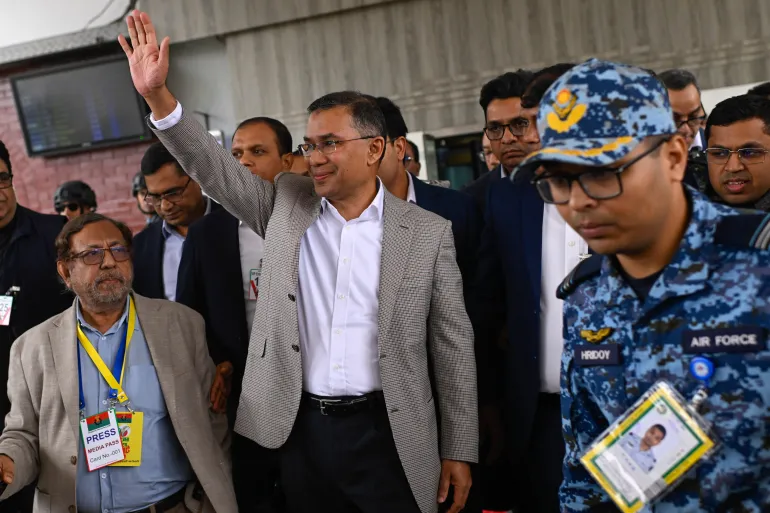
Bangladesh witnessed a historic political moment as Tarique Rahman, returning from 17 years of exile in the United Kingdom, emerged as the central figure in the recent national elections. The elections, held on February 13, 2026, saw Rahman’s party, the Bangladesh Nationalist Party (BNP), secure a decisive victory, paving the way for him to become the next prime minister. Rahman, aged 60 and the eldest son of former President Ziaur Rahman and three-time Prime Minister Khaleda Zia, was elected from both Dhaka-17 and Bogura-6, underscoring his political influence and widespread support across multiple constituencies. This remarkable turnaround follows years of political turbulence, legal challenges, and exile, marking a critical juncture in Bangladesh’s contemporary political landscape and setting the stage for potential shifts in both domestic governance and regional relations.
BNP’s Decisive Victory and International Recognition
The BNP’s victory in the 2026 national elections represents a significant political milestone for Tarique Rahman and his supporters, reflecting both the party’s organizational strength and the public’s desire for a change in leadership. According to unofficial results from the Election Commission, Rahman won elections in both constituencies he contested, demonstrating overwhelming public endorsement. The party, contesting 292 out of 300 parliamentary seats, positioned itself as the dominant force, facing an 11-party opposition alliance led by Jamaat-e-Islami. Senior BNP leaders, including Ruhul Kabir Rizvi and Mahdi Amin, declared a sweeping victory for the party while urging followers to observe gratitude in prayer rather than celebrating in the streets, emphasizing decorum in public response.
The international community quickly acknowledged the political shift in Bangladesh. Prime Minister Narendra Modi extended warm congratulations to Tarique Rahman and BNP for their “decisive victory,” emphasizing India’s commitment to supporting a democratic, progressive, and inclusive Bangladesh. Modi’s message highlighted the importance of mutual development goals, signaling the continuity of engagement and cooperation despite recent geopolitical tensions. Similarly, the United States expressed support, with Ambassador Brent T Christensen recognizing the “historic victory” and emphasizing shared objectives of prosperity and security. The global acknowledgment of the election outcome underscores the strategic significance of Bangladesh in regional politics and international trade, as well as the expectation that Rahman’s administration will navigate both domestic priorities and cross-border relationships with careful diplomacy.
Tarique Rahman’s return to political prominence follows the death of his mother, former Prime Minister Khaleda Zia, after which he formally assumed leadership of the BNP. Having served previously as acting chairman, Rahman became the party chief in December 2025, solidifying his position as the central authority within BNP. Known for his political acumen, he had also served as the de facto leader during the BNP-Jamaat coalition government from 2001 to 2006, operating from Hawa Bhaban, a facility colloquially referred to as a “shadow PMO.” His political experience, coupled with the legacy of his family, contributed to the party’s effective campaign strategy and robust electoral performance in the 2026 elections.
Political History, Exile, and Legal Challenges
Rahman’s political journey has been shaped by a series of tumultuous events, including periods of legal battles, imprisonment, and political exile. Following a caretaker government intervention in 2007 amid civil unrest, Rahman was arrested and held for 17 months on charges ranging from money laundering to alleged involvement in a plot against Sheikh Hasina. Convictions in absentia were later overturned following the student-led movement that ousted Hasina in 2024, allowing Rahman to return from London, where he had moved for medical treatment after alleged mistreatment in custody. These events, spanning nearly two decades, reflect the highly charged political environment in Bangladesh, where power transitions, partisan rivalries, and judicial interventions have shaped the nation’s democratic trajectory.
The 2026 election represents both a culmination of Rahman’s personal political struggle and a broader narrative of BNP’s resurgence. His ability to secure victories in multiple constituencies indicates a consolidation of support across urban and rural regions, while the absence of the Awami League from contesting the elections due to suspension of registration has amplified BNP’s dominance. The political environment preceding the election was defined by intense debate, public anticipation, and speculation regarding the stability and legitimacy of the incoming government.
Rahman’s historical association with governance during 2001-2006, often labeled the “dark prince” period, remains a critical aspect of his political identity. Operating as a shadow leader during coalition rule, he exerted considerable influence over policy decisions while Khaleda Zia held the formal prime ministerial office. The implications of this legacy are multifaceted, reflecting both strategic leadership capabilities and the challenges of balancing centralized authority with public accountability. Understanding this context is essential to assessing the political legitimacy and prospective governance strategies that Rahman may employ in his forthcoming administration.
Geopolitical Implications and Relationship With India
One of the most pressing challenges for Tarique Rahman’s incoming government is managing diplomatic relations, particularly with India, Bangladesh’s closest ally under Sheikh Hasina. In recent months, relations had deteriorated, marked by increasing hostility and disputes over cross-border policies, trade, and political asylum issues. Rahman has publicly acknowledged existing “issues” with India and emphasized his desire for a relationship founded on mutual respect and understanding. However, he has also indicated that rebuilding trust will require reciprocal engagement from both sides, particularly in addressing the presence of Awami League members currently in India.
The trajectory of India-Bangladesh relations under Rahman’s leadership will have significant implications for regional stability, trade agreements, energy cooperation, and security arrangements. Analysts suggest that navigating these diplomatic dynamics will be among the earliest and most consequential tests for the BNP government. Economic cooperation, border management, and cross-cultural exchange programs are likely to be prioritized to balance domestic political objectives with international obligations. Rahman’s approach indicates a pragmatic recognition of the importance of maintaining constructive bilateral engagement while asserting Bangladesh’s sovereignty and political independence.
Domestically, Rahman’s administration faces multiple challenges, including rebuilding institutional confidence, addressing socio-economic disparities, and fostering inclusive governance. With a parliamentary majority anticipated to exceed two-thirds of seats, the government is positioned to enact significant policy measures, but effective implementation will depend on administrative coordination, legislative support, and public confidence. Policy priorities are expected to focus on infrastructure development, agricultural sustainability, industrial growth, and employment generation, with an emphasis on balancing rapid economic modernization with social equity.
The leadership style and governance philosophy of Tarique Rahman will also influence civil-military relations, judicial independence, and electoral reforms. Having experienced periods of political tension, caretaker governments, and judicial scrutiny, Rahman is likely to prioritize mechanisms that stabilize political processes while ensuring accountability. Institutional strengthening, transparency initiatives, and stakeholder engagement are anticipated as key components of governance under his administration, aimed at consolidating political legitimacy and fostering public trust.
The BNP’s broader electoral strategy underscores its intent to consolidate power not merely through high-profile victories but through a multi-dimensional approach combining grassroots mobilization, strategic alliances, and policy messaging. Engagement with rural constituencies, urban electorates, and diaspora communities has been central to the campaign’s success, reflecting an adaptive and comprehensive approach to political organization. This strategy has positioned Tarique Rahman as both a charismatic leader and an effective strategist capable of navigating the complex terrain of national politics in Bangladesh.
In addition to political and diplomatic considerations, the economic implications of the BNP victory are significant. Investors, regional trade partners, and international institutions are closely monitoring policy signals regarding trade, foreign investment, and economic liberalization. Rahman’s commitment to fostering a stable, predictable, and mutually beneficial environment for business and trade is expected to shape immediate policy initiatives, particularly in sectors such as energy, manufacturing, and information technology. The administration’s economic strategy will likely emphasize balancing domestic growth with international competitiveness, aiming to strengthen Bangladesh’s position in global markets while addressing local development needs.
Rahman’s leadership is also expected to bring renewed focus on social welfare, healthcare, education, and disaster management. His government faces the task of addressing historical inequalities, regional disparities, and infrastructure deficits, while ensuring that policy interventions are inclusive and sustainable. Public engagement, community outreach, and participatory governance are anticipated to be central to the administration’s approach, reflecting an understanding that legitimacy and effectiveness are closely linked to citizen trust and active involvement in decision-making processes.
The return of Tarique Rahman to Bangladesh after nearly two decades of exile and legal battles marks a historic transition in the country’s political landscape. With his electoral success, international recognition, and strategic positioning within BNP, Rahman is poised to influence domestic policy, regional diplomacy, and national development trajectories. His government’s early decisions will likely set the tone for governance, foreign relations, and economic management, shaping both short-term outcomes and long-term prospects for Bangladesh’s stability and growth.
Rahman’s relationship with opposition forces, civil society, and media will also play a critical role in determining the effectiveness and perception of his administration. Transparent communication, conflict resolution mechanisms, and engagement with diverse stakeholder groups are essential for consolidating governance credibility. Furthermore, public confidence in institutional processes, electoral integrity, and legislative action will be closely linked to the administration’s ability to manage expectations and deliver tangible outcomes across multiple sectors.
The political, economic, and social dimensions of Tarique Rahman’s ascension reflect the broader trajectory of Bangladesh’s democracy, highlighting the interplay of historical legacies, electoral dynamics, and leadership strategies. His government’s capacity to navigate complex domestic and international challenges will be pivotal in ensuring that Bangladesh achieves sustained progress, maintains political stability, and enhances its regional and global standing.
Rahman’s tenure as prime minister is expected to be defined by efforts to reconcile past political tensions, strengthen institutional frameworks, and chart a developmental course that balances modernization with social cohesion. His ability to address key diplomatic, economic, and societal challenges while leveraging political capital, historical experience, and public support will be central to shaping the narrative of Bangladesh’s governance in the coming years.
By returning from exile, consolidating political power, and securing a parliamentary majority, Tarique Rahman has positioned himself at the nexus of opportunity and responsibility, tasked with translating electoral mandates into effective governance, sustainable development, and constructive regional engagement. His leadership will be scrutinized both domestically and internationally, as Bangladesh embarks on a new chapter under the BNP, with potential implications for regional geopolitics, bilateral relations, and the country’s socio-economic trajectory.
Rahman’s election represents a convergence of personal resilience, political strategy, and historical legacy, reflecting the enduring significance of leadership continuity, party organization, and electoral engagement in shaping Bangladesh’s contemporary political landscape. His government’s policy decisions, diplomatic initiatives, and governance approach will be closely observed as benchmarks for effectiveness, inclusivity, and strategic vision in the context of both domestic and international expectations.
Tarique Rahman’s return and electoral success signify not only the resurgence of BNP as a dominant political force but also a critical moment for Bangladesh’s democratic evolution, highlighting the interplay of historical experience, public mandate, and geopolitical considerations in determining the country’s future trajectory. The consolidation of his leadership offers opportunities for reform, development, and renewed diplomatic engagement while presenting challenges that will test governance, policy coherence, and institutional resilience.
This historic victory and the beginning of Rahman’s administration mark a transformative phase in Bangladesh, emphasizing the importance of leadership, policy direction, and constructive engagement with both domestic and international stakeholders. With a focus on political stability, economic growth, and diplomatic recalibration, Tarique Rahman is poised to shape Bangladesh’s trajectory in the years ahead, consolidating his position as a central figure in the nation’s political and developmental narrative.