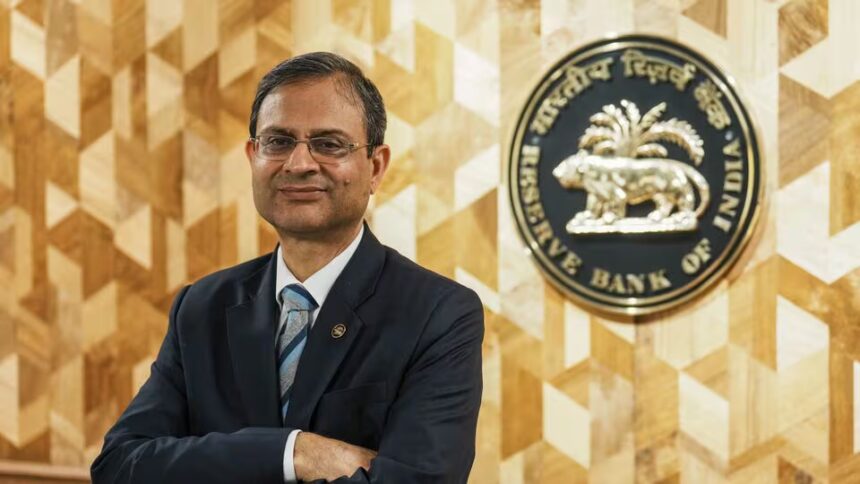
The Reserve Bank of India (RBI) has maintained its key repo rate at 5.50 percent, marking the second consecutive instance of the rate remaining unchanged, as the central bank carefully evaluates the impact of previous monetary easing measures and recent policy adjustments on the Indian economy. With global trade uncertainties, fluctuating commodity prices, and domestic demand dynamics playing a critical role in shaping macroeconomic conditions, the RBI’s decision reflects a cautious yet measured approach aimed at balancing growth prospects with inflation control. The move follows earlier rate cuts totaling 100 basis points in the first half of 2025, aimed at stimulating economic activity, with a pause introduced at the August policy review to assess the cumulative impact of these measures. Reserve Bank Governor Sanjay Malhotra, in a detailed address, highlighted that the central bank is in a “wait-and-watch” mode, carefully monitoring the outcomes of past policy actions, fiscal interventions, and external economic developments before charting the next steps in monetary policy. The decision has significant implications for borrowers, investors, and the overall economic landscape, as it signals RBI’s commitment to maintaining stability while supporting sustainable growth.
Neutral Policy Stance Amid Positive Growth and Global Trade Challenges
The six-member Monetary Policy Committee (MPC) of the RBI voted unanimously to retain the repo rate at 5.50 percent, while maintaining a neutral policy stance. This decision was largely in line with market expectations, as reflected in a Reuters poll that had forecast no immediate change in interest rates. Economists had suggested that the subdued inflationary pressures and resilient domestic growth could warrant a pause, if not further easing, in the short term. The central bank’s neutral stance provides flexibility, enabling it to respond to evolving domestic and global conditions, including trade tensions and geopolitical uncertainties. The RBI’s policy framework seeks to balance several competing objectives: fostering economic growth, controlling inflation within the targeted range, and maintaining financial stability in an environment of uncertain global demand. In his video address, Governor Malhotra emphasized that the cumulative effect of prior policy easing, along with recently announced tax reductions on consumer goods, is expected to support domestic demand. However, punitive trade tariffs imposed by the United States and potential disruptions in global supply chains could weigh on exports, creating a nuanced scenario for policymakers. By holding rates steady, the RBI allows time for these complex dynamics to unfold while ensuring that the financial system remains liquid and credit flows continue to support productive sectors of the economy.
The committee’s decision also aligns with the central bank’s assessment of macroeconomic indicators. India’s GDP growth trajectory has been revised upwards to 6.8 percent for the current fiscal year, reflecting stronger-than-expected performance in the April-June quarter, when the economy expanded by 7.8 percent year-on-year. This robust growth was underpinned by increased consumer spending, investment activity, and improving industrial production, signaling resilience in the domestic economy. Inflationary pressures, meanwhile, have remained moderate, with the annual retail inflation rate recorded at 2.07 percent in August, largely influenced by food price movements. The central bank’s forecast now anticipates inflation to average 2.6 percent for the financial year, down from an earlier estimate of 3.1 percent. The MPC noted that recent tax reductions, along with benign food prices, have contributed to this favorable inflation outlook, providing room for policy continuity and the potential for future rate adjustments if needed. By carefully calibrating its policy stance, the RBI aims to support sustained economic recovery while maintaining price stability, reflecting a delicate balance between stimulating growth and safeguarding financial conditions.
Economic Implications and Market Response to RBI Policy
The RBI’s decision to hold the repo rate steady at 5.50 percent has immediate and broader implications for the Indian economy and financial markets. Short-term borrowing costs for businesses and households remain unchanged, preserving the benefits of previous rate cuts, while long-term investors and bond markets adjust expectations regarding future monetary policy moves. India’s benchmark 10-year government bond yield rose slightly by two basis points to 6.6038 percent following the announcement, reflecting investor recalibration in response to neutral policy guidance. The rupee appreciated marginally to 88.75 against the US dollar, and equity indices showed modest gains, signaling a generally positive reception to the RBI’s measured approach. Maintaining a stable interest rate environment also supports consumer confidence and investment planning, as businesses and households can anticipate predictable financing costs amid ongoing global and domestic uncertainties.
Governor Malhotra’s statement further highlighted that the central bank is closely monitoring multiple variables before determining the future course of action. The cumulative impact of previous rate cuts and recent tax policy interventions are expected to stimulate aggregate demand, bolster consumption, and encourage private investment. At the same time, external risks, including trade tariffs imposed by the United States and volatility in global commodity markets, could dampen export growth and influence inflationary trends. By maintaining a neutral stance, the RBI allows policymakers to gather more data and assess the net effects of these interacting forces. This approach reflects a commitment to evidence-based decision-making, emphasizing careful monitoring, prudence, and flexibility rather than reactive adjustments.
The broader context of RBI’s policy also underscores the central bank’s dual mandate of promoting growth while ensuring price stability. India’s macroeconomic indicators indicate a relatively benign inflationary environment, with price pressures contained by moderate food costs and effective fiscal measures. Simultaneously, robust GDP growth demonstrates resilience in domestic demand, supporting government and private sector initiatives. The RBI’s forward guidance suggests that future policy decisions will continue to be data-driven, with attention to inflation dynamics, economic output, global trade conditions, and domestic fiscal developments. Investors and analysts are closely tracking indicators such as industrial production, consumer spending, and export performance to anticipate potential adjustments in the monetary policy stance.
In addition, the RBI’s measured policy approach has implications for financial institutions and credit markets. Banks and non-banking financial companies can plan lending and investment strategies with greater certainty, ensuring steady credit flows to priority sectors, including manufacturing, infrastructure, and consumption-driven industries. The continuity in policy also provides stability to the housing and automobile sectors, which are sensitive to interest rate changes. As the central bank monitors economic signals, it may consider further adjustments in line with achieving sustainable growth while preventing excessive inflation. The combination of growth-oriented measures, prudent monitoring, and a neutral stance underscores the RBI’s strategy of managing multiple objectives in a complex and interconnected economic environment.
The Reserve Bank’s outlook, as articulated by Governor Malhotra, signals optimism about India’s economic resilience. Upward revisions in GDP growth forecasts, low inflationary pressures, and the potential benefits from fiscal interventions collectively suggest that the economy is on a stable growth path. By holding the repo rate steady, the RBI is providing a window for the effects of prior measures to materialize, allowing the central bank to gauge whether additional easing or tightening is warranted in the near future. The neutral stance preserves flexibility while reinforcing the credibility of India’s monetary policy framework, signaling to markets and economic participants that the central bank remains committed to maintaining financial stability, supporting growth, and responding proactively to emerging risks.
With robust data collection, close monitoring of macroeconomic indicators, and a commitment to balancing growth with price stability, the RBI’s policy approach exemplifies a careful calibration of monetary policy. The central bank continues to assess the interplay of domestic consumption, investment trends, global trade challenges, and fiscal measures, aiming to create conditions conducive to sustainable growth. As policymakers evaluate the cumulative effects of previous rate cuts and fiscal incentives, the neutral stance ensures that future adjustments are informed by comprehensive economic analysis rather than short-term pressures. The decision also highlights the importance of clear communication, with Governor Malhotra emphasizing transparency, timely updates, and adherence to a consistent policy framework.
The RBI’s decision to maintain the repo rate at 5.50 percent reflects a careful, data-driven, and balanced approach to monetary policy amid a dynamic and complex economic environment. By combining evidence-based monitoring, a neutral policy stance, and an emphasis on financial stability, the central bank demonstrates its commitment to supporting sustainable growth while keeping inflation under control. The measured approach allows for flexibility in responding to future developments in domestic and global markets, ensuring that India’s monetary framework remains robust, credible, and responsive to the evolving economic landscape.