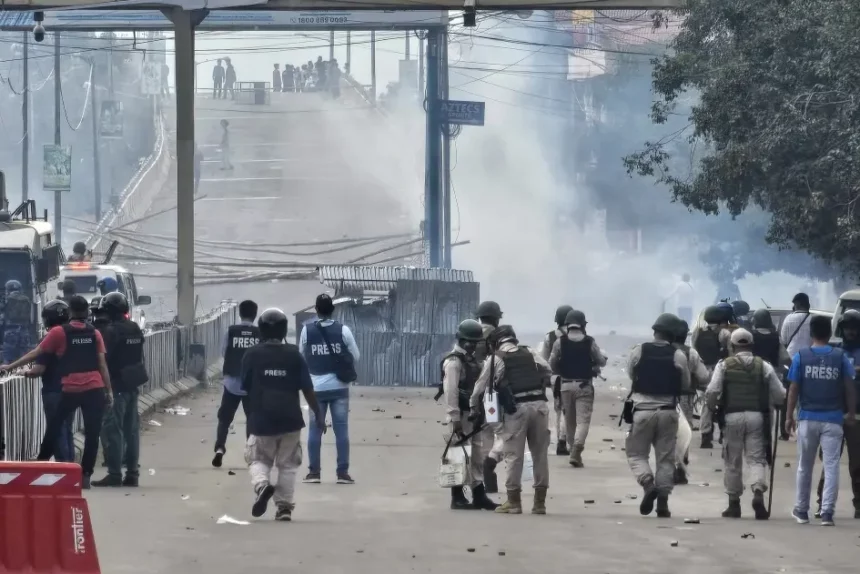
In 2023, Manipur emerged as the epicenter of communal tensions and unrest in India, recording the highest number of cases promoting enmity between groups while also ranking second in incidents of rioting, according to the latest data released by the National Crime Records Bureau (NCRB). The northeastern state’s persistent social discord highlights the challenges faced by law enforcement and governance in managing inter-community tensions, particularly in areas with complex ethnic compositions and historical grievances. The NCRB report also indicates an overall rise in crimes linked to communal disharmony and civil unrest across the country, reflecting a worrying trend that demands attention from policymakers, law enforcement authorities, and civil society alike. While the data provides a numerical snapshot of offences and disturbances, the underlying socio-political context in Manipur and other high-incidence states underscores the multidimensional nature of law-and-order challenges in India.
The surge in criminal cases promoting enmity between different groups in Manipur coincides with longstanding grievances and political developments that have aggravated social tensions. In 2023, the state registered 473 cases under this category, the highest in the country, surpassing Maharashtra, which recorded 283 cases, Andhra Pradesh with 200 cases, and Uttar Pradesh with 198 cases. Nationally, the number of such cases increased steadily over recent years, rising from 1,104 in 2021 to 1,570 in 2022 and reaching 2,155 in 2023, indicating an upward trend in offences that threaten communal harmony. The situation in Manipur was exacerbated by clashes between the Meitei and Kuki-Zo communities, triggered by proposed plans to grant Scheduled Tribe status to the Meiteis. The Kuki-Zo community feared that this change could jeopardize their existing rights and privileges, leading to violent confrontations. These incidents resulted in over 260 deaths and the displacement of more than 60,000 people, creating a humanitarian crisis alongside the law-and-order challenges.
The unrest also affected daily life in the state, with frequent protests, minor clashes, and periodic internet shutdowns as authorities attempted to curb the spread of misinformation and maintain public order. The 2023 events in Manipur not only reflect local community disputes but also highlight the broader issues of governance, ethnic identity, and the role of legal frameworks in addressing historical grievances. NCRB data on national trends further illustrates that crimes promoting enmity are not confined to the northeast. States like Maharashtra, Andhra Pradesh, and Uttar Pradesh also reported significant numbers of cases, emphasizing the need for comprehensive policies that combine preventive measures, conflict resolution strategies, and effective law enforcement. Understanding the patterns and underlying causes of these incidents is critical to framing interventions that can mitigate communal tension while ensuring justice and social stability.
Rising Rioting Incidents and Law-and-Order Concerns
Alongside offences promoting group enmity, NCRB data highlights a notable increase in rioting incidents across India, with the total number rising from 37,816 in 2022 to 39,260 in 2023. The number of victims affected by these incidents also grew, from at least 47,404 in 2022 to a minimum of 47,733 in 2023, indicating that riots and collective disturbances continue to have significant social and human costs. Manipur registered 5,421 cases of rioting in 2023, the second highest in the country after Maharashtra, which recorded 8,861 cases. Bihar and Karnataka followed with 4,182 and 4,164 cases respectively. Meanwhile, Jammu and Kashmir reported 425 cases, and Delhi reported 44 cases, reflecting considerable regional variation in the intensity of riots and civil disturbances. The data suggests that while some states struggle with sporadic outbreaks of violence, others face systemic challenges related to communal harmony, governance, and policing efficiency.
Further analysis of the NCRB report reveals that the nature and context of riots have shifted over recent years. Riots and attacks during protests or morchas were 857 in 2021, decreasing to 781 in 2022 and further to 443 in 2023, suggesting a potential decline in politically motivated street-level disturbances. However, riots targeting police personnel or government servants numbered 481 in 2021, rose to 667 in 2022, and decreased slightly to 528 in 2023, indicating ongoing risks to law enforcement officials and state representatives. The report also highlights related forms of violence, such as affray, which increased from 6,305 in 2022 to 6,830 in 2023, and arson cases, which witnessed a dramatic rise from 7,811 in 2022 to 13,626 in 2023. These trends underscore the complex and evolving nature of civil unrest, with significant implications for policing strategies, disaster management, and public safety.
The situation in Manipur exemplifies how ethnic, social, and political tensions can rapidly escalate into large-scale violence. The clashes between the Meitei and Kuki-Zo communities were not isolated incidents but rather the culmination of a series of historical grievances, administrative decisions, and socio-economic pressures. The NCRB data contextualizes these events within the broader national landscape, where rising instances of rioting and crimes promoting enmity indicate systemic vulnerabilities in managing communal harmony. Effective interventions require not only robust law enforcement responses but also proactive measures such as community engagement, inclusive policymaking, and conflict resolution mechanisms.
Underlying Socio-Political Context and Implications
Manipur’s record of crimes promoting enmity and high rioting cases cannot be fully understood without examining the socio-political context. The proposed granting of ST status to the Meiteis was a flashpoint, reflecting deeper issues of identity, political representation, and resource allocation. The Kuki-Zo community’s apprehensions regarding their entitlements exemplify the delicate balance required in multi-ethnic regions where legal reforms or administrative measures may inadvertently ignite tensions. Government interventions, including the imposition of internet shutdowns and deployment of security forces, were aimed at controlling immediate violence, but long-term solutions require dialogue, reconciliation, and policy frameworks that recognize historical and cultural sensitivities.
Beyond Manipur, the NCRB data underscores that other states also grapple with communal disharmony and rioting, albeit with different triggers and socio-political dynamics. Maharashtra’s leading figure in rioting incidents may reflect urban congestion, political mobilization, and social inequalities, while states like Bihar and Karnataka face region-specific challenges shaped by demographic diversity, political alignments, and law enforcement capacities. The increase in arson cases and affrays further indicates that civil unrest is not limited to organized political movements but can also involve spontaneous acts of violence that threaten public safety and property.
The NCRB report’s findings carry implications for governance, policing, and civil administration. Managing communal tensions effectively requires a multifaceted approach that combines preventive, legal, and rehabilitative measures. Authorities must ensure timely response to emerging conflicts, facilitate channels for dialogue among communities, and strengthen local governance mechanisms to prevent escalation. At the same time, the data suggests the importance of monitoring crime trends, understanding the root causes of social unrest, and tailoring interventions to the unique conditions of each state or region.
In Manipur, the consequences of 2023’s unrest extended beyond immediate fatalities and displacements. The disruption of daily life, interruption of economic activities, and erosion of social trust highlight the broader societal costs of communal conflict. Policymakers, civil society organizations, and local leaders must collaborate to rebuild community cohesion, restore confidence in governance, and prevent the recurrence of large-scale violence. Lessons learned from Manipur can inform strategies in other high-incidence states, emphasizing the need for anticipatory governance, early warning systems, and inclusive policy frameworks that address the concerns of all communities.
The NCRB data also provides insights into the evolving nature of riots, protests, and group-enmity crimes in India. While some categories, such as morcha-related riots, show a decline, other forms of violence including attacks on police and government personnel, arson, and affray have increased, reflecting shifting patterns in civil disturbances. Understanding these trends is essential for law enforcement agencies to allocate resources effectively, plan preventive measures, and ensure rapid response during incidents. Additionally, tracking victim statistics allows authorities to identify vulnerable populations, assess the human cost of unrest, and design targeted rehabilitation and compensation programs.
The rise in crimes promoting enmity and rioting also signals the need for greater societal awareness and proactive measures at the grassroots level. Community engagement programs, conflict resolution workshops, and awareness campaigns can complement policing efforts by promoting social cohesion and reducing misunderstandings between groups. Education initiatives emphasizing tolerance, inclusivity, and the rule of law are equally important in preventing escalation of tensions in multi-ethnic or politically sensitive regions.
Manipur’s leading position in group-enmity crimes and its second-place ranking in rioting in 2023 reflect not only localized tensions but also broader national challenges related to communal harmony and public safety. The NCRB data underscores the increasing complexity of managing law-and-order situations in a diverse country like India, where ethnic, social, and political dynamics intersect. Effective solutions demand coordinated efforts from law enforcement, policymakers, community leaders, and civil society to prevent violence, restore trust, and strengthen social cohesion while addressing the legitimate concerns of affected populations.