India’s national capital has been engulfed in a thick cloud of toxic smog for more than two weeks, pushing air quality to hazardous levels and prompting a renewed political and public outcry. Against this backdrop, Rahul Gandhi has sharply criticized the central government’s silence, calling the air pollution crisis a public health emergency that requires an immediate and enforceable national action plan. Emphasizing the suffering of families, especially children, Gandhi has demanded an urgent debate in Parliament and questioned why Prime Minister Narendra Modi has not addressed the worsening situation or taken proactive steps to protect citizens from the deteriorating air quality.
Rahul Gandhi questions government silence and calls for urgent debate and national action plan
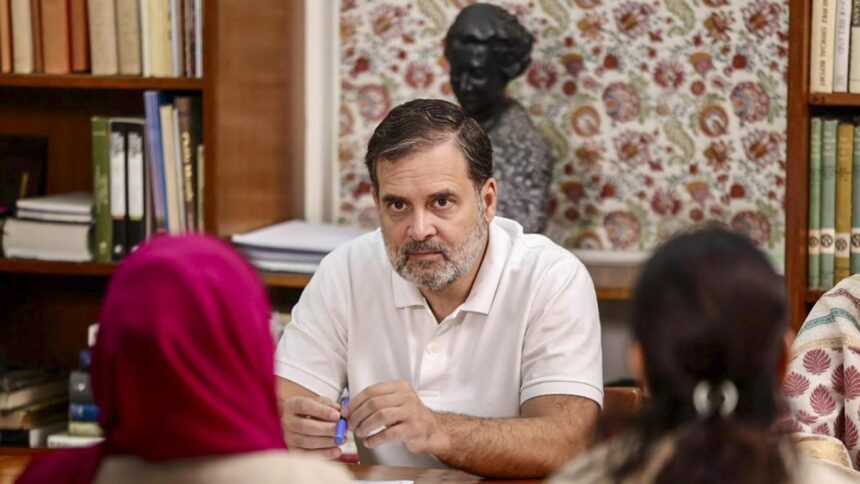
Rahul Gandhi’s statements came after a meeting at his residence where he interacted with several mothers from Delhi who expressed deep concern over their children’s health amid rising pollution levels. Gandhi later posted a video of this meeting, highlighting the emotional testimonies of parents who described the constant fear of letting their children breathe the city’s toxic air. The Congress leader pointed out that the recurring decline in air quality has become a chronic crisis every winter, yet the central government refuses to articulate a clear, accountable response.
Gandhi stated that mothers across Delhi are anxious because their children are growing up inhaling poisonous air. He emphasized that these parents are tired, frightened, and frustrated by the inaction they observe from those in power. In his message on X, Gandhi questioned how the prime minister could remain silent while millions of children are forced to breathe some of the world’s most polluted air. He argued that silence is not leadership and that the absence of urgency reflects a lack of responsibility toward the nation’s health.
According to Gandhi, India urgently needs a comprehensive and detailed debate on air pollution in Parliament. Such a discussion, he insisted, must move beyond surface-level remarks and culminate in a strict, enforceable action plan that lays out specific targets, responsibilities, and penalties. He argued that an issue of such magnitude cannot be left to fragmented measures or fluctuating seasonal responses. Instead, India must adopt a national framework that addresses sources of pollution systematically—vehicular emissions, industrial output, construction dust, crop residue burning, waste incineration, and urban congestion.
Gandhi’s criticism also focused on what he described as a lack of accountability in the Modi government’s approach. He argued that pollution mitigation requires transparency, clear responsibility-sharing across states, and measurable timelines. Without these elements, he said, annual spikes in pollution will continue to harm public health and put vulnerable populations at risk. He described the current situation as a “health emergency” that demands not political rhetoric but decisive action backed by science, administrative coordination, and long-term commitment.
He reinforced his message by saying India’s children deserve clean air, not excuses, diversions, or delayed responses. Gandhi stated that the health of the next generation cannot become a casualty of political indifference. He emphasized that the well-being of children should be a national priority above partisan lines, requiring cooperation among lawmakers, ministries, and state governments.
Gandhi’s remarks also hinted at systemic weaknesses: outdated pollution control technologies, inconsistent enforcement of environmental regulations, and limited real-time monitoring in several regions. He argued that without robust public health measures, early warning systems, and accessible medical support for pollution-related conditions, India will face long-term damage to its population’s health.
The ongoing crisis in Delhi has highlighted inequalities as well, with poorer communities facing greater exposure due to limited access to air purifiers, cleaner housing environments, or medical care. Gandhi pointed out that the burden of pollution is not shared equally, and vulnerable families pay the highest price. These disparities, he said, need to be recognized and addressed within any national action plan, ensuring that environmental justice becomes part of the policy framework.
For Gandhi, addressing India’s air pollution problem also means acknowledging the growing scientific evidence linking poor air quality to chronic diseases such as asthma, bronchitis, heart conditions, reduced lung capacity, stroke, and even premature death. He underlined that this is not an abstract concern but a real and measurable threat affecting millions. Gandhi urged the government to accept that pollution is no longer limited to seasonal phenomena but has become a permanent hazard requiring sustained intervention.
His push for a parliamentary debate is rooted in the belief that democratic discussion is essential for building consensus and exposing policy gaps. He called on lawmakers across party lines to prioritize the issue and ensure that the debate results in concrete, time-bound outcomes. Gandhi’s position is that India cannot afford to normalize toxic air or treat it as an unavoidable feature of winter. Instead, he wants the nation to adopt structural solutions that reduce pollution year-round.
Delhi’s worsening air quality raises health alarms as experts warn of long-term risks
The air quality in Delhi has deteriorated sharply over the past fifteen days, consistently falling into the “very poor” and “severe” categories. The Air Quality Early Warning System for Delhi has projected that these conditions are likely to persist over the coming week, driven by a combination of meteorological factors, emissions, and seasonal activities that trap pollutants close to the ground. Residents have reported burning eyes, persistent coughing, breathing difficulties, and fatigue as the smog thickens across the region.
Health experts have raised alarms, emphasizing that vulnerable groups require immediate attention. Children, asthma patients, elderly individuals, smokers, and people with existing cardiac or respiratory issues are at heightened risk. Doctors are insisting that preventive health check-ups are becoming essential in the current toxic environment since prolonged exposure is known to trigger airway inflammation, reduce lung function, and aggravate underlying diseases. Hospitals have seen a rise in complaints of wheezing, chest congestion, and shortness of breath.
Pulmonologists and cardiologists have stressed that Delhi’s current air quality is not just a temporary inconvenience but a serious health hazard. They warn that particulate matter (especially PM2.5) can penetrate deep into the lungs and enter the bloodstream, increasing the risk of heart attacks, strokes, chronic obstructive pulmonary disease, and long-term respiratory impairment. Medical professionals argue that immediate lifestyle adjustments—such as avoiding outdoor exercise, using masks, and ensuring indoor air filtration—are necessary but insufficient in the absence of policy-level interventions.
Schools in several parts of Delhi have been forced to restrict outdoor activities, and parents continue to express worry over their children’s declining immunity and increased susceptibility to infections. Many have urged authorities to implement clear guidelines for school operations during periods of severe pollution. Teachers and education officials have echoed the sentiment, noting that prolonged exposure harms cognitive performance, attendance, and overall well-being.
Transportation and civic infrastructure also face strain during these episodes. Reduced visibility affects road safety, increases travel time, and disrupts business activities. Traffic congestion, in turn, adds to emissions, creating a cycle that becomes harder to break without systematic intervention. Environmental specialists argue that the city needs long-term urban planning reforms, green mobility solutions, and cleaner industrial infrastructure to ensure sustained improvement.
Agricultural activity in neighboring regions remains a contributing factor, especially with seasonal crop residue burning. While multiple states have attempted punitive measures, the lack of affordable alternatives for farmers continues to drive the practice. Experts insist that sustainable solutions must involve mechanized equipment, incentives for alternative uses of stubble, and coordinated policy support across states.
Delhi’s geographical location compounds the problem. Winter winds trap pollutants in the lower atmosphere, while low temperatures slow down dispersion. The resulting smog blanket is both predictable and preventable, yet administrative coordination often falls short of meeting the challenge. Environmental researchers highlight that without a national-level framework, piecemeal strategies will remain ineffective.
Public health organizations have called for real-time transparency in pollution data, better forecasting tools, and stronger community awareness programs. They emphasize that understanding pollution sources is crucial for developing targeted interventions. Many advocate for stricter monitoring of industrial output, construction norms, vehicular emissions, and waste management practices.
The crisis has also spurred discussions about the economic burden of pollution. Studies by public health economists have estimated that the healthcare costs of pollution-related diseases, alongside loss of productivity, amount to billions annually. The toll on the workforce, educational outcomes, and social welfare systems underscores the long-term implications of continued inaction.
Delhi’s struggle with toxic air is not new. Year after year, residents brace themselves for the winter pollution surge, knowing it will bring discomfort, illness, and disruption. Yet the absence of structural reforms has made the crisis increasingly severe. Citizens are demanding that authorities move beyond temporary solutions such as temporary shutdowns, sprinkling of water, or emergency restrictions. They want systemic change grounded in accountability.
Rahul Gandhi’s appeal for an enforceable national action plan reflects this broader sentiment. As the smog tightens its grip on the capital, the call for urgent political, administrative, and public health action becomes louder. Air pollution has become an environmental, economic, and humanitarian challenge, prompting debates about governance, responsibility, and the duty of elected leaders.