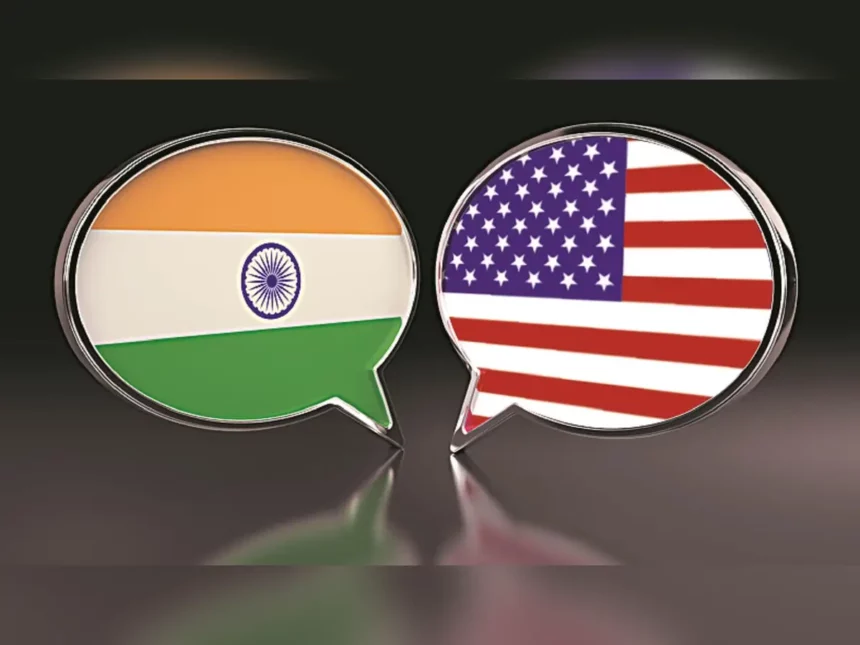
The upcoming three-day engagement between India and the United States in New Delhi marks a significant step toward shaping a long-term bilateral trade framework that both nations hope to finalise by the end of 2025. As global geopolitical and economic landscapes evolve rapidly, the two democracies are attempting to bridge tariff differences, deepen cooperation in strategic sectors, and set the foundation for a broader and mutually beneficial trade partnership.
Early-Stage Negotiations to Build the First Phase of a Potential Framework Deal
India and the United States have begun a key round of discussions in New Delhi from December 10 to December 12, focusing on the initial phase of the proposed bilateral trade agreement. This phase, which both sides have been working toward for several months, is designed to pave the way for a comprehensive multi-sectoral pact. The talks, although not labelled as a formal negotiation round, carry substantial diplomatic weight as they will shape the direction and pace of the overall agreement.
The visit of Deputy US Trade Representative Rick Switzer is central to this round of interactions. His presence underscores Washington’s intent to move deliberations forward despite shifts in US domestic trade policy in recent months. Switzer, who leads the US negotiating team for the Bilateral Trade Agreement, is joined by Assistant USTR for South and Central Asia Brendan Lynch, who is serving as the chief negotiator. Their discussions in Delhi are part of what US officials describe as a familiarisation visit, allowing them to assess progress so far and hold in-person consultations with senior officials.
Indian officials from the Ministry of External Affairs and the commerce ministry will meet the visiting delegation to review each aspect of the proposed agreement. The Ministry’s spokesperson, Randhir Jaiswal, emphasised that both countries remain committed to concluding a fair, balanced, and mutually advantageous arrangement covering several sectors. He highlighted that the meetings are structured to support ongoing negotiations, even though they are not officially classified as a formal round.
The objective of these talks is to move closer to completing the first tranche of the trade pact. According to government sources, the meetings scheduled over three days are intended to touch upon all trade-related matters that influence bilateral exchanges and the interests of exporters and industries in both markets. Although officials refrained from detailing the specifics under discussion, it is expected that tariff concerns, regulatory barriers, sector-specific cooperation, and technological collaboration will feature prominently.
Commerce Secretary Rajesh Agrawal recently expressed confidence that India and the United States could arrive at a framework agreement within the year. His optimism is rooted in sustained diplomatic engagement and shared economic priorities. Agrawal noted that while a complete Bilateral Trade Agreement may take longer to finalise due to the complexity and scale of negotiations, there is strong political will to achieve early breakthroughs that ease tariff burdens on both sides. He added that resolving reciprocal tariff concerns is essential for enhancing market access and improving trade flows.
Recent political developments, especially in Washington, have influenced the pace of negotiations. The original target of completing the first phase of the agreement by the fall of 2025 was delayed due to the introduction of new US tariff policies. President Donald Trump’s administration imposed a 25 per cent tariff on Indian goods starting August 1, followed by an additional 25 per cent increase. These measures were justified by the United States as part of reciprocal trade actions targeting countries with which it records substantial trade deficits. India became subject to these tariffs partly due to its continued import of Russian oil, which contributed to Washington’s policy recalibration.
Despite these challenges, India has continued to pursue diplomatic channels to resolve tariff disputes and maintain momentum in the broader strategic partnership. Indian exporters have been particularly affected by the increased tariffs, prompting New Delhi to prioritise tariff adjustments and exemptions in the framework deal. The discussions in Delhi are expected to explore ways to navigate these tariff pressures while building a structured negotiation timeline for the comprehensive agreement.
On the US side, officials view the talks as an opportunity to address long-standing concerns such as India’s regulatory environment, market access for American companies, and intellectual property protection. The US has also shown interest in exploring cooperation in strategic and emerging sectors such as defence manufacturing, semiconductors, clean technology, critical minerals, and space collaboration. These areas have gained prominence as both countries seek to strengthen supply chains and reduce dependence on geopolitical rivals.
The India-US relationship has grown stronger over recent years, driven by converging strategic interests and expanding economic ties. Bilateral trade has grown steadily and now stands at significant levels, but tariff disputes and regulatory hurdles have occasionally strained commercial relations. This three-day meeting, therefore, is positioned as a crucial moment to rebuild momentum, streamline negotiations, and prepare the blueprint for future trade rounds.
Beyond trade in goods and services, both countries are increasingly looking at partnerships in technology, space, innovation, and digital governance. Washington has repeatedly stressed the importance of working with India to ensure secure supply chains in critical sectors, including electronics and defence. New Delhi, on the other hand, sees the relationship as an opportunity to attract high-value investment, expand export markets, and strengthen domestic manufacturing.
These discussions also carry symbolic significance. By convening senior negotiators in Delhi, India showcases its commitment to maintaining steady diplomatic engagement despite external policy headwinds. At the same time, the United States reinforces its approach of pursuing targeted, phased trade arrangements rather than comprehensive single-stage pacts. This phased strategy aligns well with India’s preference for gradual, sector-wise progress that accommodates domestic priorities.
As talks progress over the next three days, both sides will seek to identify actionable areas for early harvest measures—interventions that offer immediate benefits while the larger agreement continues to take shape. These measures could include tariff reductions on selected goods, agreements on harmonising standards, or frameworks for enhanced cooperation in emerging technologies. The hope is that such steps will build trust and generate momentum toward the broader Bilateral Trade Agreement.
India and the United States are at a pivotal moment in their economic partnership. With growing global uncertainties and shifting power dynamics, a resilient, forward-looking trade framework is increasingly essential. The discussions underway in Delhi could therefore serve as an important bridge between past challenges and future opportunities, helping both countries reinforce their strategic and economic alignment.
Strategic, Technological, and Diplomatic Priorities Driving the Trade Dialogue
The ongoing trade discussions in Delhi are influenced by a wider geopolitical context. Both nations recognise that their partnership is not limited to commerce alone but extends to shared democratic values, strategic cooperation, and global leadership roles. The trade dialogue, therefore, reflects a broader ambition to align economic policy with national security objectives.
One of the major strategic priorities for the United States is building resilient supply chains independent of geopolitical competitors. India is emerging as a key partner in this effort, especially in sectors such as semiconductors, electronics assembly, clean energy components, and defence production. These areas are expected to form a major part of the long-term trade framework. India, in turn, seeks greater US investment in high-technology sectors and favourable access to American markets for manufactured goods.
Technology cooperation is likely to be another important component of the discussions. With rapid advancements in artificial intelligence, digital public infrastructure, cybersecurity, and cloud technologies, both countries are exploring ways to create a collaborative ecosystem. The United States acknowledges India’s role as a global technology hub, while India sees value in deepening technological partnerships to enhance domestic capabilities and global competitiveness.
Energy security and clean technology are also important aspects of the dialogue. As India transitions to renewable energy systems, access to US technology, research partnerships, and green financing mechanisms will be crucial. For Washington, supporting clean technology adoption in India aligns with global climate goals and strategic interests.
Diplomatically, the negotiations highlight the political commitment at the highest levels. Leaders in both countries have repeatedly emphasised that India-US ties are among the most consequential global partnerships. This sentiment has strengthened the resolve of negotiators despite tariff disputes, policy shifts, and market disruptions. The discussions in Delhi continue this trajectory by focusing on achievable outcomes and long-term vision.
The United States is also seeking greater transparency and predictability in India’s regulatory processes, particularly regarding standards, data governance, and market access. A structured dialogue on these issues could help resolve friction points that have affected American companies operating in India. For India, such discussions are an opportunity to articulate its own regulatory priorities and ensure a balance between foreign investment and domestic industry protection.
In the broader diplomatic landscape, India’s positioning as a major economic power and a stabilising force in the Indo-Pacific enhances the importance of the trade discussions. For Washington, strengthening ties with India is a key component of its Indo-Pacific strategy. For New Delhi, deeper US engagement helps diversify economic partnerships and reduce vulnerabilities associated with overdependence on any single region.
As the three-day engagement continues, both delegations will examine the feasibility of fast-tracking elements of the agreement while setting realistic timelines for more complex areas. The comprehensive trade relationship envisioned by both sides will require sustained political will, economic alignment, and institutional coordination.