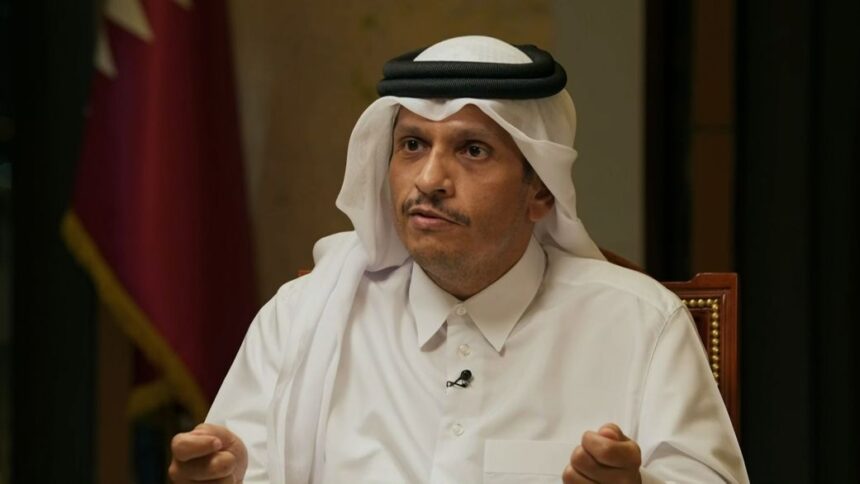
In a dramatic escalation of tensions in the Middle East, Qatar’s Prime Minister Sheikh Mohammed bin Abdulrahman Al-Thani has condemned Israel’s unprecedented airstrike in Doha that targeted Hamas leaders, calling it a barbaric act that has extinguished hope for the release of Gaza hostages. The prime minister warned that Israeli Prime Minister Benjamin Netanyahu must be held accountable for what he described as “state terror” and declared that Doha is reassessing its role in future ceasefire mediation. The strike, which marks the first Israeli military action inside the oil-rich Gulf state, has shaken a region long considered shielded from such direct conflict and raised grave questions about security guarantees from Washington, one of Qatar’s closest allies.
Qatar’s Strong Condemnation and Global Fallout
On Tuesday, the Israeli military launched strikes in Doha that killed at least six people, according to Hamas, though senior Hamas leaders reportedly survived the attempt. The strikes represented a seismic departure from Israel’s traditional areas of engagement, extending its reach into the Gulf state that has for over a decade hosted Hamas’s political bureau with tacit approval from the United States. For Qatar, a country that has positioned itself as a crucial mediator in the Israel-Gaza conflict alongside Egypt and the US, the attack was both a political affront and a direct challenge to its sovereignty.
Prime Minister Sheikh Mohammed bin Abdulrahman Al-Thani did not mince words in his response. Calling the attempted assassination “barbaric,” he said Benjamin Netanyahu’s actions had “killed any hope” for the families of hostages in Gaza who had pinned their last remaining optimism on Doha-led ceasefire negotiations. “We were thinking that we are dealing with civilized people. That’s the way we are dealing with others. And the action that Benjamin Netanyahu took—I cannot describe it, but it’s a barbaric action,” the prime minister said in an interview following the strike.
Abdulrahman Al-Thani emphasized that the strike undermined months of delicate negotiations and had left the families of hostages in despair. He revealed that he had personally met with one of the hostage families on the morning of the attack, underscoring how fragile and critical the mediation process had been before it was derailed by military escalation.
The Qatari leader further accused Israel of engaging in “state terror,” a strong characterization that underlines the seriousness with which Doha views the incident. He added that Qatar is now in discussions with Washington over its role in any future mediation efforts, signaling a possible withdrawal or recalibration of its involvement in Gaza ceasefire talks. “Doha is reassessing everything,” he said, warning that the attack had forced Qatar to reconsider its diplomatic posture.
The timing of the attack is particularly significant. It came just three months after Iran retaliated against a US military base in Qatar, an incident that had already heightened tensions in the Gulf and raised doubts over Washington’s ability to ensure the security of its allies. Now, with an Israeli strike taking place in the capital itself, Qatar faces a new and unexpected dimension of insecurity—one that places it at the center of a rapidly expanding regional conflict.
Regional and International Repercussions of Israel’s Escalation
The Israeli government, for its part, has defended the strikes. Defence Minister Israel Katz stated unequivocally that Israel would “act against its enemies anywhere,” while Prime Minister Benjamin Netanyahu called on Qatar to expel Hamas leaders or hold them accountable. “Because if you don’t, we will,” Benjamin Netanyahu warned, making it clear that Israel sees no geographic limits in its campaign against Hamas. Israel’s ambassador to the United Nations, Danny Danon, echoed this sentiment, telling Israeli media that “it was not an attack on Qatar; it was an attack on Hamas.”
Yet this framing has done little to mitigate the shockwaves the strike has sent through the Gulf and beyond. For the United States, the incident presents an awkward dilemma. President Donald Trump, whose administration has maintained close ties with both Israel and Qatar, publicly distanced himself from the operation. The White House confirmed that Donald Trump was not informed of Israel’s plans in advance. Upon learning of the strike, Donald Trump reportedly asked his envoy Steve Witkoff to warn Qatar, but by then the operation was already underway. In an unusual rebuke of a key ally, the White House said Donald Trump did not agree with Israel’s decision to take military action in Doha.
This divergence between Washington and Tel Aviv adds another layer of complexity to an already fragile geopolitical landscape. The US has long relied on Qatar as a stable partner in the Gulf, hosting its largest military base in the region, Al Udeid Air Base. The perception that Washington could not prevent—or even anticipate—an Israeli strike in the Qatari capital raises uncomfortable questions about America’s ability to uphold its security guarantees in the Gulf.
For Hamas, the immediate consequence of the strike was the loss of six people, though its senior leadership survived. In a statement, the group dismissed the attack as a failure, affirming that “the enemy’s attempt to assassinate our brothers in the negotiating delegation” had not succeeded. However, the group also indicated that the strike would have repercussions on its willingness to engage in talks mediated by Qatar, potentially undermining one of the few remaining channels for dialogue.
Meanwhile, the Israeli military simultaneously announced strikes on Houthi targets in Yemen, killing at least 35 people according to Houthi sources. The two operations, carried out on the same day, highlighted Israel’s widening scope of military engagement in the region. For observers, the strikes suggest an Israeli strategy of preemptively targeting perceived threats across multiple fronts, regardless of international sensitivities or geographic boundaries.
The fallout from the Doha strike has also been deeply personal for many of the families of hostages in Gaza. With the mediation process now in jeopardy, their hopes for a negotiated release have dimmed considerably. Abdulrahman Al-Thani’s remark that Benjamin Netanyahu “just killed any hope for those hostages” encapsulated the despair that has now set in. For Qatar, which has worked painstakingly to build a reputation as a neutral mediator capable of engaging both Western powers and militant groups, the attack represents a potential turning point in its diplomatic role.
The wider region is also grappling with the implications. Gulf states that have long viewed their wealth and stability as buffers against direct conflict are now confronted with the prospect that even they are not beyond the reach of escalating hostilities. The strike in Doha shatters the assumption that the Gulf’s oil-rich capitals are insulated from the turbulence afflicting neighboring regions.
At the same time, the attack risks driving a wedge between Israel and some of its quiet Gulf partners. While several Gulf states have cultivated closer ties with Israel in recent years, the violation of Qatari sovereignty is likely to harden positions and complicate efforts at normalization. Qatar, already critical of Israel’s policies in Gaza, may now emerge as a vocal opponent of Israel’s regional ambitions.
Internationally, the strike has been widely interpreted as a dangerous precedent. The idea that Israel could target Hamas leaders in the heart of Doha raises questions about the potential for similar operations in other countries hosting Palestinian factions. It also underscores the extent to which Israel is willing to pursue its objectives unilaterally, even at the risk of alienating close allies and destabilizing friendly states.
For Benjamin Netanyahu, the operation may serve as a demonstration of resolve to his domestic audience, showing that he is prepared to strike at Hamas wherever its leaders reside. But for Qatar and the wider international community, the cost of such actions is measured in shattered negotiations, heightened insecurity, and a rapidly narrowing path toward peace.