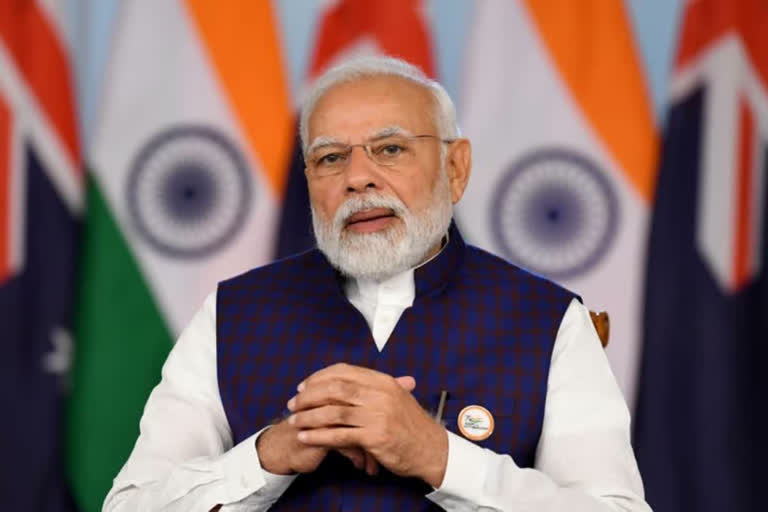
Prime Minister Narendra Modi is set to give his parliamentary constituency Varanasi a major developmental boost with the launch and foundation stone-laying of projects worth around ₹2,200 crore. In a visit scheduled for August 2, PM Modi will unveil a series of initiatives across sectors such as infrastructure, health, education, environment, water, electricity, and tourism. The scale and range of the projects underline the government’s intent to shape Varanasi into a modern, sustainable, and culturally vibrant city while ensuring improved connectivity, better urban amenities, and enhanced living standards for its residents.
The visit reflects a multi-pronged approach to development where traditional heritage and modern infrastructure are brought together. From ancient kunds and temples to high-tech medical upgrades and new road corridors, the projects are designed to touch the lives of people from all walks of life. On this occasion, the Prime Minister will also release the 20th instalment of the PM-Kisan scheme, benefitting farmers across the country.
Roads, bridges and better connectivity across urban and rural zones
One of the major focus areas of this development push is improved connectivity in and around Varanasi. PM Modi will inaugurate the widening and strengthening of key roads such as the Varanasi-Bhadohi road and the Chhitauni-Shool Tankeshwar road. These upgrades aim to smoothen regional travel and reduce travel time for commuters.
In addition, a new railway overbridge at Hardattpur will be inaugurated to ease congestion along the busy Mohan Sarai-Adalpura stretch, a key bottleneck. The Prime Minister will also lay the foundation for several road and bridge projects across both urban and rural pockets. These include road corridors in areas like Lahartara-Kotwa, Dalmandi, Gangapur, and Babatpur.
Two new railway overbridges are also on the cards—at Level Crossing 22C and in the Khalispur Yard area. These projects are expected to resolve long-standing traffic delays and increase mobility across the district.
The goal is to provide seamless movement of goods and people, connecting distant localities more efficiently with city centres and essential services. By addressing both arterial and internal routes, the plan envisions inclusive connectivity for both urban residents and rural communities.
Holistic transformation of public spaces, education and health services
Alongside roads, significant attention has been paid to cultural, environmental, and social infrastructure. The Prime Minister will launch redevelopment works for eight riverfront kuccha ghats and beautification efforts at sites like Kalika Dham and Rangildas Kutiya in Shivpur.
To rejuvenate key cultural and religious landmarks, foundation stones will be laid for restoration work at Kardameshwar Mahadev Temple and for development projects in Karkhiyaon—the birthplace of several Indian freedom fighters.
A major environment-related initiative includes the creation of an Urban Miyawaki Forest in Kanchanpur and beautification of Shaheed Udyan and 21 other city parks. These efforts aim to introduce more green spaces in the city, promoting ecological balance and community recreation.
Water-related works will also see a significant upgrade. PM Modi will launch restoration and water purification efforts at key kunds such as Ramkund, Mandakini, Shankuldhara, and others. These sacred water bodies, long associated with Varanasi’s spiritual identity, will benefit from modern maintenance and purification technology. In addition, four floating pujan platforms will be installed, allowing pilgrims to perform rituals without disturbing the water ecosystem.
Rural water access is being prioritised through the inauguration of 47 Rural Drinking Water Schemes under the Jal Jeevan Mission. These schemes will ensure that clean and safe drinking water reaches villages that have long struggled with erratic supply or poor quality.
In the education sector, PM Modi will inaugurate upgrades to 53 school buildings across the city. These improvements are expected to bring better infrastructure and facilities to thousands of students. He will also lay the foundation stone for a new district library and renovation works at high schools in Jakhini and Lalpur, among others. These initiatives reflect the government’s emphasis on learning spaces that are modern, inclusive, and well-equipped.
On the health front, new installations of advanced medical equipment, including robotic surgery and CT scan facilities, are underway at Mahamana Pandit Madan Mohan Malaviya Cancer Centre and Homi Bhabha Cancer Hospital. The aim is to boost early diagnosis, critical care, and surgical precision in serious medical cases.
Further, the Prime Minister will lay the foundation stone for a new Homoeopathic College and Hospital to increase access to alternative medical systems. An Animal Birth Control Centre and an associated Dog Care Centre will also be inaugurated, signalling efforts toward humane management of the city’s stray animal population and broader urban hygiene.
To enhance the city’s cultural footprint, the ancestral house of literary icon Munshi Premchand in Lamahi will be redeveloped, and the adjoining museum upgraded. New City Facility Centres will be established in Sarnath, Rishi Mandvi, and Ramnagar Zones to improve tourism infrastructure and visitor experience.
The projects to be launched and initiated during PM Modi’s visit underscore a clear message—Varanasi’s development is no longer limited to its spiritual and cultural glory, but equally anchored in modern amenities, green urban planning, digital connectivity, and inclusive progress.