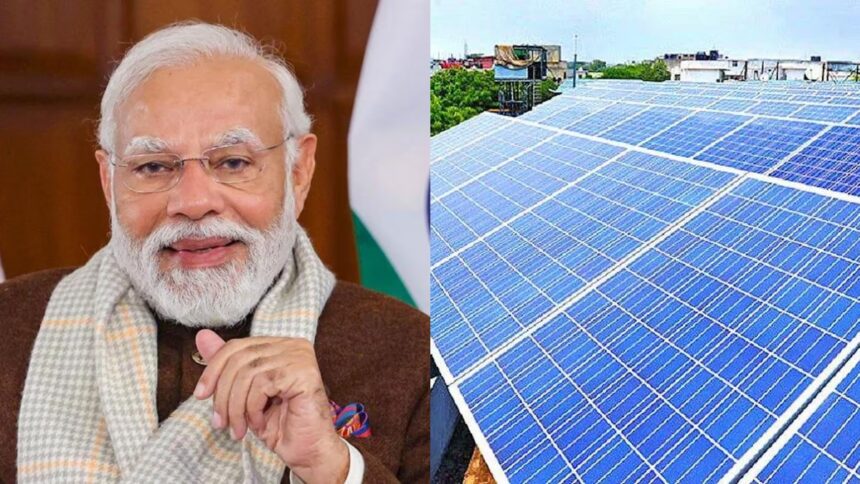
Gautam Buddh Nagar, April 16, 2026: In a significant push towards renewable energy adoption and self-reliance, the Uttar Pradesh New and Renewable Energy Development Agency has highlighted the benefits of the ambitious PM Surya Ghar: Muft Bijli Yojana being implemented by the Government of India and the Government of Uttar Pradesh. The scheme aims to install solar panels on rooftops of one crore households across the state, providing up to 300 units of free electricity per month to each family.
According to officials, the initiative is designed not only to promote clean and sustainable energy but also to reduce electricity expenses for common citizens and encourage energy independence at the household level. The scheme aligns with broader national goals of increasing renewable energy capacity and reducing dependence on conventional power sources.
Subsidy Structure and Financial Benefits
Under the scheme, both central and state governments are offering substantial subsidies to encourage adoption of rooftop solar systems. The financial assistance is structured as follows:
Up to ₹45,000 subsidy for 1 kW systems
Up to ₹90,000 subsidy for 2 kW systems
Up to ₹1,08,000 subsidy for systems ranging from 3 kW to 10 kW
These subsidies significantly reduce the upfront cost of installation, making solar energy more accessible to middle- and lower-income households.
In addition to subsidies, the scheme also offers collateral-free loans at an approximate interest rate of 7% per annum for systems up to 3 kW capacity. This financing option is expected to further boost participation by easing the financial burden on applicants.
Simple Online Application Process
Interested applicants can apply through the official portal PM Surya Ghar Official Portal. The application process involves multiple steps to ensure transparency and proper verification.
Applicants are first required to register on the portal and fill out the application form. Following this, approval must be obtained from the respective electricity distribution company (DISCOM). Once approval is granted, the solar panel system can be installed. After installation, applicants need to complete net metering formalities and upload bank details to receive the subsidy.
This streamlined digital process ensures ease of access and minimizes delays in implementation.
Eligibility and Required Documents
To avail benefits under the scheme, certain eligibility criteria must be met. The applicant must be an Indian citizen and must own a residential property with a suitable rooftop for solar panel installation. A valid electricity connection is also mandatory.
Additionally, applicants should not have previously availed benefits under any other solar subsidy scheme. Required documents include Aadhaar card, residence proof, latest electricity bill, mobile number, and bank account details such as passbook or cancelled cheque.
These conditions ensure that the benefits reach genuine and eligible beneficiaries.
Additional Income Opportunity Through Net Metering
A key feature of the scheme is the provision of net metering, which allows households to generate surplus electricity and supply it back to the grid. This not only reduces electricity bills but also provides an opportunity to earn additional income.
By enabling consumers to become “prosumers” — both producers and consumers of electricity — the scheme promotes decentralized energy generation and strengthens the overall power infrastructure.
Support and Local Assistance
For further assistance and detailed information, interested individuals can visit the office of the Project Officer, UP NEDA, located at Vikas Bhawan, Surajpur, Greater Noida. Officials are available on working days to guide applicants through the process and address any queries related to installation, subsidy, or documentation.
Toward a Sustainable Future
The PM Surya Ghar scheme represents a transformative step in India’s renewable energy journey. By combining financial incentives, easy access, and long-term savings, the initiative is expected to accelerate rooftop solar adoption across urban and rural areas alike.
As more households participate, the scheme is set to play a crucial role in reducing carbon emissions, lowering energy costs, and moving the state closer to a sustainable and energy-secure future.