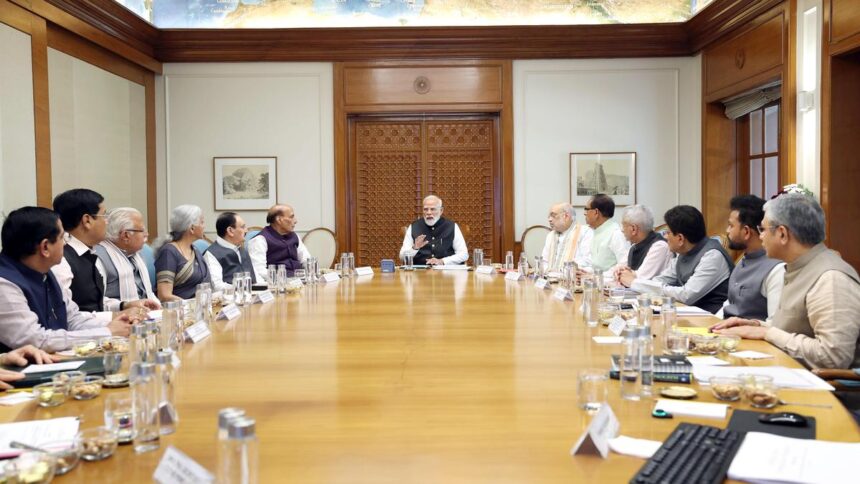
Narendra Modi chaired a crucial high-level meeting in New Delhi to assess the impact of the escalating West Asia crisis on India’s energy security and essential supplies. The 3.5-hour-long meeting, held at the Prime Minister’s residence, brought together key cabinet ministers to review the situation across petroleum, crude oil, natural gas, electricity, and fertiliser sectors. The urgency of the discussion reflects growing concerns over global energy disruptions triggered by the ongoing conflict involving Iran, the United States, and Israel. With India heavily dependent on imports for its energy needs, particularly from the Gulf region, the government is taking proactive steps to ensure that domestic supply chains remain stable and citizens do not face shortages or price shocks.
Key Focus: Energy Supply, LPG Availability and Economic Stability
The meeting saw participation from senior ministers including Amit Shah, Nirmala Sitharaman, J. P. Nadda, Hardeep Singh Puri and Shivraj Singh Chouhan. The central objective was to ensure uninterrupted availability of essential commodities across the country despite global uncertainties. Officials reviewed supply chains, stock levels, and contingency plans to tackle any potential disruptions.
One of the major concerns discussed was India’s dependence on LPG imports, a significant portion of which passes through the Strait of Hormuz. With tensions affecting maritime routes, the government is closely monitoring shipments and diversifying supply sources. The meeting emphasized that there is no immediate shortage, but preparedness remains critical. Authorities have also urged citizens to avoid panic buying, as unnecessary stockpiling could disrupt distribution systems.
The government is also evaluating the broader economic impact, including inflationary pressures due to rising crude oil prices. Higher fuel costs can directly affect transportation, agriculture, and manufacturing sectors, making it essential to maintain a balance between supply stability and price control.
Government Measures: LPG Boost, Fuel Pricing and Airfare Changes
Following the review, several key decisions have been implemented to manage the evolving situation. The Centre has directed an increase of 20% in LPG supply to states starting March 23, aiming to strengthen availability and reduce the risk of shortages. This step is particularly important as LPG remains a critical household fuel across India.
In addition, oil marketing companies have increased the prices of premium petrol variants such as Speed, Power, and XP95 by ₹2.09 to ₹2.35 per litre. While regular petrol prices remain unchanged, the adjustment reflects the rising cost of crude oil in global markets. Premium fuels, often used in high-performance vehicles, are typically priced higher than standard petrol, and the increase is seen as a calibrated response to market conditions.
Another significant move is the removal of the airfare cap by the Ministry of Civil Aviation. Airlines are now allowed to adjust domestic ticket prices based on demand. This decision comes in the context of rising operational costs, including fuel expenses, and is expected to provide flexibility to the aviation sector while potentially impacting passenger fares.
Strait of Hormuz Disruption and India’s Strategic Concerns
A major point of discussion during the meeting was the disruption in the Strait of Hormuz, one of the world’s most critical energy corridors. Nearly 20% of global petroleum supplies pass through this narrow waterway, making it a vital link for countries dependent on oil imports. For India, the stakes are particularly high, as a large share of its LPG and crude oil imports originate from the Gulf region.
The ongoing conflict has made the route increasingly unsafe, affecting tanker movement and raising concerns about supply continuity. Countries like Saudi Arabia, Iraq, and Kuwait, which are major energy exporters to India, rely heavily on this route. Any prolonged disruption could lead to delays, increased shipping costs, and volatility in global energy markets.
Despite these challenges, the arrival of LPG shipments in India has provided some relief, indicating that supply chains are still functioning, albeit under pressure. The government is also exploring alternative routes and sources to mitigate risks associated with the Hormuz corridor.
Outlook: Balancing Crisis Management and Long-Term Strategy
The high-level meeting underscores the government’s focus on proactive crisis management and long-term energy security planning. By coordinating across multiple ministries, the Centre aims to address both immediate challenges and structural vulnerabilities in the energy sector. The emphasis on dialogue, monitoring, and strategic decision-making reflects an effort to maintain stability during a period of global uncertainty.
India’s approach includes diversifying energy sources, strengthening domestic production, and enhancing logistical capabilities to handle disruptions. The current situation also highlights the importance of reducing dependence on a single region for critical imports. As geopolitical tensions continue to evolve, maintaining resilience in supply chains will remain a key priority.
The coming weeks will be crucial in determining how the West Asia crisis impacts global energy dynamics and, in turn, India’s economy. For now, the government’s message remains clear: supplies are stable, systems are in place, and efforts are ongoing to ensure that citizens face minimal disruption despite the challenging global environment.