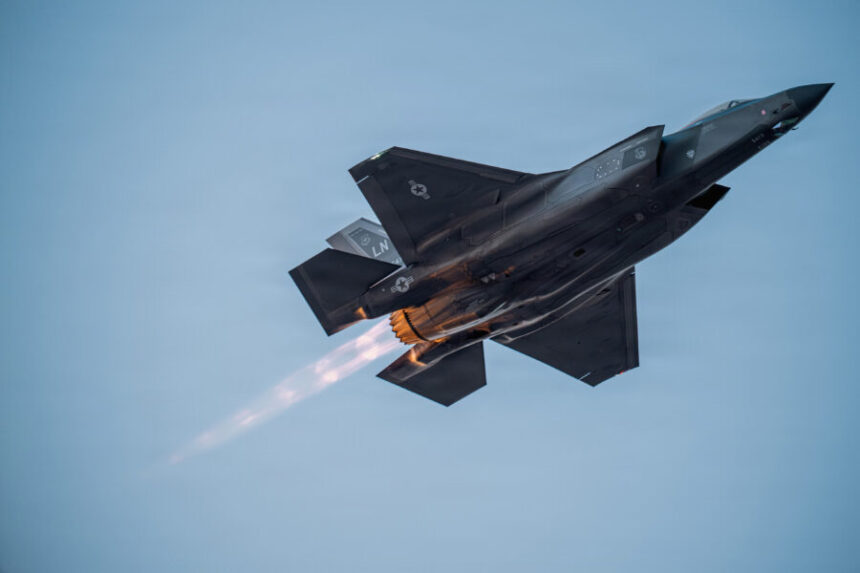
Iran has claimed a major breakthrough in modern warfare, stating that it successfully shot down a US F-35 fighter jet using an indigenous infrared-based air defence system. According to Iranian state media, the operation was carried out by the Islamic Revolutionary Guard Corps using its domestically developed “Majid” system. If verified, this would mark the first known instance of the world’s most advanced stealth fighter jet being neutralized in combat. The F-35 Lightning II has long been considered a symbol of American air superiority, designed to evade radar and penetrate even the most sophisticated air defence networks. However, Iran claims it identified a key weakness in the aircraft—its heat signature—and exploited it using infrared tracking technology. It is important to note that these claims have not been independently verified, and global defence analysts remain cautious in assessing their authenticity.
How Iran Claims It Detected and Destroyed the F-35
According to Iranian reports, the F-35 was targeted not through conventional radar detection but via its infrared emissions. The Majid air defence system, which operates on heat-seeking technology, is designed to detect thermal radiation emitted by aircraft engines. Unlike radar-based systems that the F-35 is specifically built to evade, infrared systems focus on heat signatures, which are far more difficult to conceal completely. Iran claims that the Majid system tracked the aircraft at close range and destroyed it with a single missile, demonstrating both precision and effectiveness. The reported range of the system is between 700 meters and 6 kilometers, making it particularly suitable for point defence scenarios where enemy aircraft operate at low altitudes. Iranian officials have suggested that the F-35’s onboard electronic warfare systems, which typically jam radar signals, were ineffective against this type of threat, leaving the aircraft vulnerable.
Decoy Strategy and Tactical Deception by Iran
Iran has also outlined a broader strategy that it claims led to the success of this operation. According to these accounts, Iranian forces deliberately shut down their real radar systems during the early stages of the conflict and replaced them with decoy installations. These decoys reportedly emitted signals similar to actual radar systems, misleading US and Israeli forces into believing that Iran’s air defence infrastructure had been destroyed. Once this perception was established, Iran claims it reactivated its real systems and deployed infrared-based defences like Majid in strategic locations. This approach, if accurate, represents a calculated use of deception and timing in modern warfare. By creating a false sense of security, Iran may have encouraged adversaries to deploy high-value assets such as the F-35 deeper into contested territory, where they could be targeted more effectively. This strategy highlights the evolving nature of air defence, where technological innovation is combined with tactical misdirection.
Implications for Modern Air Warfare and Global Military Balance
The claim, if proven true, could have significant implications for global military strategy. The F-35 has been central to the air power doctrines of the United States and its allies, valued for its stealth capabilities, advanced sensors, and multi-role functionality. A successful interception using infrared technology would suggest that stealth alone may not guarantee invulnerability in modern combat scenarios. It could lead to increased investment in counter-infrared technologies, as well as a reassessment of how advanced aircraft are deployed in hostile environments. Additionally, the reported losses of drones and other aerial assets by US and allied forces, as claimed by Iranian sources, point to a broader challenge in maintaining air superiority under evolving threat conditions. However, defence experts emphasize that without independent verification, these claims should be treated with caution. Conflicts often involve information warfare, where narratives are shaped to influence perception as much as reality.
The situation also reflects the growing complexity of military engagements, where technological advancements are rapidly changing the dynamics of power. Whether or not the specific claim regarding the F-35 is confirmed, it underscores the importance of adaptability and innovation in defence strategies. As nations continue to develop new systems and countermeasures, the balance between offensive and defensive capabilities will remain a key factor in determining outcomes in modern warfare.