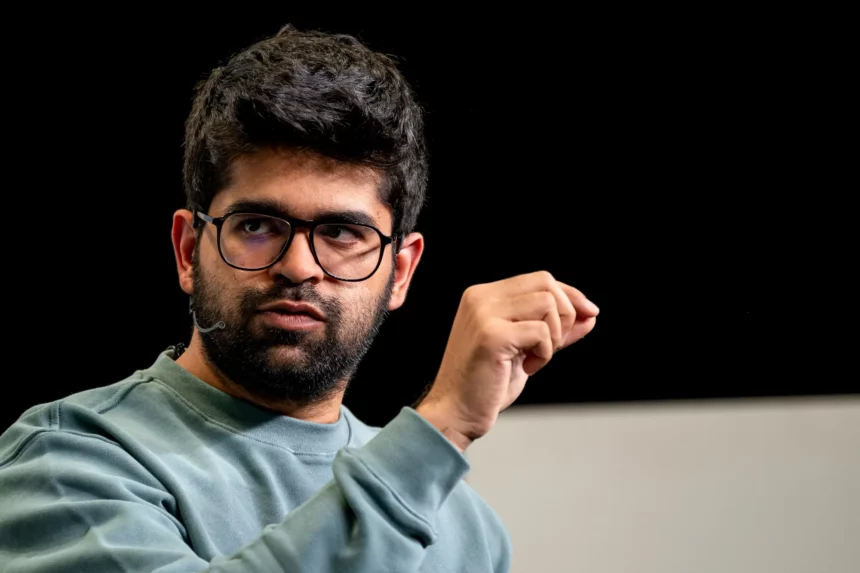
In a candid and sharp Reddit “Ask Me Anything” session, Perplexity AI CEO Aravind Srinivas offered a blunt take on Google’s position in the rapidly evolving AI-powered browser race, questioning the tech giant’s ability to adapt as the industry moves toward agent-driven, ad-free user experiences. As Google continues to bet on its ad-based business model, Srinivas argued this approach could soon be its greatest vulnerability, framing Google as a “giant bureaucratic organisation” unable to fully embrace the future of AI browsing without jeopardising its revenue streams.
Google’s Ad Dependency vs AI Agent Future
Srinivas emphasised that as AI agents become capable of handling everything from browsing to comparison and summarisation, the traditional ad-centric business model will face unprecedented challenges. He noted that Google’s strategy revolves around generating ad revenue by encouraging users to click through search results, an approach incompatible with AI agents performing these tasks automatically for users. According to Srinivas, Google will face “business model constraints” in allowing AI agents to perform user tasks while maintaining high ad revenue streams, stating the company will eventually have to “embrace one path and suffer, in order to come out stronger.”
Despite Google’s own ventures into AI-powered browsing with “Project Mariner,” Srinivas believes the company is slowed by its dependence on legacy monetisation strategies, making its progress reactive rather than pioneering. He suggested Google’s inability to pivot quickly is due to its organisational structure, describing it as weighed down by “too many decision-makers and disjoint teams,” hindering innovation and adaptability.
Perplexity’s Bet on Ad-Free AI Browsing
Perplexity has stepped directly into the competitive ring with its AI-native browser, Comet, launched on July 9. The browser, currently in an invite-only phase for Perplexity premium users, is designed to let AI handle the heavy lifting – from searching to summarising – so that users can focus on decisions rather than managing multiple tabs and distractions. The premium plan is priced at $200 per month or $2,000 per year, with a free version planned for wider rollout. Recently, Airtel announced it would offer its customers in India complimentary access to the Perplexity Pro subscription for one year, giving Perplexity a strategic distribution advantage.
Srinivas highlighted that while Comet owes its foundation to Chromium, the open-source engine maintained by Google, Perplexity’s priorities are fundamentally different, focusing on users over advertisers. He also admitted the company initially underestimated user willingness to pay for an ad-free browsing experience but was encouraged by the strong early demand for Comet’s premium tier, proving that “people are ready to pay for utility and independence.”
The Perplexity CEO acknowledged that as Comet gains traction, larger players like Google will likely attempt to replicate its features, a common trajectory in the tech industry. At a Y Combinator event in June, Srinivas stated, “If your company is something that can make revenue on the scale of hundreds of millions of dollars or potentially billions, you should always assume a model company will copy it.” He further criticised Google’s “Project Mariner” as “similar but quite limited,” reflecting his belief that the tech giant’s innovations are driven by competition rather than a commitment to reshape user experiences proactively.
Perplexity’s head of communications, Jesse Dwyer, echoed this sentiment, noting that larger firms often “do everything they can to drown your voice,” raising concerns that “Browser War III” could end unfavourably for users if monopolistic practices persist. Despite the inherent risks, Srinivas remains firm on his vision for an internet where AI agents work to benefit users, not ad-driven profit models. His direct remark, “Enough of the monopoly of Google,” summarises Perplexity’s determination to challenge established norms and offer a cleaner, user-first browsing experience in the AI era.