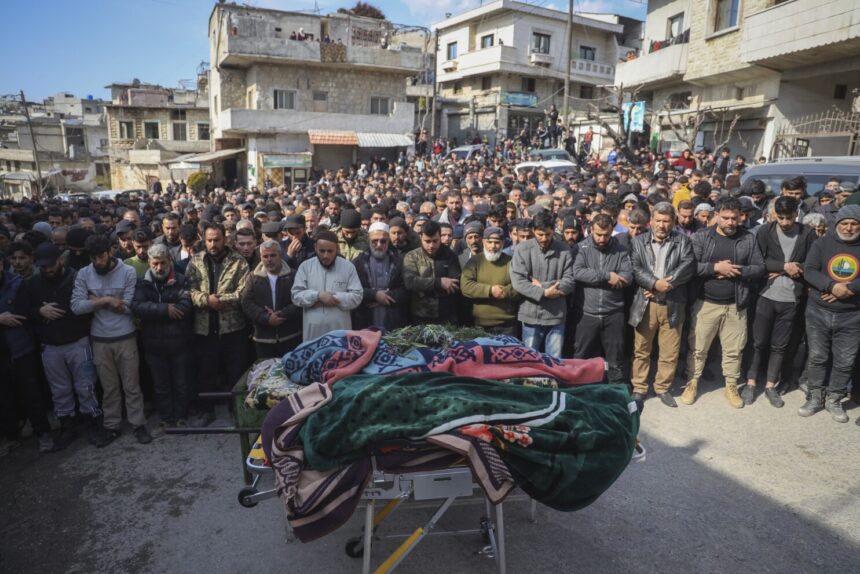
In southern Syria’s Sweida province, four days of relentless violence have left at least 516 civilians and fighters dead, exposing the fragile stability of a country already reeling from 14 years of conflict. Hospitals overflowed with the wounded and dead, while families fled their homes in fear as sectarian tensions between Druze and Bedouin communities escalated into widespread killings, field executions, and accusations of massacres on all sides.
Bodies Pile Up as Violence Spirals
Bahaa, a surgeon at the Sweida National Hospital, worked non-stop as casualties flooded in, many with gunshot wounds to the head, suggesting executions rather than random violence. Videos from inside the hospital showed hallways filled with bodies, body bags stacked in rooms, and corpses left outside due to the lack of space. Another doctor described the desperate measures taken, including rationing medicines to manage the overwhelming influx of the wounded, with the facility itself under siege as bullets and artillery fire rattled the walls.
The violence began from a local dispute between Bedouin tribes and Druze fighters, quickly spiraling as Syrian government forces intervened and clashed with Druze fighters resisting their entry into the province. The UK-based Syrian Observatory for Human Rights reported that among the dead were at least 86 Druze civilians executed by government fighters or allied militias, while three Bedouin civilians were killed by Druze fighters.
Sectarian Tensions Fuel Killings
The situation worsened on Tuesday when at least 15 unarmed people were killed inside a reception hall belonging to the prominent Radwan family in Sweida. Eyewitnesses recounted how gunmen in military fatigues stormed in while people were drinking coffee, opening fire without warning. Videos showed unarmed men lying in pools of blood, and relatives claimed that ambulances were blocked from reaching the wounded, ensuring their deaths from blood loss.
It remains unclear whether those responsible were government-affiliated forces or rogue militias, as witnesses described the attackers as wearing army fatigues but unable to confirm their allegiance. The uncertainty over who was committing the violence deepened mistrust among civilians, with some residents stating they could not distinguish between state security forces and armed groups.
As fighting took on a sectarian character, videos emerged on social media of government fighters posting hate speech against the Druze community, tearing down images of Druze spiritual leaders, and boasting over dead bodies. In one instance, a government soldier filmed himself brandishing a machete, declaring intentions of sectarian violence, while another gloated over the bodies of Druze victims, referencing the community’s spiritual leader.
Despite a ceasefire declared on Wednesday, violence continued intermittently. Rumors of new Bedouin attacks led to a mass exodus from Sweida, with families fleeing and transporting the bodies of relatives killed in the violence. In one heartbreaking video, a young civil engineer documented a woman’s body with her throat slit, showing the unending brutality of the conflict.
Syrian President Ahmad al-Sharaa, who came to power after the ousting of Bashar al-Assad, condemned the violence and promised accountability while pledging to protect minority communities. However, his reassurances have done little to ease tensions, with sectarian mistrust reaching new heights. The government claimed it was adhering to rules of engagement to protect civilians, but reports and videos from the ground painted a grim picture of continuing violence and retribution.
As the fighting leaves the province shattered, many residents are questioning the purpose of continued bloodshed after years of war. Bahaa, the surgeon, captured the sentiment of many Syrians when he reflected on the endless cycle of violence: “So many of those killed were anti-Assad from the beginning. All of these killings after 14 years of war. What’s the point?”
The recent wave of violence has underscored the deep sectarian fractures within Syria, posing a serious threat to the unity of the state. With ongoing displacement, fear, and unresolved grievances, Sweida’s tragedy reflects the continuing humanitarian crisis in Syria, where promises of accountability and peace remain overshadowed by the grim reality on the ground.