On the tenth day of the Parliament Budget Session, political tensions escalated in the Lok Sabha as opposition parties prepared a no-confidence motion targeting Speaker Om Birla. The proceedings highlighted growing disagreements over procedural matters, parliamentary conduct, and the leadership role of the Speaker in managing the House. The conflict intensified after repeated adjournments of debates and demands for Congress leader Rahul Gandhi to be allowed to speak during the ongoing session, which began following the presentation of the Union Budget on February 1, 2026.
Opposition Moves No-Confidence Motion Against Speaker Om Birla
The opposition’s preparations to table a no-confidence motion against Lok Sabha Speaker Om Birla mark a significant development in the ongoing Budget Session. Reports indicate that 103 Members of Parliament have signed the notice to move the resolution, citing alleged partiality and procedural mismanagement during the conduct of the House. Sources note that the motion is being filed under Article 94(c) of the Constitution, which allows the Lok Sabha to remove its Speaker if a majority of members deem it necessary.
The no-confidence motion comes amid repeated disruptions in House proceedings, largely connected to the demands of Congress MPs and the Leader of the Opposition, Rahul Gandhi. The opposition has raised concerns over procedural fairness, claiming that the Speaker has not adequately addressed requests for debate and discussion before budget-related proceedings. In particular, the Congress and allied parties allege that the Speaker’s management of the House has sidelined opposition voices, limiting opportunities for scrutiny and meaningful participation.
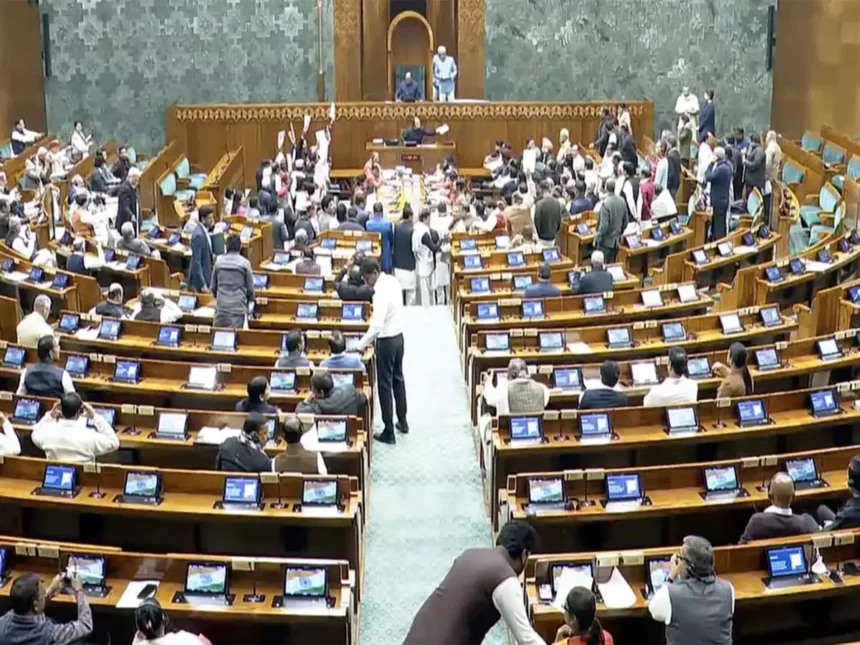
On the ninth day of the session, February 9, Lok Sabha proceedings lasted merely 13 minutes due to ongoing protests by opposition members. Rahul Gandhi repeatedly demanded the floor, highlighting that he had approached the Speaker an hour before the proceedings, who allegedly assured him that he would be allowed to speak prior to budget discussions. Despite this, Gandhi claimed that he was prevented from addressing the House, prompting renewed tensions and temporary suspension of several MPs.
Union Parliamentary Affairs Minister Kiren Rijiju has publicly commented on the opposition’s move, stating that while they can submit the motion, they lack the numerical strength to succeed. He emphasized that under India’s parliamentary norms, the government has sufficient support to retain the Speaker, indicating that the motion is unlikely to result in the removal of Om Birla. Rijiju also noted that opposition MPs had violated parliamentary decorum by climbing the Speaker’s table and attempting to enter the Speaker’s chamber, actions that led to the suspension of eight members.
The no-confidence motion is being closely watched not only for its procedural implications but also for its political symbolism. The opposition’s push to remove the Speaker is framed as an assertion of parliamentary accountability and as a response to perceived marginalization of dissenting voices during key sessions. Meanwhile, the government’s narrative highlights the importance of maintaining order, procedural integrity, and adherence to constitutional provisions regarding the Speaker’s tenure.
Rahul Gandhi’s Demands and Parliamentary Disruptions
A central element of the ongoing tensions has been the repeated insistence by Rahul Gandhi to be allowed to speak on the floor of the Lok Sabha. According to reports from February 9, opposition members repeatedly demanded that the Leader of the Opposition be heard, leading to adjournments of debates and interruptions of routine proceedings. Rahul Gandhi stated that he had approached the Speaker an hour prior to the scheduled proceedings, seeking permission to speak before the discussion on the President’s address and subsequent budget debate. Gandhi highlighted that the assurance given by the Speaker was not honored, prompting confrontations within the House.
The repeated adjournments underscore the high-stakes nature of parliamentary management during the Budget Session. Gandhi and opposition leaders argue that blocking their participation undermines the spirit of parliamentary democracy, which is meant to allow diverse viewpoints and debates on matters of national policy. Opposition sources have claimed that the Speaker’s conduct reflects a lack of neutrality, particularly in matters related to the presentation and discussion of the Union Budget, which forms a critical part of legislative oversight.
The government, represented by parliamentary affairs officials, maintains that while opposition members have the right to raise concerns, there are procedural limits to ensure orderly conduct in the House. Minister Rijiju emphasized that the temporary suspensions of MPs were appropriate responses to breaches of decorum, including attempts to physically obstruct proceedings and unauthorized entry into restricted areas of the House. These actions, the government asserts, compromise parliamentary traditions and cannot be justified, even when politically motivated.
The tension surrounding Rahul Gandhi’s demand to speak also coincides with the aftermath of the Union Budget presentation on February 1, 2026. Following the budget, the next scheduled step is the discussion on the President’s address, which serves as a precursor to detailed budget debates. Opposition leaders argue that denying them adequate opportunity to participate in this discussion limits their ability to hold the government accountable and to question policy choices effectively. The resulting gridlock has generated media coverage, public debate, and commentary on the balance between procedural rules and the rights of MPs to express dissent.
The combination of the no-confidence motion and repeated disruptions illustrates the complexity of parliamentary politics during critical sessions. Opposition parties are navigating both procedural frameworks and political strategy, while the government is managing majority control and enforcing adherence to rules. This dynamic has made the tenth day of the Budget Session a focal point for national attention, highlighting the interaction between constitutional provisions, parliamentary practice, and partisan politics.
The repeated short sessions and adjournments have raised questions about the functioning of the House and the ability of MPs to fulfill their legislative duties. While procedural mechanisms exist for raising grievances and tabling motions, the interplay between opposition protests and government management has created a highly charged atmosphere. Analysts note that such episodes often influence public perception of parliamentary democracy and may have ramifications for political discourse leading up to elections and subsequent legislative sessions.
The opposition’s reliance on Article 94(c) is legally sound, providing a mechanism for accountability and removal of the Speaker if a majority votes in favor. However, given the current numerical distribution in the Lok Sabha, it is widely acknowledged that the motion is unlikely to succeed. Nevertheless, the filing of the notice by 103 MPs demonstrates a coordinated effort by opposition parties to highlight concerns and to assert the principle that parliamentary authority must be exercised with fairness and impartiality.
During the February 10 session, attention is expected to focus not only on procedural arguments related to the no-confidence motion but also on debates over the conduct of the Speaker, the rights of opposition members, and the enforcement of decorum within the House. The ongoing situation reflects broader questions about how parliamentary democracy balances majority rule with protections for minority voices, the role of the Speaker in mediating disputes, and the interaction between political strategy and legislative procedure.
Rahul Gandhi’s repeated interventions and insistence on speaking before budget discussions also illustrate the significance of timing and access within parliamentary practice. Opposition leaders assert that procedural delays and adjournments have hindered their ability to participate meaningfully in budget debates, potentially affecting legislative scrutiny of government proposals. The Speaker’s responses, including temporary suspensions and refusals to allow immediate speeches, highlight the tension between authority and accountability in parliamentary governance.
The series of events over the past two days, including the filing of the no-confidence motion and procedural confrontations, has brought national attention to the functioning of the Lok Sabha. Media coverage and commentary have focused on the balance between orderly proceedings and the democratic right to dissent. Political analysts suggest that such incidents are indicative of the evolving nature of parliamentary politics, where procedural maneuvers, public statements, and party strategy intersect with constitutional responsibilities and governance expectations.
The situation also underscores the importance of dialogue and negotiation between the Speaker, ruling party members, and opposition MPs. While the opposition has expressed frustration over perceived marginalization, the government emphasizes adherence to established rules, majority authority, and maintenance of decorum. This dynamic has created a highly charged environment, with both symbolic and practical implications for the management of parliamentary sessions, the conduct of debates, and the expression of dissent.