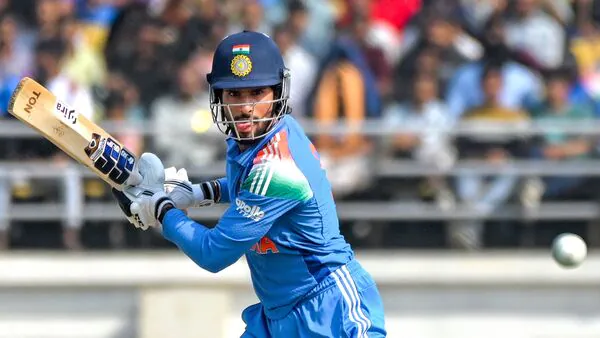
India’s preparations for the upcoming five-match Twenty20 International series against New Zealand have been disrupted by the confirmed absence of young middle-order batter Tilak Varma from the first three matches, forcing the team management to reassess combinations and strategy at a crucial stage of the season. The left-hander, who has quickly established himself as a dependable presence in India’s T20 setup, has been sidelined following a recent abdominal surgery and will remain under medical supervision as he continues his recovery. His unavailability comes at a time when the series is viewed as an important testing ground for India’s evolving T20 plans, particularly with major international tournaments on the horizon.
The announcement has drawn attention not only because of Varma’s growing importance to the side, but also because of the delicate balance India seeks to maintain between player fitness and competitive readiness. With the first three matches scheduled closely together, the team has opted for caution, prioritising long-term health over immediate returns. While Varma is expected to recover fully, his absence from the early part of the series introduces an element of uncertainty into India’s batting order and places additional responsibility on other players to fill the gap.
India will face New Zealand in a series that promises to be competitive, given the visitors’ reputation for adaptability and discipline in the shortest format. For the Indian camp, the focus now shifts to managing the transition smoothly, ensuring that the absence of a key batter does not disrupt momentum or clarity of roles. The situation also highlights the broader challenges teams face in modern cricket, where packed schedules and high physical demands require constant vigilance over player workload and recovery.
Injury, surgery and the careful road to recovery
Tilak Varma’s exclusion from the opening matches stems from an abdominal issue that required surgical intervention earlier this month. Following the procedure, he was discharged from hospital and advised a structured rehabilitation programme aimed at ensuring complete recovery before a return to competitive cricket. Medical staff have outlined a phased plan that includes rest, gradual physical conditioning and a cautious reintroduction to batting and fielding activities once clearance is granted.
The decision to rule him out of the first three T20Is reflects a conservative approach designed to avoid any risk of aggravation. In high-intensity formats like T20 cricket, even minor physical discomfort can compromise performance and increase the likelihood of further injury. By allowing Varma adequate time to heal, the team management hopes to preserve his long-term availability rather than rushing him back for short-term gains.
Throughout his recovery, Varma remains under close observation, with regular assessments guiding each stage of his rehabilitation. Only after he demonstrates full fitness and comfort during training will a decision be taken on his participation in the remaining two matches of the series. This approach mirrors a growing emphasis in international cricket on player welfare, where medical teams and selectors work closely to balance competitive needs with sustainable career management.
For Varma himself, the period away from the field represents a temporary pause in what has been a rapidly ascending career. Known for his composure under pressure and ability to adapt to different match situations, he has become a valued option in India’s middle order. His injury, while unfortunate, also underscores the physical toll that modern cricket places on players who operate across formats and competitions. The focus now is firmly on recovery, with the understanding that a fully fit return will serve both player and team better in the long run.
Impact on India’s T20 plans and team balance
Varma’s absence from the initial fixtures inevitably influences India’s tactical approach to the series. As a left-handed batter capable of anchoring an innings or accelerating when required, he has provided balance and flexibility to the batting lineup. Without him, the team management must consider alternative combinations that can replicate, at least in part, his role in the middle overs.
The series against New Zealand offers India an opportunity to evaluate depth and adaptability within the squad. Other batters may be asked to step into unfamiliar roles, testing their ability to handle pressure and maintain scoring momentum. While India possesses considerable bench strength, the challenge lies in achieving the right mix of stability and aggression, particularly against an opponent known for exploiting lapses in execution.
From a broader perspective, the situation also feeds into India’s long-term planning in the T20 format. With major tournaments approaching, each bilateral series serves as a chance to refine combinations, identify reliable performers and build cohesion. Varma’s temporary absence may accelerate experimentation, offering insights into how the team functions under altered circumstances and which players can shoulder additional responsibility.
The response from fans and analysts has been largely supportive, recognising the importance of prioritising health over immediate participation. Varma’s progress will continue to be closely monitored, not only for his potential return later in the series but also as an indicator of how effectively injury management protocols are being implemented. His eventual comeback, once fully fit, is expected to strengthen India’s options as the season progresses.
As India prepares to take on New Zealand without one of its promising young batters, the emphasis remains on adaptability, depth and collective effort. The series will test the team’s ability to adjust plans without compromising performance, while Varma’s recovery journey highlights the careful balance between ambition and prudence in elite sport. In the evolving landscape of international cricket, such moments serve as reminders that success is built not only on talent, but also on patience, planning and respect for the demands placed on players’ bodies.