Former Union Home Minister P. Chidambaram has strongly criticised Prime Minister Narendra Modi for attributing remarks to him regarding India’s military response after the 2008 Mumbai attacks, describing the Prime Minister’s statement as “terribly wrong” and “imagined words.” His sharp response came a day after PM Modi indirectly referred to P. Chidambaram’s interview about how the then UPA government handled Pakistan in the aftermath of the terror strikes. The exchange has reignited a political war of words between the ruling party and the opposition, with the 26/11 terror attacks once again becoming a flashpoint in national security discourse.
P. Chidambaram denies PM Modi’s claim on military action after 26/11
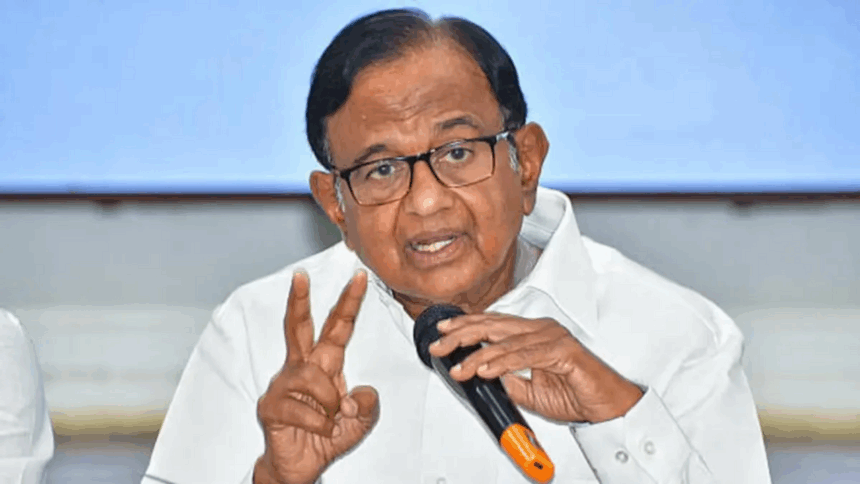
P. Chidambaram, who served as India’s Home Minister in the immediate aftermath of the Mumbai terror attacks, issued a strong rebuttal through a detailed post on X, criticising the Prime Minister for misquoting him. “I quote the Hon’ble PM’s words: ‘…has said India was ready to respond after 26/11, but because of the pressure exerted by some country, then Congress govt stopped India’s armed forces from attacking Pakistan.’ The statement has three parts, and each one of them is WRONG, terribly WRONG. It is disappointing to read that the Hon’ble Prime Minister of India imagined the words and attributed them to me,” P. Chidambaram wrote.
His post made it clear that he was rejecting the interpretation made by PM Modi. P. Chidambaram added that he had never made the statement in the form it was being presented in political speeches. His clarification came after PM Modi, speaking at a public event on Wednesday, launched a sharp attack on the Congress, accusing the party of showing “weakness” after the terror strikes and allowing foreign pressure to dictate national security decisions.
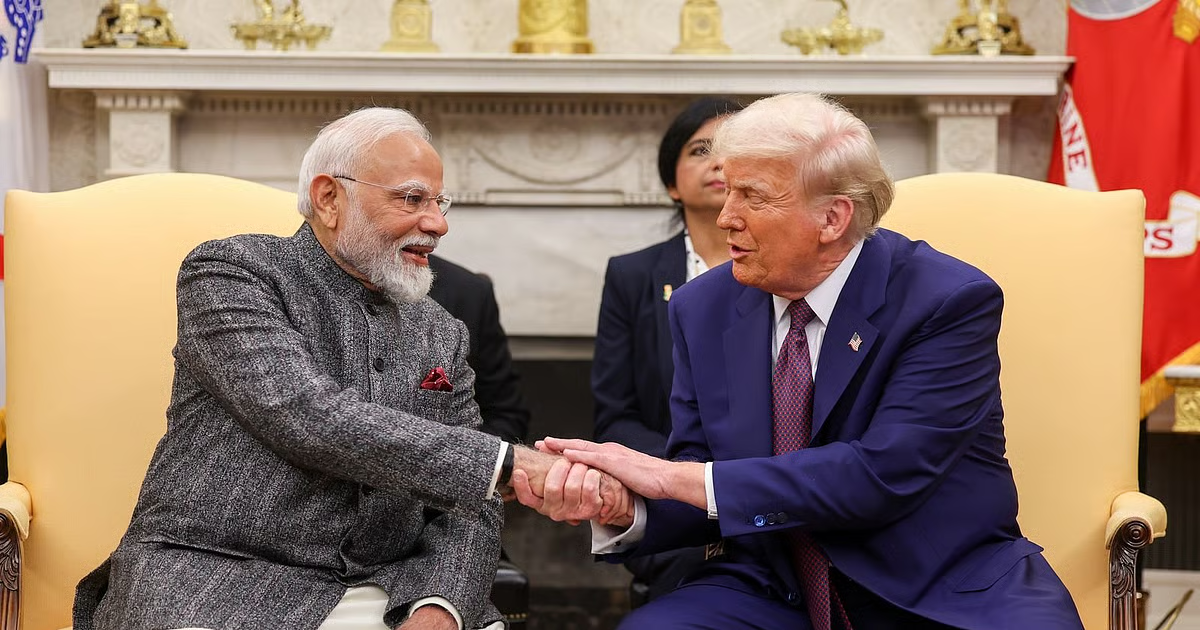
During his speech, PM Modi said, “Mumbai is not only the economic capital but also one of the most vibrant cities in India. That is why terrorists chose Mumbai for a major attack in 2008. But the Congress government in power then sent a message of weakness, a message of surrender to terrorism.”
Without naming P. Chidambaram directly, PM Modi added, “Recently, a senior Congress leader, who even served as the former Home Minister, revealed big things in an interview. He claimed that after the Mumbai attack, our forces were ready to attack Pakistan. The entire country wanted the same. But according to that Congress leader, the then government stopped India’s forces from taking action due to pressure from another country. Congress must tell us who made this decision under foreign pressure, who played with Mumbai’s national sentiment. The country has the right to know. This weakness of Congress strengthened the terrorists and weakened national security, a price repeatedly paid by the country in lives lost.”
P. Chidambaram’s counter reflects the sharp political divide over how the UPA government responded to one of India’s deadliest terror attacks. The incident killed 166 people and left deep scars on the nation’s security psyche. It also defined India’s foreign policy stance and security posture for years to come.
Political blame game over 26/11 resurfaces amid PM Modi’s attack on Congress
The Prime Minister’s remarks were linked to an interview given by P. Chidambaram on October 1 during an ABP News podcast. In that interview, P. Chidambaram had described the decision-making process in the wake of the 26/11 attacks, including how international diplomatic pressure, especially from the United States, shaped India’s position at the time. He had said that the government weighed all options, including military response, but ultimately adopted a diplomatic path under intense international scrutiny.
P. Chidambaram had assumed charge as Home Minister on November 30, 2008, a day after the terror strikes, following the resignation of Shivraj Patil. His tenure began at one of the most volatile moments in India’s security history. The 26/11 attacks, orchestrated by Pakistan-based terrorist organisation Lashkar-e-Taiba, involved multiple gunmen entering Mumbai via the sea route and targeting several high-profile locations, including the Taj Mahal Palace Hotel, Chhatrapati Shivaji Maharaj Terminus, Leopold Cafe, and the Nariman House Jewish center.
The attacks lasted for three days, leaving the entire country in shock. In the days that followed, the UPA government faced enormous pressure from both domestic political circles and the international community. While many within India demanded swift military action against Pakistan, the United States and several other countries urged restraint to avoid escalation.
In his recent remarks, P. Chidambaram explained that India had considered multiple response options. According to him, “The United States, particularly, had mounted tremendous diplomatic pressure on India not to retaliate militarily. The government of the day had to weigh not just the immediate emotional reaction but the long-term strategic consequences of a war.” This was, he insisted, a strategic decision—not a sign of weakness.
Prime Minister Modi, however, used the issue to target the Congress leadership, questioning why the government allegedly “bowed to foreign pressure.” He argued that the party’s response sent the wrong message to terrorist groups, emboldening them and weakening India’s security position. “The country has the right to know,” PM Modi declared, escalating the political debate.
The Congress party has since defended its position, reiterating that the UPA government had taken significant diplomatic and security measures post-attack, including presenting extensive evidence to the international community on Pakistan’s involvement. The government’s efforts led to several global sanctions on terror groups operating from Pakistani soil and sustained diplomatic pressure on Islamabad.
Political observers note that this is not the first time the 26/11 attacks have been brought into electoral or political debates. The event remains one of the most emotionally charged episodes in modern Indian history, often resurfacing in political rhetoric, especially during periods of heightened security discussions or elections.
The current exchange between PM Modi and P. Chidambaram underscores how past national security crises continue to shape contemporary political discourse. PM Modi’s remarks were aimed at highlighting what he described as “Congress’s weak leadership,” while P. Chidambaram’s rebuttal sought to assert that the government of the time made a “calculated and strategic choice.”
P. Chidambaram’s public post has also sparked a larger conversation about political accountability, historical narratives, and the role of diplomacy versus military action in responding to terrorism. The debate comes at a time when national security remains a critical election issue, and both the ruling and opposition parties are trying to shape public perception around their respective security records.
The 26/11 terror attacks marked a turning point in India’s counter-terrorism strategy. In the years following the attack, the UPA government established the National Investigation Agency, strengthened coastal security, and expanded intelligence-sharing mechanisms. It also worked closely with the United States and other countries to isolate Pakistan diplomatically.
While PM Modi has consistently criticised the Congress for its handling of the crisis, Congress leaders have countered by pointing to the institutional reforms and international consensus built during that period. This tug of war over historical events is not only about past decisions but also about shaping narratives of strength, security, and national interest in the present.
As the political sparring intensifies, it underscores how deeply 26/11 remains etched in the national consciousness. It is not just an episode of terror but also a defining moment in India’s modern security and political history. The ongoing exchange between PM Modi and P. Chidambaram signals that the debate over how the UPA government responded to 26/11 is far from settled, and it will likely continue to shape political narratives in the months to come.