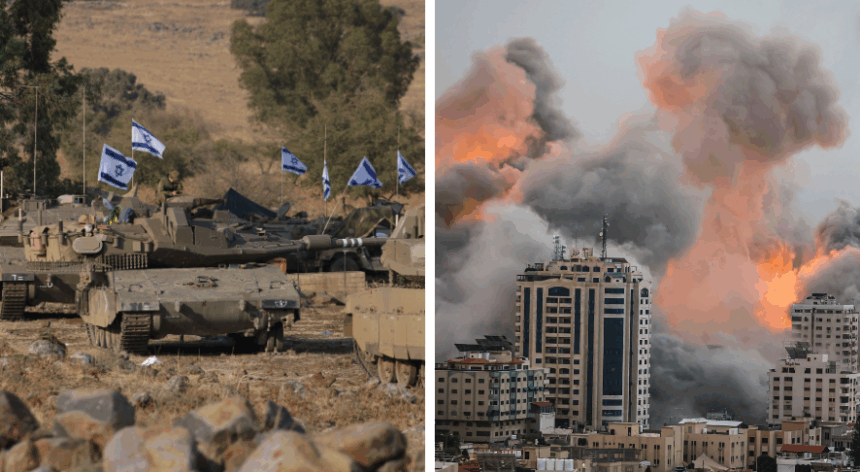
Since the announcement of a ceasefire framework between Hamas and Israel, several explosions have rocked Gaza, highlighting the fragile nature of peace efforts in the war-torn region. Despite the first phase of the ceasefire being agreed upon through indirect negotiations in Egypt, the violence has not completely ceased, demonstrating the challenges of enforcing a temporary truce amid deep-seated mistrust and ongoing military operations. The announcement of the ceasefire plan came a day after the second anniversary of Hamas militants’ cross-border attack that had sparked Israel’s large-scale assault on Gaza, which has claimed tens of thousands of lives and left the region devastated. While international leaders hailed the agreement as a potential step toward reducing hostilities, the reality on the ground continues to be marked by explosions and intermittent strikes, underscoring the fragile nature of the ceasefire.
Explosions and Airstrikes Persist Despite Ceasefire Agreement
According to Gaza’s civil defense agency, several explosions have been reported throughout the territory since the announcement of the ceasefire plan, particularly in the northern regions of Gaza. Mohammed Al-Mughayyir, a senior official with the agency, described a “series of intense airstrikes” that struck Gaza City following the initial announcement. Despite the political breakthrough, the violence has underscored the difficulties in implementing the first stage of the ceasefire effectively. Local residents reported hearing loud blasts, while emergency services struggled to assess the damage and provide timely assistance to affected neighborhoods. The continuing explosions have raised concerns among international observers and humanitarian agencies that the ceasefire could collapse prematurely, much like previous attempts to broker peace in the region.
Earlier, US President Donald Trump announced that both Israel and Hamas had agreed to the first phase of his peace plan, designed to de-escalate hostilities and bring stability to Gaza. Speaking on Truth Social, Donald Trump expressed pride in the agreement, stating, “I am very proud to announce that Israel and Hamas have both signed off on the first Phase of our Peace Plan.” However, the announcement provided few details about the operational mechanisms of the ceasefire, leading analysts to caution that enforcement on the ground may face significant challenges. Historical context has shown that similar agreements in the past often faltered due to violations, misunderstandings, or the inability to manage localized clashes, and the current ceasefire appears no different in its vulnerability.
The announcement also came amidst ongoing scrutiny of the humanitarian crisis in Gaza, where prolonged military operations have devastated infrastructure, created severe shortages of essential supplies, and displaced thousands of residents. Humanitarian agencies continue to urge both sides to ensure safe corridors for civilians and the uninterrupted delivery of aid, particularly in densely populated areas where the risk of civilian casualties remains high. The presence of unexploded ordnance and intermittent shelling further complicates the prospects of a durable ceasefire, even as political leaders celebrate the initial agreement.
International Reactions and Local Celebrations Amid Fragile Peace
News of the agreement sparked reactions across Israel, Gaza, and the wider international community. Families of hostages in Israel celebrated the announcement with fireworks, expressing relief at the prospect of their loved ones’ eventual release. In Gaza, residents welcomed the ceasefire with cautious optimism, hoping for a pause in the relentless cycle of violence and destruction. Abdul Majeed abd Rabbo, a resident of the southern city of Khan Younis, said, “Thank God for the ceasefire, the end of bloodshed and killing. I am not the only one happy, all of the Gaza Strip is happy, all the Arab people, all of the world is happy with the ceasefire and the end of bloodshed.” His words reflected the hopes of millions who have endured the humanitarian consequences of the two-year-long conflict.
The first stage of Donald Trump’s 20-point framework, which emerged from indirect talks in Egypt, is designed to halt hostilities temporarily, release hostages, and create conditions for broader diplomatic engagement. If fully implemented, the agreement could represent the closest either side has come to halting a conflict that has escalated into a regional crisis, involving multiple countries such as Iran, Lebanon, and Yemen. Analysts have noted that the successful execution of the ceasefire would also be a major foreign policy achievement for the US President, who has long sought to resolve high-profile international conflicts but has struggled to deliver tangible outcomes in previous peace efforts, both in Gaza and regarding the ongoing war in Ukraine.
Despite cautious optimism, international observers have expressed concern over the potential fragility of the ceasefire. Questions remain about how both sides will handle potential violations, enforce withdrawal commitments, and manage ongoing tensions in urban areas where militant activity and civilian populations are intertwined. Previous ceasefires in Gaza have often broken down due to misunderstandings, sporadic attacks, or the inability of mediators to exert control over all factions involved. Therefore, while celebrations and relief are evident, the ground reality remains unpredictable, and the potential for renewed violence persists.
The timing of the agreement also carries symbolic significance. It coincides with the second anniversary of Hamas’s cross-border attack on October 7, which had triggered Israel’s intensive military response. The conflict that ensued left over 67,000 people dead, destroyed critical infrastructure, and created a prolonged humanitarian crisis. The first phase of the ceasefire, although limited, is seen as a critical opportunity to halt the escalation and prevent further loss of life. Local authorities and international mediators have emphasized that the success of the framework depends not only on formal declarations but also on the immediate cessation of hostilities and robust monitoring mechanisms to ensure compliance.
In addition to the human toll, the conflict has reshaped the political and strategic landscape of the region. Israel’s military operations, Hamas’s resistance, and the involvement of neighboring countries have deepened regional tensions and complicated efforts to broker lasting peace. International leaders, including European and Arab nations, have welcomed the ceasefire as a step toward reducing violence, urging both parties to honor their commitments and expand the framework into a more permanent agreement. Humanitarian organizations continue to highlight the urgent need for aid delivery and civilian protection, emphasizing that any lapse in compliance could exacerbate the already dire situation on the ground.
For residents of Gaza, the initial stage of the ceasefire has brought a rare moment of hope. The prospect of a temporary halt in fighting has allowed families to reunite, children to play outside more freely, and medical facilities to stabilize their operations. Nevertheless, the ongoing explosions serve as a stark reminder that the peace agreement is fragile and that the risk of renewed conflict remains high. Both Israeli and Palestinian authorities face immense pressure to demonstrate commitment to the ceasefire while navigating the complex web of internal and external political pressures.
In Israel, the announcement of the ceasefire plan also prompted widespread attention among the general public and policymakers. Families of hostages celebrated the news, setting off fireworks and expressing cautious optimism about the possibility of their loved ones returning home safely. For Israel, the ceasefire represents an opportunity to consolidate security gains, manage international scrutiny, and project a diplomatic stance that emphasizes a willingness to engage in negotiated solutions.
The agreement, brokered by the United States and Qatar, underscores the ongoing importance of international mediation in the conflict. Mediators have highlighted that while the first stage is a crucial step, the larger challenge lies in sustaining momentum, addressing contentious issues, and laying the groundwork for subsequent phases that could eventually lead to a broader, durable peace. Analysts have emphasized that the success of the framework will be evaluated not only by the reduction of immediate hostilities but also by the ability of both parties to engage constructively in diplomatic processes and confidence-building measures.
While Donald Trump’s announcement has drawn international attention and local celebrations, the continued explosions in northern Gaza highlight the limitations of ceasefire agreements in conflict zones characterized by fragmented authority and persistent mistrust. Humanitarian experts caution that without rigorous monitoring and enforcement, the ceasefire may collapse, leading to renewed escalation and further casualties. Local authorities have called for calm and vigilance, urging residents to remain alert while hope for peace cautiously takes hold.
The complex political dynamics underlying the Israel-Hamas conflict, combined with regional involvement and historical grievances, make any ceasefire inherently fragile. Past efforts have repeatedly demonstrated that temporary agreements can be undermined by spoilers, miscommunication, or actions by extremist factions on either side. Therefore, while the first phase of Donald Trump’s plan is being celebrated, analysts remain wary of the potential for renewed conflict and emphasize the need for continued diplomatic engagement, transparency, and robust mechanisms to manage violations.
Amidst the ongoing humanitarian crisis, local communities in Gaza continue to face significant challenges. Damage to housing, healthcare facilities, and essential infrastructure has left many without basic services, compounding the difficulty of implementing a ceasefire. International aid agencies have stressed the importance of ensuring that humanitarian relief reaches those most in need, particularly in areas most affected by ongoing airstrikes and explosions. The interplay between political agreements and on-the-ground realities underscores the critical importance of enforcing ceasefires effectively to prevent further loss of life and to provide a window for broader reconciliation.
As the ceasefire enters its initial stage, both sides remain under scrutiny from international actors and local populations alike. The ability of Israel and Hamas to adhere to the agreement will likely determine whether this phase serves as a stepping stone toward broader peace or collapses under the weight of residual tensions and sporadic violence. While celebrations and cautious optimism provide a momentary reprieve, the ongoing explosions demonstrate that the path to lasting peace in Gaza remains fraught with challenges, requiring sustained commitment, robust oversight, and continuous diplomatic engagement.
Overall, the initial phase of the ceasefire in Gaza, while symbolically significant, remains fragile. Explosions reported since the agreement highlight the challenges of enforcing peace in a highly volatile environment. The success of the ceasefire will depend on both sides honoring their commitments, the effective delivery of humanitarian aid, and the ability of mediators to maintain momentum toward a more comprehensive and lasting peace in the region.