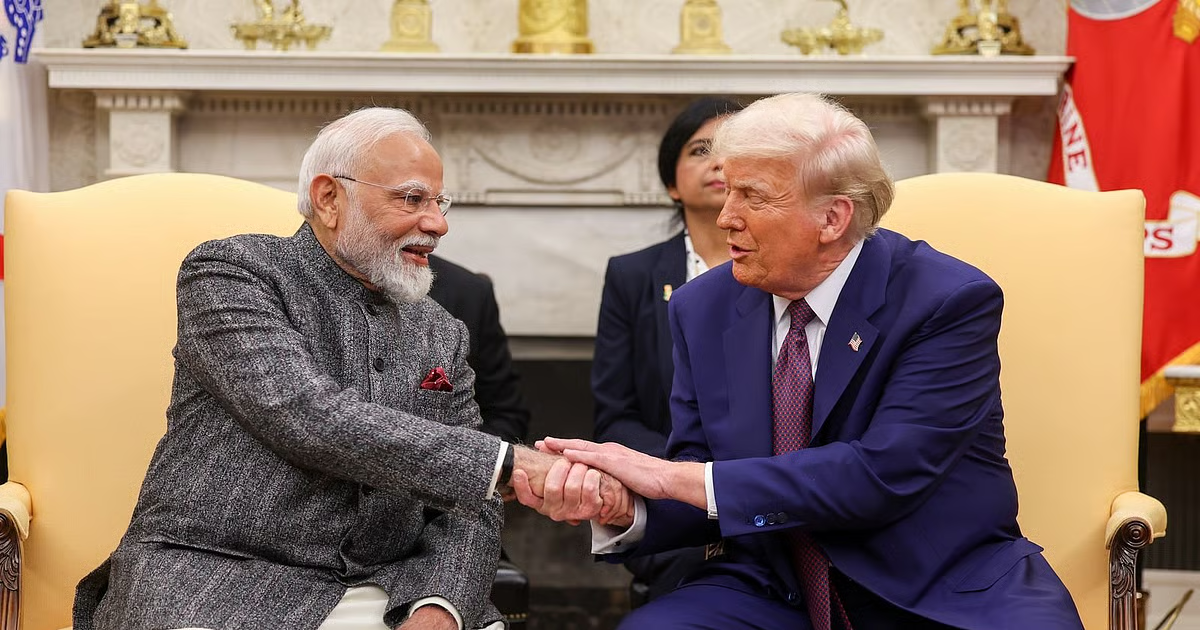
Prime Minister Narendra Modi has welcomed the first phase of US President Donald Trump’s peace plan between Israel and Hamas, calling it an important step toward long-term peace in the region. His statement came hours after a major diplomatic breakthrough was announced, marking the most significant development in the Gaza conflict in nearly two years. PM Modi also praised the leadership of Benjamin Netanyahu, expressing optimism that the deal will ease the humanitarian crisis in Gaza, secure the release of hostages, and create a foundation for regional stability.
PM Modi’s Statement Reflects India’s Backing for Diplomatic Peace Initiatives
Prime Minister Modi welcomed the announcement of the initial stage of the Donald Trump peace framework between Israel and Hamas, which includes a ceasefire and the release of hostages. In a post on X, PM Modi said, “We welcome the agreement on the first phase of President Donald Trump’s peace plan. This is also a reflection of the strong leadership of PM Benjamin Netanyahu.” His remarks underscored India’s continued support for diplomatic efforts aimed at de-escalating conflicts and restoring humanitarian conditions in conflict zones.
The Prime Minister further emphasized that the release of hostages and increased humanitarian assistance would bring much-needed relief to the people in Gaza and could pave the way for lasting peace. India has consistently maintained a balanced diplomatic approach, supporting Israel’s right to security while advocating for humanitarian relief and a peaceful resolution in the Palestinian territories. PM Modi’s statement aligns with this long-held position, signaling India’s endorsement of any constructive step toward peace in the Middle East.
The announcement of the deal came just hours after Donald Trump confirmed that both Israel and Hamas had accepted a US- and Qatar-brokered agreement to release hostages and initiate a phased troop withdrawal. The United States and Qatar played critical roles as mediators in facilitating the initial phase of negotiations, which aims to ease tensions and address immediate humanitarian concerns.
The conflict in Gaza has drawn global attention, with widespread calls for a ceasefire and humanitarian aid. The Donald Trump administration’s initiative, according to analysts, could represent the most serious push toward de-escalation in years. It has already been met with cautious optimism from multiple stakeholders, including European and Arab nations that have called for the protection of civilians and the start of a political process that leads to lasting peace.
A Breakthrough in a War That Redefined the Middle East
Israel and Hamas have agreed to pause hostilities in Gaza and release hostages and prisoners under the framework put forward by the Donald Trump administration. The contours of the deal have been confirmed by both sides separately. News of the agreement triggered an emotional wave across Israel and Gaza. In Tel Aviv, families of hostages gathered in public squares, setting off fireworks and celebrating the prospect of their loved ones returning home. In Gaza, many Palestinians clapped and cheered at the news, hoping for an end to years of relentless bloodshed and devastation.
The agreement comes at a time when the war, now entering its third year, has caused unprecedented destruction and suffering. The conflict began with Hamas’s cross-border attack on Israel on October 7, 2023, an assault that claimed the lives of more than a thousand Israelis and triggered Israel’s massive military response. Since then, the war has resulted in tens of thousands of Palestinian deaths, the destruction of most of Gaza’s infrastructure, and widespread displacement.
The breakthrough was reached in indirect talks held in Egypt, where negotiators managed to finalize the first stage of Donald Trump’s 20-point peace framework. This phase includes a temporary ceasefire, the release of 20 living hostages held by Hamas, and a partial withdrawal of Israeli troops from most of Gaza. According to people familiar with the matter, Hamas intends to release all 20 hostages within days, while the Israeli military will initiate the withdrawal process soon after.
The deal marks the biggest diplomatic opening in the conflict since it began. It is seen as a carefully calibrated first step rather than a comprehensive solution. Nonetheless, many observers believe this is the closest the two sides have come to ending the war since the beginning of hostilities.
The war’s impact has gone far beyond Israel and Gaza. It has drawn in countries like Iran, Yemen, and Lebanon, reshaping alliances and triggering new conflicts in the region. Israel’s international isolation has grown over time, with several countries criticizing the scale of its military operations. At the same time, Israel has defended its actions as necessary for its security, rejecting allegations of genocide that have emerged from international forums and protests around the world.
The Donald Trump peace framework aims to address both immediate humanitarian needs and long-term political challenges. However, uncertainty remains over some of the most contentious aspects of the proposal. Key among these are questions surrounding the disarmament of Hamas, the future governance of Gaza, and the security guarantees that Israel seeks. Negotiations on these issues are expected to be far more complex and drawn out.
For now, the agreement has been met with a rare moment of cautious optimism across the region. Israeli hostage families, who have been protesting for months, expressed relief and hope that this will lead to the safe return of their loved ones. In Gaza, war-weary civilians see the deal as a potential pause in the cycle of violence and destruction that has defined their lives for nearly two years.
Global reaction to the announcement has been swift. Several European leaders welcomed the development as a critical step toward peace. In the Arab world, governments issued statements calling for the deal to be fully implemented and expanded into a more permanent ceasefire. International organizations have also urged both parties to allow humanitarian aid to flow freely and ensure the protection of civilians.
The agreement’s timing is also symbolic. It was reached just one day after the second anniversary of the October 7 attacks that plunged the region into turmoil. The war has since reshaped the political and security landscape of the Middle East, with ripple effects across the globe. As of now, both Israel and Hamas appear to be more open to a diplomatic track than at any point in the last two years, though their underlying positions remain deeply entrenched.
While this initial phase offers hope, significant challenges lie ahead. Questions of who will govern Gaza after the Israeli withdrawal, how Hamas will respond to pressure for disarmament, and how long the ceasefire can hold are unresolved. Analysts caution that without a clear political roadmap, the ceasefire could falter, plunging the region back into violence.
Nevertheless, this moment represents a diplomatic opening that few believed possible just months ago. For the people of Gaza and Israel, exhausted by years of war and bloodshed, even a fragile peace offers a glimpse of relief. For regional and global powers, it is a reminder that political will and negotiations, however difficult, can still shift the course of history.
Prime Minister Modi’s endorsement of the agreement underscores India’s commitment to supporting peace efforts in volatile regions. India’s diplomatic position has long favored dialogue, humanitarian assistance, and stability. As the deal moves toward implementation, New Delhi is likely to continue backing international efforts aimed at bringing lasting peace to the Middle East.
The road ahead remains uncertain, but the current development stands as the most significant step toward ending one of the most devastating conflicts of recent years. The Donald Trump-brokered deal, if fully realized, could reshape the trajectory of the war and offer a chance, however fragile, for a future defined not by conflict, but by the prospect of peace.