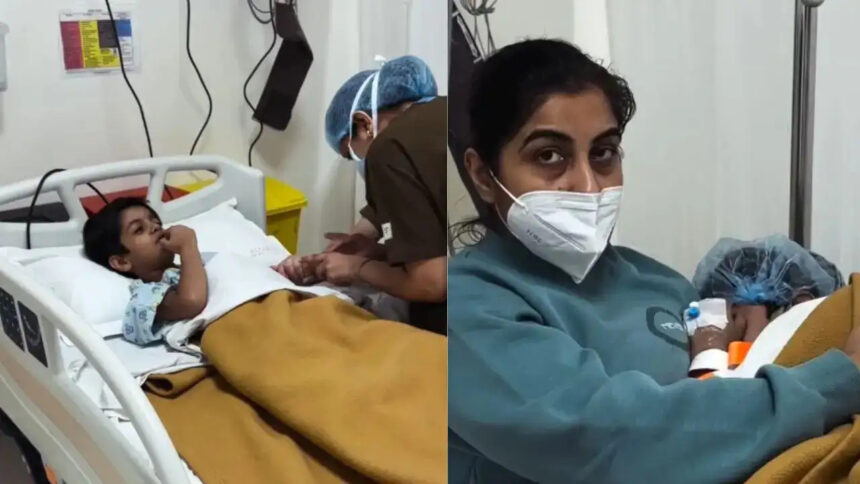
A mother’s emotional social media post has reignited concerns about worsening air pollution in Noida after she claimed that hazardous air quality led to severe respiratory and allergic complications in her five-year-old child, ultimately requiring surgery at a hospital in Gurugram. The claim comes as Noida’s Air Quality Index (AQI) continues to hover in the ‘very poor’ category, posing a serious public health challenge for residents, particularly young children. According to medical experts, rising pollution levels are increasingly linked not only to respiratory illnesses but also to cardiovascular and heart-related complications among children.
The mother, who shared details of her child’s condition online, stated that pollution-triggered health issues escalated rapidly, leaving the family in distress. Her post—widely shared across platforms—described how the child developed persistent breathing difficulties and intense allergy episodes that did not subside with routine treatment. The family eventually opted for surgical intervention following a medical consultation in Gurugram.
Speaking to local media, the child’s father confirmed that symptoms had been worsening over weeks. “He was struggling to breathe normally, especially during outdoor exposure. Allergies were becoming frequent, and inhalation-based relief was temporary,” the father said, describing the ordeal prior to hospitalisation.
Health experts monitoring pediatric cases in the NCR region have noted a sharp spike in pollution-induced ailments among children. Physicians warn that prolonged exposure to particulate matter, toxic airborne pollutants, and smog increases inflammation, weakens immunity, and may put stress on developing organs, including the heart.
A senior pediatric specialist from a Gurugram-based hospital explained the medical trend. “Pollution is no longer causing just coughing or asthma flare-ups. We are now diagnosing more pediatric patients with cardiac stress and heart-related complications, especially those already sensitive to allergens,” the doctor said, underscoring the gravity of the situation.
Environmental agencies continue to flag Noida among the most affected cities in the National Capital Region. While authorities have introduced episodic restrictions on outdoor construction activity and dust control drives, residents and health experts argue that the pace of remediation does not match the severity of exposure-related health risks.
Public health advocates are calling for stricter pollution monitoring around schools, expanded pediatric health advisories, emergency medical response planning during high-pollution days, and long-term urban air quality action that prioritises vulnerable populations.
As winter smog thickens across northern India, families in Noida are increasingly reporting symptoms ranging from wheezing and skin rashes to allergic reactions and shortness of breath. The mother’s post has humanised what medical data has long warned—children are paying the highest health cost for a crisis that continues to worsen.