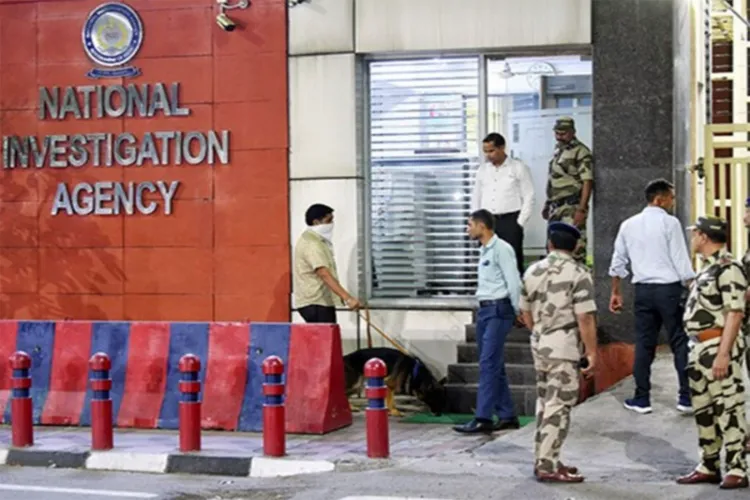
The investigation into the Kaliachak incident in West Bengal’s Malda district has entered a critical phase as the National Investigation Agency continues its probe for the third consecutive day. The case, which involves the shocking confinement of judicial officers by a mob, has triggered national concern over law and order, institutional security, and possible premeditated conspiracy. With teams actively questioning individuals and reconstructing the sequence of events, the probe is steadily widening in scope and intensity.
The incident itself—where several judicial officers were allegedly held hostage for hours inside the Kaliachak-II Block Development Office—has already drawn scrutiny from the Election Commission and the Supreme Court. The seriousness of the situation prompted authorities to hand over the investigation to the NIA, reflecting the gravity of the breakdown in administrative control. As the probe unfolds, it is becoming increasingly clear that the episode was not an isolated outburst but may have deeper organisational and political undercurrents.
Multi-Layered Investigation Focuses on Conspiracy and Administrative Lapses
NIA teams have been conducting extensive questioning of individuals linked to the incident, including drivers, local officials, and witnesses present at the scene. Investigators have revisited key locations such as the Kaliachak-II BDO office and nearby police stations to piece together a detailed timeline of how the situation escalated.
The agency is particularly focused on determining whether the violence and confinement of judicial officers were pre-planned. Preliminary findings suggest that a large group had assembled in advance, raising questions about coordination and intent. The formation of barricades and the targeting of the officers’ convoy have further strengthened suspicions that the attack may have been orchestrated rather than spontaneous.
A key figure in the investigation is the alleged mastermind, identified as Mofakkerul Islam, who has been taken into custody. Authorities are examining his role in mobilising the crowd and inciting the agitation. Reports indicate that multiple cases have been registered against him, and further interrogations are expected to uncover the extent of his involvement.
The NIA is also scrutinising potential lapses on the part of local administration and police. Questions are being raised about why adequate security measures were not in place despite the presence of judicial officers and the volatile nature of the situation. The Supreme Court has already expressed concern over the apparent failure to provide timely protection, indicating the seriousness of the institutional breakdown.
Political Fallout and National Implications of the Malda Incident
The Malda incident has quickly evolved into a major political flashpoint, with leaders across the spectrum weighing in on its implications. The episode has been cited as evidence of deteriorating law and order, particularly in the context of upcoming elections in West Bengal. At the same time, competing political narratives have emerged, with accusations and counter-accusations shaping public discourse.
Beyond politics, the incident raises fundamental questions about the safety of judicial and administrative personnel in sensitive environments. The fact that officers engaged in official duties could be held hostage for hours points to significant vulnerabilities in the system. It also highlights the challenges faced by authorities in managing large, emotionally charged gatherings, especially when linked to contentious issues such as electoral processes.
The NIA’s investigation is expected to play a crucial role in establishing accountability and restoring confidence in institutional mechanisms. By examining not only the actions of those directly involved but also the broader context in which the incident occurred, the agency aims to provide a comprehensive understanding of the events.
At the same time, the case underscores the importance of coordination between central and state agencies in handling crises of this nature. The deployment of a multi-member NIA team and the ongoing questioning of suspects reflect a concerted effort to address the situation with urgency and precision.
As the probe continues, the focus remains on uncovering the full extent of the conspiracy, identifying all those responsible, and ensuring that such incidents do not recur. The developments in the coming days are likely to have significant implications not only for the individuals involved but also for the broader political and administrative landscape.