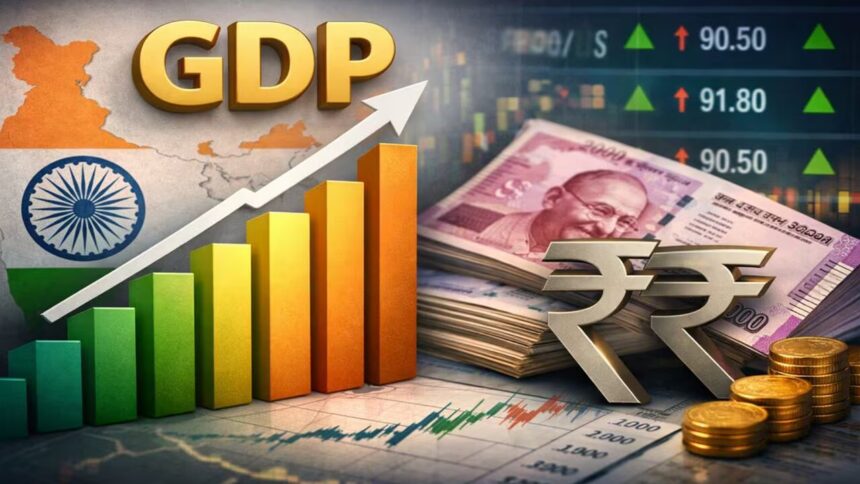
A fresh downgrade in India’s economic outlook by Moody’s Ratings has brought renewed attention to the growing impact of global geopolitical tensions on domestic growth prospects. The agency has cut India’s GDP growth forecast for FY27 to 6%, down from its earlier estimate of 6.8%, citing the escalating conflict in West Asia and its cascading effects on inflation, consumption, and investment. This revision marks a notable shift in sentiment at a time when India was widely expected to remain the fastest-growing major economy.
The downgrade reflects a broader concern that external shocks—particularly disruptions in energy supply chains—are beginning to weigh on India’s otherwise strong macroeconomic fundamentals. As a country heavily dependent on imported crude oil and liquefied petroleum gas, India is especially vulnerable to fluctuations triggered by geopolitical instability. The West Asia conflict, involving key energy-producing regions, has already pushed up global oil prices, adding pressure on domestic inflation and fiscal balances.
Rising Energy Costs and Inflation Threaten Growth Momentum
At the heart of Moody’s downward revision lies the surge in energy prices and its ripple effects across the economy. India imports nearly 85% of its crude oil requirements, making it highly sensitive to global price movements. With the ongoing conflict disrupting supply chains, fuel and transportation costs are rising, which in turn affects almost every sector—from manufacturing to agriculture.
Moody’s has warned that these pressures could lead to higher inflation, projecting it to average around 4.8% in FY27. This uptick in inflation is not limited to fuel alone; it is expected to spill over into food prices due to India’s reliance on imported fertilisers and logistics networks that depend heavily on fuel. As costs rise, household budgets come under strain, leading to weaker consumption—one of the key drivers of India’s economic growth.
The agency also highlighted the risk of supply disruptions, particularly in LPG shipments, which could result in shortages and further inflate costs for households. These challenges create a complex scenario for policymakers, who must balance inflation control with the need to sustain growth.
In addition to inflationary pressures, higher energy prices increase the government’s subsidy burden, particularly on fuel and fertilisers. This could strain fiscal resources, limiting the government’s ability to invest in infrastructure and social programs that typically support economic expansion.
Consumption, Investment, and Policy Outlook Under Pressure
Beyond inflation, Moody’s has pointed to weakening demand and investment activity as key factors behind the revised growth forecast. Elevated input costs are expected to dampen private consumption, as households cut back on discretionary spending. At the same time, businesses may delay or scale down investment plans due to higher operational costs and uncertain market conditions.
Industrial activity is also likely to slow, as rising costs affect production and profitability. This could have a cascading impact on employment and income levels, further reinforcing the slowdown in consumption. The moderation in gross fixed capital formation—an important indicator of investment—signals that the economy may face challenges in maintaining its growth momentum.
Monetary policy is another critical factor in this evolving scenario. With inflation risks rising, the Reserve Bank of India may adopt a cautious stance, potentially keeping interest rates elevated or tightening them further if necessary. While such measures are essential to control inflation, they can also restrict credit growth and investment, adding another layer of complexity to the economic outlook.
Despite these headwinds, India’s economy retains certain strengths. Strong domestic demand, ongoing infrastructure spending, and a relatively stable financial system provide a cushion against external shocks. However, Moody’s assessment suggests that these strengths may not be sufficient to fully offset the impact of prolonged geopolitical tensions.
The revision also aligns with a broader trend among global institutions, many of which have trimmed their growth projections for India in light of rising uncertainties. While the country is still expected to grow at a relatively healthy pace compared to other major economies, the downgrade signals a more cautious outlook for FY27.
At a strategic level, the situation underscores the importance of energy security and diversification. Reducing dependence on imported fuel and investing in alternative energy sources could help mitigate the impact of future shocks. In the near term, however, the focus remains on managing the immediate challenges posed by rising costs and maintaining economic stability.