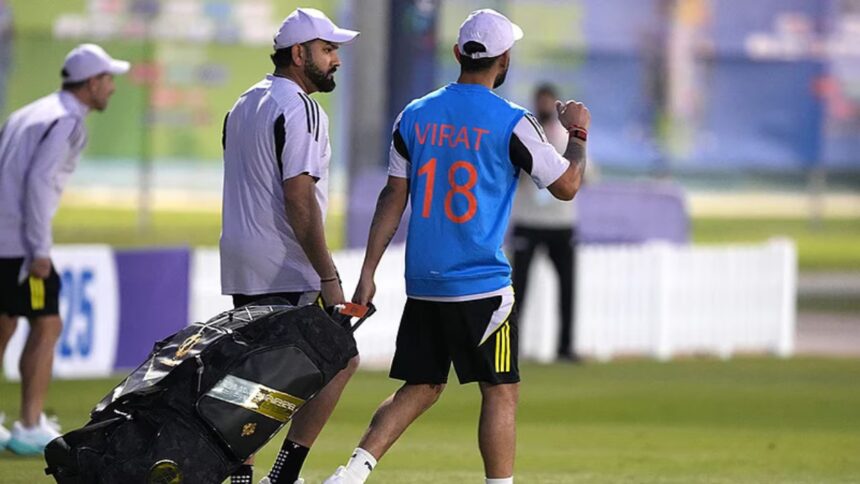
The Board of Control for Cricket in India (BCCI) has announced a significant overhaul of its central contracts list for the 2025–26 season, marking a shift in policy and financial structure that reflects recent retirements, player performances, and evolving priorities for both men’s and women’s cricket. Notably, the A+ category has been removed, and senior players Rohit Sharma and Virat Kohli have been officially demoted to Grade B contracts, signaling both a recognition of career transitions and a realignment of resources to reward consistent performers and emerging talents. This move comes as the BCCI balances financial considerations, performance-based incentives, and strategic planning to maintain competitive depth in Indian cricket across formats. The announcement also coincides with the inclusion of new names in central contracts, adjustments in the women’s system, and the ongoing prioritization of players who have demonstrated sustained excellence in international cricket.
Men’s Cricket Contracts and the Demotion of Senior Stars
The men’s central contracts list for 2025–26 reflects the changing landscape of Indian cricket, particularly in light of retirements from Test and T20I cricket by some of the sport’s most celebrated figures. Rohit Sharma and Virat Kohli, who have been mainstays of India’s batting line-up for over a decade, have been officially moved to Grade B. This demotion is partly a recognition of their reduced participation in international formats while still acknowledging their contributions to Indian cricket over the years. Test and ODI captain Shubman Gill retains his place in the topmost Grade A category, highlighting his leadership role and continued excellence. Similarly, pace spearhead Jasprit Bumrah and all-rounder Ravindra Jadeja remain in Grade A, though reports suggest that technically they have been downgraded in designation, while their remuneration remains unaffected, with Bumrah continuing to receive Rs. 7 crore per year.
The total number of players awarded central contracts has decreased from 34 last year to 30 this season, indicating a more selective approach by the BCCI. Grade B now consists of 11 players, including Rohit Sharma, Virat Kohli, Washington Sundar, KL Rahul, Mohammed Siraj, Hardik Pandya, Rishabh Pant, Kuldeep Yadav, Yashasvi Jaiswal, Suryakumar Yadav, and Shreyas Iyer. Grade C contains 16 players, encompassing a mix of emerging talents such as Abhishek Sharma and experienced contributors like Axar Patel, Tilak Varma, Rinku Singh, Shivam Dube, Sanju Samson, Arshdeep Singh, Prasidh Krishna, Akash Deep, Dhruv Jurel, Harshit Rana, Varun Chakaravarthy, Nitish Kumar Reddy, Sai Sudharsan, Ravi Bishnoi, and Ruturaj Gaikwad.
The rationale for the demotion of senior players extends beyond age or retirement alone; it also reflects the BCCI’s emphasis on current performance, fitness, and availability across formats. Players like Bumrah, Jadeja, and Gill continue to exemplify the balance between experience and current form, justifying their high-category designations. Other notable absentees from central contracts include Mohammed Shami, Ishan Kishan, Rajat Patidar, and Sarfaraz Khan, highlighting the competitive nature of selection and financial prioritization within Indian cricket.
The changes also underscore the BCCI’s intention to reward multi-format versatility and maintain a financially sustainable structure that aligns player compensation with actual participation and impact. The reduction in total contract holders and removal of the A+ category reflects a strategic decision to redistribute resources in a manner that incentivizes emerging talent while maintaining fairness for established performers who are transitioning out of active formats. This approach is designed to balance legacy recognition with forward-looking investment in the next generation of Indian cricketers.
Women’s Cricket Contracts and Continued Evolution of the Central System
Parallel to the men’s contract adjustments, the BCCI has made notable revisions to the women’s central contracts for 2025–26, reinforcing its commitment to nurturing talent and sustaining competitive standards in Indian women’s cricket. Harmanpreet Kaur and Smriti Mandhana continue to occupy the top Grade A positions, reflecting their sustained leadership and performance in international cricket. In a significant update, Jemimah Rodrigues has been promoted from Grade B to Grade A, signaling recognition for her consistent contributions and emerging influence on the field. Conversely, Deepti Sharma has moved out of Grade A, highlighting the competitive environment and performance-driven nature of contract assignments.
Grade B for women’s cricket includes Renuka Thakur, Shafali Verma, Richa Ghosh, and Sneh Rana, while Grade C accommodates 13 players spanning established performers and emerging talent, including Radha Yadav, Amanjot Kaur, Pratika Rawal, Kranti Gaud, Uma Chetry, Arundhati Reddy, Sree Charani, Yastika Bhatia, Harleen Deol, Kashvee Gautam, G Kamalini, and Vaishnavi Sharma. The adjustments reflect not only performance considerations but also strategic planning to prepare a pipeline of players capable of contributing consistently at the highest levels.
The BCCI’s approach to the women’s central contracts mirrors its overarching philosophy in men’s cricket: balancing recognition for established players with strategic investment in younger talent. Financially, the three-tier structure remains consistent with prior seasons, with Grade A retainers valued at INR 50 lakh, Grade B at INR 30 lakh, and Grade C at INR 10 lakh. This structured approach incentivizes performance, ensures transparency in compensation, and provides clear progression pathways for emerging cricketers who aspire to play at the international level.
Through these adjustments, the BCCI has signaled a renewed focus on performance-based evaluation, strategic resource allocation, and long-term development, both for men’s and women’s cricket. The changes also reflect broader shifts in Indian cricket, where player transitions, international commitments, and evolving formats require adaptable financial and contractual frameworks. By emphasizing merit, potential, and contribution to team objectives, the central contracts system reinforces the BCCI’s role in shaping competitive cricketing structures while providing stability and motivation for players across the spectrum.
The demotion of iconic figures such as Virat Kohli and Rohit Sharma, though symbolic of their career phase changes, simultaneously celebrates their legacy while allowing room for emerging stars to claim central recognition and financial security. In the women’s game, elevation of players like Jemimah Rodrigues demonstrates a proactive approach to acknowledging growth and contribution, ensuring that young talent is nurtured within the central contracts ecosystem. The integration of performance, leadership, and developmental priorities underscores the BCCI’s strategic vision for sustaining excellence and competitiveness in Indian cricket across formats and genders.
By consolidating central contracts, aligning financial incentives with performance, and maintaining a meritocratic evaluation system, the BCCI continues to strengthen the professional framework for cricket in India. These measures aim to provide clarity, stability, and motivation for players while ensuring that the national team benefits from a pool of cricketers who are both capable and committed. As Indian cricket navigates evolving formats, international schedules, and domestic competitions, the restructured central contracts system serves as a critical tool for talent management, financial prudence, and long-term planning.
The 2025–26 contracts also reflect broader strategic considerations regarding player readiness, fitness management, and preparation for global tournaments. By balancing contractual incentives with real-world participation and performance metrics, the BCCI ensures that both men’s and women’s cricket maintains high standards while promoting sustainable career pathways for players. This realignment reinforces the board’s vision of creating a competitive, merit-based, and financially transparent cricketing ecosystem that supports national objectives while fostering individual growth.