New Delhi, January 14, 2026
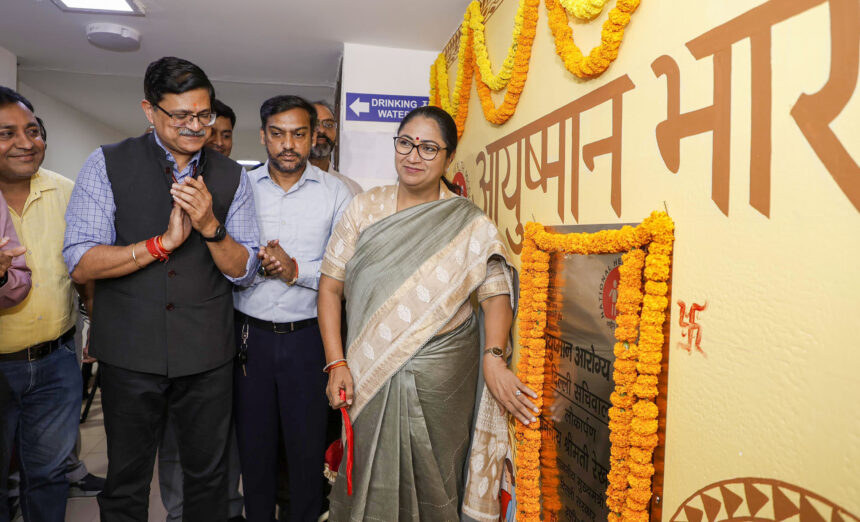
Strengthening Delhi’s primary healthcare network, Health and Family Welfare Minister Pankaj Kumar Singh on Wednesday inaugurated a newly constructed Ayushman Arogya Mandir in the Bhimnagari area of Malviya Nagar. The inauguration was part of a larger programme held on the occasion of Makar Sankranti, during which 81 new Ayushman Arogya Mandirs were dedicated to the public across the capital. With this expansion, a total of 319 Ayushman Arogya Mandirs have become operational in Delhi within just 11 months, marking one of the fastest developments in the city’s primary healthcare infrastructure.
The Bhimnagari Ayushman Arogya Mandir has been developed as a modern, fully equipped primary healthcare facility aimed at providing comprehensive medical services at the neighbourhood level. The centre will offer free medical consultations along with general OPD services, dental OPD, eye OPD, diagnostic testing, pharmacy services, medical counselling and vaccination facilities, including routine immunisation for children. In addition, the centre features a dedicated dental care unit, a yoga and wellness room, and a range of preventive healthcare services designed to promote long-term well-being among residents.
According to the Health Department, the Bhimnagari centre currently provides more than 100 types of in-house diagnostic tests. Plans are already in place to expand this capacity to over 200 diagnostic tests in the near future. This expansion is expected to significantly reduce the need for patients to visit large hospitals for basic investigations, thereby easing the burden on tertiary healthcare facilities and saving time and cost for patients.
Speaking at the inauguration ceremony, Health Minister Pankaj Kumar Singh said that the Bhimnagari Ayushman Arogya Mandir will also serve as the starting point for introducing Ayurveda-based Panchkarma therapy in Delhi’s primary healthcare system. He said Panchkarma services will be rolled out in a phased manner across Ayushman Arogya Mandirs throughout the capital. The initiative aims to provide affordable, effective and holistic treatment options at the local level, combining modern medicine with traditional systems of healthcare.
The minister said the Delhi Government is committed to delivering world-class primary healthcare services to every citizen. He added that the Panchkarma unit being developed at the Bhimnagari centre is envisioned to be among the best in the country, offering high-quality integrated healthcare services to people from all sections of society. He emphasised that the government’s focus is to ensure that residents do not have to stand in long queues outside major hospitals for common ailments and primary medical needs.
Pankaj Kumar Singh noted that the successful operation of more than 300 Ayushman Arogya Mandirs, along with the rapid expansion of diagnostic services, reflects the government’s effort to transform Delhi into a strong, reliable and people-centric healthcare capital. Strengthening primary healthcare, he said, is the most effective way to reduce pressure on large hospitals and improve overall health outcomes for the population.
Malviya Nagar MLA Satish Upadhyay, who was present at the event, praised the design and services of the Bhimnagari Ayushman Arogya Mandir. He said the centre has the potential to emerge as a model healthcare facility in Delhi due to its modern infrastructure, strong community outreach, dental care services, comprehensive OPD facilities and proposed Panchkarma treatments. He also urged the Health Minister to expedite the complete redevelopment of Madan Mohan Malviya Hospital and the establishment of a district-level diagnostic laboratory to further strengthen healthcare services in the area.
Upadhyay said Ayushman Arogya Mandirs are not merely primary health centres, but trusted spaces that cater to the everyday health needs of local residents. He noted that the availability of qualified doctors, diagnostic facilities, medicines and essential primary care services under one roof has made these centres an important pillar of community healthcare.
Reaffirming the government’s commitment, Health Minister Pankaj Kumar Singh assured that all necessary funds, staffing and infrastructure support would be provided to ensure that each Ayushman Arogya Mandir functions in accordance with the highest quality standards. He said maintaining consistency in service quality across all centres remains a top priority for the government.
Under the Ayushman Bharat–Pradhan Mantri Jan Arogya Yojana, around seven lakh Ayushman cards have already been issued in Delhi, enabling residents to access cashless treatment. With continuously expanding diagnostic capacity and the steady rollout of integrated healthcare services, the Delhi Government is moving rapidly towards its target of establishing 1,100 Ayushman Arogya Mandirs across the capital. The objective, officials said, is to ensure that every resident of Delhi has access to high-quality primary healthcare facilities close to their homes.