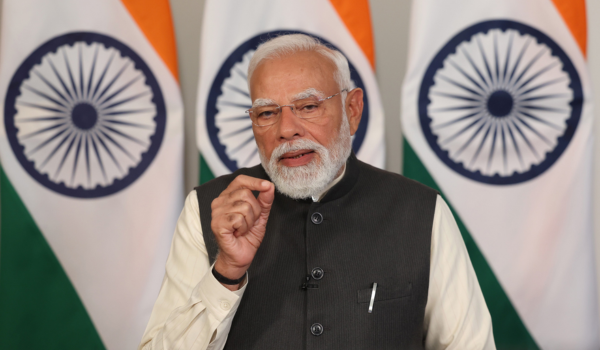
The Union Budget has emerged as a defining statement of India’s readiness to advance decisively toward developed-nation status, reflecting long-term preparation rather than short-term compulsion.
Prime Minister Narendra Modi has described the Union Budget as a clear expression of India’s collective aspiration to become a developed nation, underlining that the document reflects confidence built through sustained reforms and disciplined governance. In an extensive articulation of the government’s economic vision, he emphasised that the budget is not framed as a reaction to crisis or urgency, but as an outcome of years of groundwork, institutional strengthening, and strategic clarity. According to him, the country has reached a stage where ambition is matched by capacity, allowing policy choices to be driven by preparedness and inspiration rather than pressure.
The Prime Minister outlined that the coming decade will be decisive for India’s transformation and identified three overarching priorities that will guide governance and policy direction. These include the pursuit of deeper structural reforms, the strengthening of innovation ecosystems across sectors, and the simplification of governance to make institutions more responsive and citizen-centric. He asserted that these pillars are not isolated objectives but interconnected forces that together shape a resilient and competitive economy. The government’s emphasis, he noted, has consistently been on creating systems that empower citizens, encourage enterprise, and reduce friction in everyday economic activity.
According to the Prime Minister, the impact of reforms undertaken over the past decade is already visible in the lives of ordinary citizens. He referred to what he described as a “Reform Express,” suggesting that a steady flow of policy changes has improved access to services, reduced inefficiencies, and created new opportunities. From financial inclusion to digital governance, he argued that reforms have translated into tangible benefits rather than remaining abstract policy ideas. This, he said, has strengthened public trust and reinforced confidence in the country’s economic direction.
Defence modernisation, fiscal priorities, and national preparedness
A significant aspect of the Prime Minister’s remarks centred on national security and defence preparedness, which he described as essential foundations of a developed nation. He highlighted that India must remain constantly prepared to respond to evolving security challenges in an uncertain global environment. Drawing attention to recent operational experiences, he stated that the benefits of defence reforms carried out over the last decade have become increasingly evident, reinforcing the importance of sustained investment and institutional change in this sector.
The Prime Minister stressed that modernising the defence ecosystem is not merely a strategic choice but a national responsibility, particularly for a country whose global role is expanding. He pointed out that the Union Budget for 2026–27 has allocated ₹7.85 lakh crore to the defence sector, marking a 15 per cent increase over the previous year. This allocation, he noted, represents the largest share granted to any single ministry or department, underscoring the priority accorded to security and preparedness.
He explained that defence expenditure is not limited to military capability alone but has broader economic implications. Investments in indigenous defence manufacturing, research, and technology development stimulate domestic industry, generate employment, and reduce dependence on imports. According to him, reforms in defence procurement and production have encouraged private sector participation and innovation, helping to build a more self-reliant ecosystem aligned with contemporary strategic needs.
The Prime Minister also linked defence preparedness to fiscal discipline and long-term planning. He argued that consistent budgetary support reflects confidence in the country’s economic fundamentals and its ability to sustain high levels of public investment. Rather than viewing defence spending as a burden, he described it as a strategic investment that enhances stability, credibility, and national confidence.
Beyond defence, the Prime Minister reiterated that the budget reflects a broader philosophy of readiness. He stated that India is no longer operating in a mindset of scarcity or hesitation but is approaching policy decisions with assurance derived from institutional maturity. This approach, he said, allows the government to make bold choices while maintaining macroeconomic stability and fiscal responsibility.
Growth through women-led development, trade confidence, and private sector investment
Another central theme in the Prime Minister’s articulation was the role of women in shaping India’s development journey. He asserted that women will play the most decisive role in the creation of a developed India and that government initiatives are increasingly designed to empower them economically and socially. According to him, policies aimed at improving access to education, finance, entrepreneurship, and employment opportunities for women are not welfare measures alone but growth strategies that unlock the country’s full potential.
He emphasised that women-led development creates multiplier effects across families, communities, and the broader economy. By enabling women to participate more fully in economic activity, the country can achieve more inclusive and sustainable growth. The Prime Minister indicated that the budget reflects this understanding through continued support for schemes and initiatives that strengthen women’s agency and economic independence.
Turning to India’s external economic engagement, the Prime Minister highlighted the significance of political stability and predictability in restoring and sustaining investor confidence. He remarked that consistent governance and a clear policy direction have made India a reliable partner in global trade and investment. This, he said, has enabled the country to negotiate trade agreements from a position of strength rather than vulnerability.
The Prime Minister noted that stronger domestic manufacturing, a resilient services sector, and a growing MSME base have collectively enhanced India’s bargaining power in international trade negotiations. He explained that recent Free Trade Agreements are structured to expand market access for Indian enterprises, particularly MSMEs operating in sectors such as textiles, leather, chemicals, handicrafts, and gems. By opening new markets and reducing barriers, these agreements are intended to integrate Indian businesses more deeply into global value chains.
He contrasted this approach with earlier periods, alleging that economic mismanagement in the past had weakened India’s negotiating position on the global stage. According to him, reforms undertaken in recent years have restored confidence and credibility, allowing India to engage with the world on more equal terms. He reiterated that reform is not a slogan but a sustained commitment demonstrated through policy consistency and execution.
The Prime Minister placed particular emphasis on the role of the private sector in driving the next phase of economic transformation. He described private enterprise as a critical partner in the journey toward a developed India and called for a decisive and forward-looking response from industry. According to him, the next leap in growth will depend on the willingness of businesses to invest boldly in innovation, research and development, supply chains, and quality enhancement.
He urged the private sector to look beyond short-term margin protection and focus on building long-term capacity and global competitiveness. Investments in technology, skills, and infrastructure, he said, will be essential to position Indian firms as leaders rather than followers in global markets. The Prime Minister argued that the government has laid the foundation through reforms and policy support, and the onus now lies on private enterprise to seize the opportunity.
In his broader vision, the Prime Minister framed the budget as a reflection of national self-belief. He suggested that India has entered a phase where ambition is underpinned by institutional strength, fiscal capacity, and social consensus. The emphasis on reform, innovation, and simplified governance, he said, is designed to ensure that growth is not only rapid but also resilient and inclusive.
Throughout his remarks, the Prime Minister returned to the idea that becoming a developed nation is not a destination defined solely by economic indicators, but a process that involves confidence, preparedness, and collective effort. The Union Budget, in this sense, is presented as both a policy document and a statement of intent, signalling that India believes it is ready to assume greater responsibility and opportunity on the global stage.