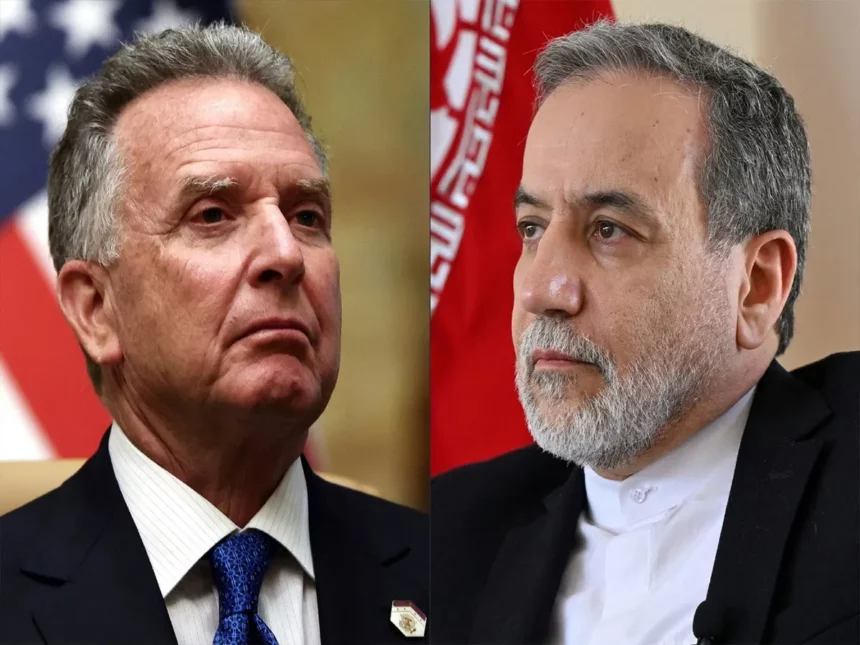
Iran and the United States are set to engage in a new round of nuclear negotiations in Rome this Saturday. The talks, which come under the looming shadow of President Donald Trump’s threat of military action, aim to resolve the longstanding dispute over Iran’s nuclear ambitions. The discussions will take place indirectly, with Iran’s Foreign Minister Abbas Araqchi and Donald Trump’s Middle East envoy Steve Witkoff negotiating through mediators from Oman. This follows a constructive first round in Muscat. Araqchi expressed optimism about the possibility of reaching an agreement, provided Washington remains realistic.
The Road to Diplomacy
During his arrival in Rome for the second round of talks, Araqchi reiterated that Iran believes an agreement is achievable if the United States approaches the negotiations with pragmatism. Tehran has tempered expectations, however, after certain officials hinted that sanctions could be lifted soon. Iran’s Supreme Leader, Ayatollah Ali Khamenei, has remained cautious, stating he is neither overly optimistic nor pessimistic about the outcome.
On the American side, President Donald Trump has reiterated his stance that Iran must be prevented from acquiring nuclear weapons. Donald Trump, who abandoned the 2015 nuclear agreement between Iran and six major powers in 2018, has since reimposed harsh sanctions on Tehran. Now back in office, Donald Trump has renewed his “maximum pressure” strategy on Iran, demanding that the country halt its production of highly enriched uranium, which the U.S. believes could be used for atomic weapon development.
Challenges Ahead
Tehran maintains that its nuclear program is peaceful, though it is open to negotiating certain limitations in exchange for the removal of sanctions. Iran seeks strong assurances that the U.S. will not backtrack again as it did in 2018. Since that time, Iran has exceeded the limits set in the 2015 deal, particularly in terms of uranium enrichment, producing quantities far beyond what is necessary for civilian energy purposes.
Iran has made it clear that certain red lines must not be crossed in negotiations. These include the refusal to dismantle its uranium-enriching centrifuges, halt enrichment entirely, or reduce its enriched uranium stockpile below the levels agreed in 2015. Tehran also insists that its defense capabilities, particularly concerning missiles, remain off the table for negotiation. Despite these challenges, both countries have expressed a commitment to diplomacy, although significant differences remain in their approach to resolving the issue.