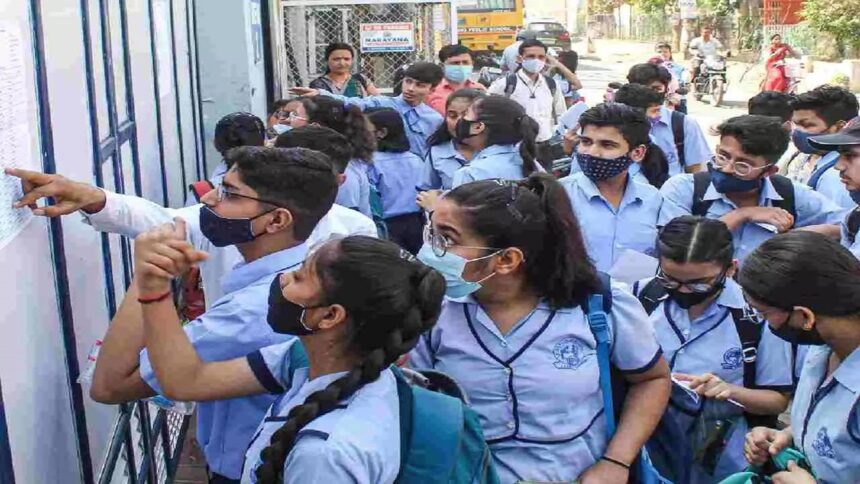
The Madhya Pradesh Board of Secondary Education (MPBSE) is set to begin the class 12 board examinations for the year 2026 from February 10. This annual examination, which will continue until March 7, is expected to witness the participation of over seven lakh students across Science, Commerce, and Humanities streams. As one of the most important milestones in a student’s academic journey, the MP Board class 12 exam serves not only as a measure of learning and understanding but also as a crucial determinant of future academic and career opportunities. With the countdown for the exams already underway, students are advised to familiarize themselves with the paper pattern, marking scheme, and effective last-minute strategies to maximize their performance. Given the scale of the examinations and the diversity of subjects, a well-planned approach is essential to maintain composure, manage time efficiently, and ensure a thorough understanding of key concepts while avoiding unnecessary stress. The MP Board exams hold significant value not just for academic progression but also in preparing students for competitive environments, higher education, and professional courses that follow after school completion.
MP Board Class 12 Exam 2026: Paper Pattern and Evaluation Scheme
The MP Board class 12 examination is structured to evaluate students’ understanding, analytical abilities, and application of knowledge across various subjects. The board has designed the paper pattern to include a mix of objective and subjective questions that test different levels of cognitive skills. The total marks for each subject have been fixed at 80, with questions distributed across objective-type, very short answers, short answers, long answers, and very long answers. The objective-type section, consisting of 20 questions each worth one mark, assesses students’ ability to recall factual knowledge and apply basic concepts quickly. The very short answer section includes five questions carrying two marks each, encouraging concise expression of concepts. Short answer questions, totaling sixteen and carrying three marks each, require students to elaborate with precision while maintaining clarity in thought. Long answer questions, numbering four and each worth five marks, allow students to demonstrate deeper understanding, reasoning, and critical evaluation. Finally, the very long answer section, which includes two questions worth eight marks each, challenges students to synthesize information, present comprehensive arguments, and provide structured, well-reasoned responses. Understanding this pattern enables students to allocate time effectively, prioritize high-weightage sections, and develop strategies to approach different types of questions with confidence. Familiarity with the distribution of marks and the expected depth of responses is crucial, particularly for students who aim to balance accuracy with speed during the examination.
The MPBSE emphasizes a uniform evaluation standard to ensure fairness and consistency across subjects and streams. By combining objective questions with subjective descriptive questions, the board aims to test not only rote learning but also analytical and reasoning abilities, which are essential for success in higher education. The balance between different question types ensures that students with varying strengths have the opportunity to score optimally. For example, students who excel in problem-solving can maximize scores in objective and short-answer sections, while those with strong writing and analytical skills can perform well in long and very long answer sections. This design also encourages students to adopt a holistic approach to preparation, integrating practice in time management, structured writing, and conceptual understanding. Awareness of these structural details in advance allows students to approach their exams strategically and reduces the likelihood of last-minute surprises that may impact performance.
Last-Minute Tips and Exam-Day Preparations for MP Board Class 12 Students
As the MP Board class 12 exams approach, last-minute preparation becomes a crucial aspect of ensuring readiness and confidence. Students are encouraged to consolidate learning using summaries, formula sheets, and revision notes, focusing on high-weightage topics that are likely to appear in the exams. Reviewing concise materials helps reinforce key concepts without overloading memory or creating confusion on the day before the exam. Adequate rest is equally important, with students advised to sleep at least six to eight hours before the examination to maintain alertness and concentration during long hours of writing. Proper rest not only supports cognitive function but also reduces anxiety, enabling a calm and focused approach.
On the day of the examination, students must arrive at the examination center at least 30 minutes early to avoid unnecessary stress and ensure timely verification of identification and admit cards. Carrying essential documents, including the original admit card, a valid school ID or government-issued photo ID, and approved stationery items such as blue or black ballpoint pens, pencils, erasers, and rulers, is mandatory for smooth entry and compliance with examination rules. Adhering to the prescribed school uniform requirements is necessary, as entry may be restricted for students not following the dress code. Following a disciplined routine, including a healthy breakfast, hydration, and mental relaxation exercises, helps students remain focused and manage exam-day anxiety effectively.
During the exam, students should prioritize clarity and structured presentation of answers, ensuring legibility and organized expression of ideas. Time management is critical, with an initial focus on high-mark questions followed by attention to sections that require concise responses. Objective-type questions should be attempted carefully to avoid errors, while subjective questions should reflect understanding, reasoning, and structured arguments. Students are advised against attempting entirely new chapters at this stage, as revisiting familiar concepts and practicing key problem areas provides a higher probability of accuracy and performance. Strategic review and careful planning of time allocation across sections ensure that all questions are attempted efficiently, minimizing incomplete or rushed answers.
The MP Board class 12 exams also provide an opportunity for students to apply test-taking strategies learned during preparation, including prioritization of questions, systematic problem-solving, and review of answers before submission. Maintaining calm and avoiding distraction during the examination ensures sustained performance across all subjects. Students should be mindful of instructions regarding negative marking, if applicable, and allocate time judiciously to minimize mistakes. Confidence, focus, and clarity in approach are as important as subject knowledge, reinforcing the holistic nature of examination preparedness.
The MP Board class 12 examinations for 2026 represent a critical academic milestone for over seven lakh students across Madhya Pradesh. The board has ensured a clear and structured examination pattern that balances objective and subjective assessment, reflecting a comprehensive evaluation of students’ knowledge, reasoning, and analytical skills. By understanding the paper pattern, adopting strategic last-minute preparation methods, and adhering to exam-day guidelines, students can approach the MPBSE class 12 exams with confidence and clarity. The careful planning, timely revision, and disciplined execution of strategies not only support better performance but also prepare students for future academic and professional endeavors. With these insights, students can navigate the exam season effectively, ensuring that their hard work and preparation culminate in rewarding results while managing stress and maintaining mental and physical well-being.