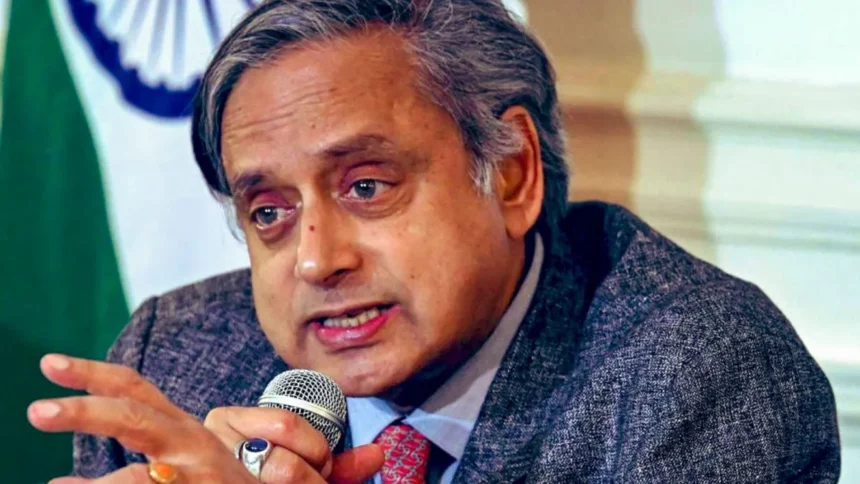
In recent developments in international diplomacy, Congress leader Shashi Tharoor has urged a measured response to US President Donald Trump’s apparent shift in tone regarding the US-India relationship, emphasizing that while Prime Minister Narendra Modi reacted quickly, careful, strategic work remains necessary to repair and strengthen bilateral ties. Shashi Tharoor’s remarks come in the wake of Donald Trump’s earlier controversial statements suggesting that the United States had “lost” India to China, which created waves in diplomatic circles and prompted a reassessment of America’s approach toward India. The subsequent tone softening, in which Donald Trump referred to Prime Minister Modi as a “friend” and downplayed concerns about the bilateral relationship, has been met with cautious optimism in India, yet Shashi Tharoor insists that the situation requires prudent attention, underscoring that real-world consequences for India must be addressed. The Congress leader’s observations highlight both the fluidity and fragility of international diplomacy, where statements by world leaders carry enormous weight and demand careful handling to maintain trust and strategic balance.
Donald Trump’s New Tone and Shashi Tharoor’s Call for Strategic Caution
Shashi Tharoor’s perspective on the latest shift in US-India diplomacy centers on the delicate nature of repairing the political and economic trust that has been affected by prior tensions. Speaking to ANI, Shashi Tharoor acknowledged the Prime Minister’s swift response to Donald Trump’s remarks and noted that India’s foreign affairs apparatus has underscored the foundational nature of the US-India strategic partnership. He described this comprehensive partnership as a “global strategic partnership,” emphasizing that it remains crucial even amidst fluctuating statements by the US President. According to Shashi Tharoor, while the positive tone is welcomed, it must be met with a “spirit of caution” because diplomatic relationships involve a complex web of agreements, understandings, and ongoing negotiations that cannot be instantly restored by mere rhetorical shifts.
Shashi Tharoor stressed that both governments must engage in “serious repair work” to ensure that previous frictions, such as trade disputes and policy differences, do not resurface in ways that could undermine bilateral cooperation. He pointed out that the rapidity of public statements, especially in the context of a high-profile international leader like Donald Trump, can create immediate implications for Indian businesses, trade agreements, and global perception. Shashi Tharoor noted that Indians on the ground experience the tangible effects of these statements, whether in terms of trade, tariffs, or diplomatic maneuvering, and thus any positive rhetoric must be substantiated with concrete policy measures to rebuild trust and stability.
Shashi Tharoor on Lutnick’s Remarks and the Broader Context of US Policy
Beyond Donald Trump’s tone, Shashi Tharoor also addressed comments made by US Commerce Secretary Howard Lutnick, who suggested that India might “say sorry” and make concessions to the United States in the context of trade and economic dealings. Shashi Tharoor strongly rejected this notion, asserting that India has conducted itself with maturity and prudence in its dealings, particularly in areas such as energy procurement and international trade relations. He highlighted that India had, at the US’s encouragement, engaged in purchasing Russian oil to stabilize domestic and global oil markets, demonstrating a level of strategic foresight and responsiveness that belied any suggestion of mismanagement.
Shashi Tharoor’s remarks further contextualized the selective nature of criticism leveled at India, pointing out that other major economies, including China, Turkey, and European countries, have engaged in larger-scale trade with Russia. He noted that these countries have contributed significantly more financial resources to Russia than India has, yet the American narrative seemed to single out India. Shashi Tharoor argued that such selective targeting reflected flaws in US policy and was neither warranted nor justified, emphasizing that India’s actions were measured, responsible, and aligned with global energy and economic realities.
The broader backdrop to these comments includes ongoing trade tensions between the United States and India, which have intensified in recent years. Measures such as the imposition of a 50% tariff on Indian goods by Donald Trump’s administration, combined with a series of public anti-India statements by White House officials on social media and television, strained the bilateral relationship. These actions not only affected economic exchanges but also complicated strategic dialogues on regional security, defense collaboration, and technology partnerships. In this context, Shashi Tharoor’s advocacy for caution and deliberate diplomatic effort serves as a reminder that recovery from strained relations requires patience, strategic planning, and clear communication at multiple levels of government.
Shashi Tharoor emphasized the importance of understanding the cumulative effect of public statements on India’s international standing and domestic interests. He suggested that while the change in Donald Trump’s rhetoric provides an opportunity to recalibrate and mend ties, it is essential to maintain vigilance. Both governments must work collaboratively to translate positive diplomatic signals into actionable agreements that ensure stability, mutual respect, and forward-looking cooperation. Shashi Tharoor’s emphasis on measured diplomacy underscores the fact that relationships between nations, particularly those with significant geopolitical stakes like the US and India, cannot be managed solely through verbal assurances.
In analyzing Lutnick’s comments on India “saying sorry,” Shashi Tharoor provided a broader critique of US expectations, framing them as indicative of a misunderstanding of India’s strategic priorities and calculated decisions. India’s role in stabilizing oil prices by purchasing Russian crude was a practical and measured response to global market volatility, he explained, reflecting an understanding of both domestic needs and international economic trends. Shashi Tharoor stressed that other nations’ actions surpassed India’s in financial impact on Russia, yet India was disproportionately criticized, illustrating a selective lens through which American policy sometimes evaluates international partners. This selective scrutiny, Shashi Tharoor argued, points to the necessity of a diplomatic approach grounded in careful analysis and strategic foresight rather than reactive commentary.
Shashi Tharoor also highlighted that the Indian government, led by Prime Minister Modi, had effectively communicated its commitment to the US-India partnership, emphasizing that the strategic relationship remains robust and comprehensive. The prompt acknowledgment of Donald Trump’s revised tone by Modi and India’s diplomatic corps reflects an understanding of the importance of timely communication and reassurance in international relations. However, Shashi Tharoor cautioned that while these gestures are meaningful, they must be accompanied by substantive policy actions to reinforce trust and operational collaboration across trade, defense, energy, and technology sectors.
Furthermore, Shashi Tharoor drew attention to the potential domestic repercussions of perceived lapses or unilateral policy shifts in international relations. Any perception that India is yielding to external pressure could affect public confidence, economic planning, and India’s broader geopolitical positioning. Therefore, Shashi Tharoor’s insistence on cautious optimism aligns with the broader imperative of safeguarding India’s sovereignty, strategic autonomy, and reputation in global forums while simultaneously nurturing essential alliances with partners like the United States.
Overall, the nuances of the current situation in US-India relations demonstrate the complexity of modern diplomacy, where statements, gestures, and policy actions intersect in ways that influence global perception, domestic stability, and bilateral cooperation. Shashi Tharoor’s commentary highlights the need for India to respond strategically, ensuring that positive signals from the US are translated into tangible, reliable, and mutually beneficial policy outcomes. His call for careful engagement reflects a deep awareness of the stakes involved in one of the world’s most consequential bilateral relationships, underscoring the intricate balance between optimism, pragmatism, and long-term strategy in international diplomacy.
The discussions around Donald Trump’s revised tone, Lutnick’s controversial remarks, and India’s careful policy responses collectively illustrate the multidimensional nature of diplomacy, where political narratives, economic interests, and strategic partnerships are interwoven. Shashi Tharoor’s measured approach emphasizes that while optimism is welcome, it must be coupled with actionable initiatives, transparent communication, and sustained engagement across both governmental and diplomatic channels. In doing so, India can protect its national interests while reinforcing the resilience and reliability of its partnership with the United States, ensuring that the bilateral relationship is not only preserved but strengthened in the long term.