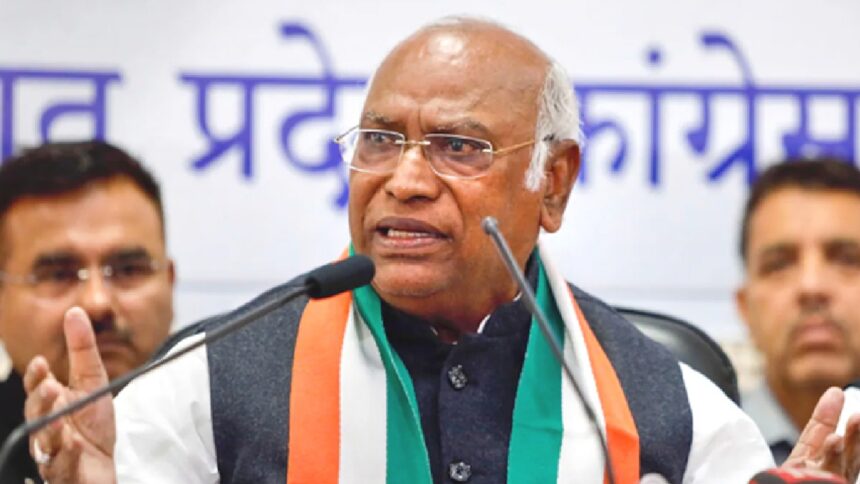
Congress President and All India Congress Committee chief Mallikarjun Kharge was admitted to MS Ramaiah Hospital in Bengaluru on Tuesday night after experiencing fever and mild breathing difficulties, raising concerns among party leaders and supporters. The 82-year-old veteran politician, known for his resilience and decades-long experience in Indian politics, was immediately attended to by a team of medical specialists upon arrival. According to party sources, Mallikarjun Kharge was admitted on doctors’ advice after he felt unwell following a series of demanding political engagements in Bengaluru. The hospital swiftly initiated a series of medical examinations to assess his overall health and pinpoint the underlying cause of his symptoms. While the party assured the public that there is no immediate cause for concern, Mallikarjun Kharge remains under strict medical observation until his condition stabilizes fully. The hospital administration is expected to issue a detailed medical bulletin with updates on his health trajectory, ensuring transparency and timely communication about the leader’s well-being.
Mallikarjun Kharge, widely regarded as one of the most seasoned politicians in India, has been at the helm of the Congress party as its president since October 2022. His tenure has seen him navigate multiple electoral challenges, organizational restructuring, and complex political scenarios across the country. Despite his age, Mallikarjun Kharge continues to maintain a rigorous schedule, engaging in back-to-back meetings, public programs, and strategic discussions with party leaders at both state and national levels. This active involvement in politics reflects his enduring commitment to the party and its objectives, as well as his role in shaping its strategic outlook for upcoming elections. While his hospitalization has naturally generated concern among Congress workers and the general public, medical professionals have confirmed that his condition is stable, and he is being closely monitored by a dedicated team of specialists. The combination of age-related health considerations and the high-intensity demands of political life has underscored the need for careful monitoring and timely medical intervention, ensuring that Kharge can continue his contributions once he recovers fully.
Medical Care and Monitoring of a Veteran Politician
Upon admission to MS Ramaiah Hospital, Mallikarjun Kharge underwent a comprehensive evaluation by senior doctors and specialists in internal medicine, pulmonology, and general health. The initial assessments focused on his respiratory function, vital signs, and the possible causes of fever, given his advanced age and active lifestyle. Hospital sources indicated that a full spectrum of tests, including blood work, chest imaging, and other diagnostic procedures, was undertaken to rule out complications and identify the precise origin of the symptoms. Doctors have emphasized that, at this stage, there is no evidence of critical health concerns, but continuous monitoring is essential given his age. The medical team is also considering factors such as underlying chronic conditions, medication regimens, and recent exposure to demanding political schedules, all of which could influence recovery. A multidisciplinary approach ensures that any emerging health issues are promptly addressed, combining preventive care with targeted interventions to stabilize his condition efficiently.
Mallikarjun Kharge’s admission highlights the broader conversation about health management for senior political leaders, particularly those engaged in high-pressure roles with constant travel and public engagement. Political veterans often operate under tight schedules and high-stakes environments, which can exacerbate pre-existing conditions or trigger new health concerns. In Mallikarjun Kharge’s case, the immediate medical attention and hospital-based observation demonstrate a proactive approach, ensuring both timely care and minimal disruption to ongoing party responsibilities. The hospital administration has confirmed that regular updates will be shared with the public and the party to prevent misinformation and unnecessary panic, reinforcing confidence in both the medical process and Mallikarjun Kharge’s recovery trajectory. Party leaders have expressed gratitude to the hospital team for their swift intervention, noting that Mallikarjun Kharge’s condition remains stable and that he is receiving world-class medical attention befitting his status as a national leader.
Political Implications and Leadership Continuity
Mallikarjun Kharge’s hospitalization comes at a critical juncture for the Congress party. With elections, internal strategy meetings, and organizational restructuring ongoing, the party faces challenges that require stable leadership and continuity in decision-making. Mallikarjun Kharge has played a pivotal role in coordinating election strategies, overseeing candidate selections, and mentoring younger leaders to strengthen the party’s organizational structure. His health episode underscores the importance of having robust mechanisms within political parties to manage transitions and ensure uninterrupted leadership during temporary incapacitations. Party insiders have reassured that interim arrangements are in place for routine responsibilities and decision-making processes, ensuring that the broader political agenda remains on track while Mallikarjun Kharge recovers under medical supervision.
Beyond the immediate political implications, Mallikarjun Kharge’s hospitalization has prompted reflections on the rigors of political life for senior leaders in India. His decades-long career has included navigating high-pressure legislative debates, organizational responsibilities, and nationwide campaigns. Such roles demand significant physical and mental endurance, and even minor health issues can necessitate immediate medical intervention. The current situation serves as a reminder of the importance of structured healthcare support and preventive measures for senior politicians, enabling them to sustain their contributions while maintaining personal well-being. Congress leaders have expressed solidarity with Mallikarjun Kharge, emphasizing that his health and recovery are paramount, and that the party’s operations will continue seamlessly under the guidance of its leadership team.
Mallikarjun Kharge’s career, spanning over five decades, includes numerous legislative, administrative, and party leadership roles at both state and national levels. He has earned respect across party lines for his commitment to governance, policymaking, and organizational discipline. As AICC president, he has been instrumental in shaping Congress’s responses to political developments, formulating electoral strategies, and enhancing the party’s engagement with grassroots structures. His hospitalization has brought an outpouring of support and well-wishes from political figures, colleagues, and constituents nationwide, reflecting the high regard in which he is held. The incident also highlights the human dimension of political life, where even the most experienced leaders remain susceptible to health challenges that require immediate attention and care.
Medical experts involved in Mallikarjun Kharge’s care have emphasized that early intervention is critical for effective management of age-related health issues. They noted that close observation, combined with timely diagnostic evaluations, helps prevent escalation of symptoms and ensures that appropriate treatment plans can be formulated. In Mallikarjun Kharge’s case, the team has instituted a rigorous monitoring schedule, assessing vital parameters, administering supportive therapy, and running follow-up investigations to confirm stabilization. Hospital authorities have reiterated that there is no immediate cause for alarm, but careful monitoring will continue until doctors are confident that his health has returned to a fully stable state. This cautious approach aligns with best practices for geriatric care in high-stress individuals, balancing medical oversight with patient comfort and dignity.
The hospitalization also underscores the importance of timely communication between political organizations and the public. By promptly informing party members, media, and supporters about Mallikarjun Kharge’s health status, the Congress has mitigated rumors and speculation. Party officials have confirmed that regular updates will follow, including detailed medical bulletins, to maintain transparency and public confidence. This approach reflects a broader trend in political healthcare management, where leaders’ health updates are communicated with accuracy and care, recognizing both the public interest and the personal privacy of the individual.
Mallikarjun Kharge’s hospitalization is a reminder of the intense demands placed on political leaders, particularly those who continue to serve actively at advanced ages. The combination of frequent travel, public engagements, strategic meetings, and legislative responsibilities can contribute to physical strain, making proactive healthcare monitoring essential. Experts suggest that senior politicians should have dedicated medical support systems and periodic health evaluations to ensure early detection of potential issues. The current medical oversight of Mallikarjun Kharge demonstrates how prompt intervention and coordinated care can stabilize health conditions while allowing leaders to continue contributing meaningfully to public life.
As Mallikarjun Kharge undergoes treatment and observation, Congress leaders are making necessary adjustments to ensure continuity in decision-making. His extensive experience and institutional knowledge remain invaluable for guiding party strategy, mentoring younger leaders, and maintaining organizational stability. While he remains under medical supervision, the party’s executive committee and senior office-bearers are tasked with routine operational decisions, ensuring that political processes and electoral preparations continue without disruption. This measured approach highlights the resilience of the party’s administrative framework and the importance of contingency planning in political organizations.
In the context of India’s broader political landscape, the hospitalization of an influential leader like Mallikarjun Kharge carries symbolic and practical significance. It serves as a reminder of the intersection between leadership responsibilities and personal health, illustrating how political careers—particularly at the highest levels—demand sustained attention to well-being alongside public service. The situation has generated a wave of public concern, with supporters, political peers, and media closely following updates on his recovery. Such episodes also reinforce the critical need for structured healthcare provisions and proactive monitoring mechanisms for senior leaders to maintain governance stability and organizational continuity.