New Delhi, January 13, 2026
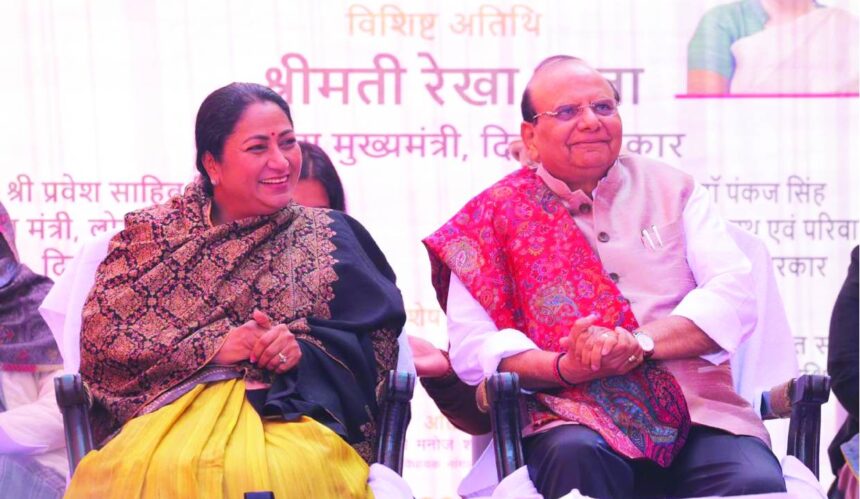
The Lieutenant Governor of Delhi, Vinai Kumar Saxena, and Chief Minister Rekha Gupta on Tuesday laid the foundation stone for the Nangloi-Najafgarh road strengthening and drainage project, marking a major step towards resolving long-standing infrastructural issues in West Delhi. The project, costing ₹64.04 crore, aims to improve road conditions, modernise drainage systems, and provide relief from chronic waterlogging, pollution, and traffic congestion affecting lakhs of residents in the area.
The Nangloi-Najafgarh corridor has struggled for decades with pothole-ridden roads, overflowing drains, and severe traffic bottlenecks, especially during the monsoon season. The new initiative will upgrade roads, construct new stormwater drains, strengthen existing drainage systems, and ensure proper outfall connections with the Ranhola Drain, Najafgarh (Sahibi River), and Mungeshpur Drain. The road will also be strengthened and reconstructed with RCC crash barriers installed along the central verge to ensure safe and effective drainage.
Addressing the ceremony, Lieutenant Governor Saxena described the day as a historic moment for the residents of Nangloi and Najafgarh, whose decades-old demand for infrastructural improvements is finally being fulfilled. He recalled visiting the area in September 2024, when roads were severely damaged, sewage water flowed freely on streets, and living conditions were miserable. Saxena praised the current Delhi Government for prioritising the project and taking concrete steps to address these persistent issues.
Chief Minister Rekha Gupta said the project is a significant gift for the people of West Delhi. She emphasised that the previous government had neglected road and drainage development for years, but her administration has worked to address basic infrastructural challenges within the past 11 months. “This initiative is not only about road construction but reflects our commitment to building a safe, waterlogging-free, and sustainable Delhi,” Gupta said. She highlighted that Delhi is implementing modern approaches to stormwater management across the city, including the Kirari-Mundka Halt Supplementary Drain, M. B. Road stormwater drain, and Kirari-Rithala trunk drain projects, which will collectively address waterlogging over thousands of acres.
Delhi Cabinet and PWD Minister Pravesh Sahib Singh said several roads in the area had been in dilapidated condition for years. The current government has completed the tendering process, started construction, and ensured a five-year quality guarantee for all roads under the project. Transport Minister Pankaj Kumar Singh added that the project demonstrates the government’s resolve to build a safe, seamless, and modern West Delhi. He also mentioned plans for metro connectivity along the corridor in the near future.
The Nangloi-Najafgarh project is being implemented jointly by three Public Works Department (PWD) divisions—WR-1, WR-2, and SWR-2—with coordination among multiple agencies, including MCD, DDA, I&FC, DJB, BSES, IGL, and the Traffic Police, to ensure long-term effectiveness and sustainability.
The project will include the construction of footpaths, a central verge, and upgraded drainage infrastructure, aiming to reduce accidents, improve traffic management, and lower dust and pollution levels. Once completed, the project will bring lasting relief from monsoon-related waterlogging, improve commuter safety, and transform living conditions for residents of West Delhi.
The foundation stone ceremony was attended by Members of Parliament Yogendra Chandolia and Kamaljeet Sehrawat, MLAs Neelam Krishna Pahalwan and Gajender Drall, along with senior officials, Delhi Cabinet Ministers, and other public representatives.