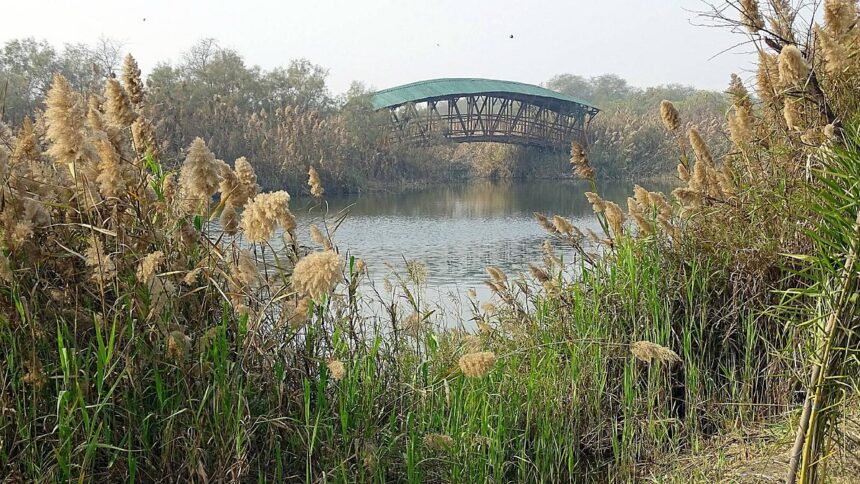
In a significant move to enhance urban greenery and protect wildlife, the Yamuna Authority has announced plans to develop the Dhanouri Wetland in Greater Noida into a biodiversity park. The decision follows the cancellation of the proposed Ramsar site designation for the wetland. Spanning 46.35 hectares, the Dhanouri Wetland is home to a variety of migratory birds and other wildlife, making it a vital ecological asset for the city. Once developed, the park will act as a crucial “green lung,” improving air quality and offering residents a space to connect with nature. The project is expected to cost approximately ₹150 crore, with around 30 hectares of land to be acquired for development purposes.
Authorities have confirmed that the Yamuna Expressway Industrial Development Authority (YEIDA) will select a consulting agency to oversee the design and execution of the project. The initiative aligns with broader efforts to integrate environmental sustainability into urban planning and provide habitats for endangered and migratory species. Officials believe that the biodiversity park will not only safeguard thousands of birds but also serve as an educational and recreational space for citizens, raising awareness about the importance of wetlands and biodiversity conservation.
Dhanouri Wetland: Ecological Importance and Green Lung for Greater Noida
The Dhanouri Wetland, covering 46.35 hectares, has long been recognized for its rich biodiversity and as a refuge for migratory birds. The wetland supports various aquatic species and plants, creating a balanced ecosystem that contributes to air purification, water conservation, and microclimate regulation in the surrounding areas. With rapid urbanization in Greater Noida, the preservation and development of such green spaces have become increasingly critical.
By converting the wetland into a biodiversity park, authorities aim to enhance its ecological function while making it accessible and beneficial to the public. The park is expected to incorporate walking trails, observation decks, and designated areas for birdwatching, allowing residents to engage with nature responsibly. Officials have highlighted that maintaining the wetland’s natural integrity will remain a priority, with minimal human interference in sensitive areas to ensure the protection of migratory and resident species.
The green lung provided by the wetland will help mitigate air pollution, reduce heat, and improve the overall quality of life in Greater Noida. Environmentalists have praised the initiative, emphasizing that urban wetlands play a crucial role in ecological balance and biodiversity conservation, especially in rapidly expanding cities where natural habitats are under threat.
Project Planning, Land Acquisition, and Implementation
The Yamuna Authority has allocated an estimated budget of ₹150 crore for the development of the biodiversity park. About 30 hectares of land will be acquired to facilitate the construction of park infrastructure, while careful planning will ensure minimal disruption to the existing wetland ecosystem. The remaining area will continue to function as a natural habitat for birds and aquatic life.
YEIDA will appoint a consulting agency to design and manage the project, ensuring that the park meets ecological, recreational, and educational objectives. The agency will be responsible for creating sustainable pathways, interpretative signage, and facilities that allow visitors to experience the wetland without harming its flora and fauna. Plans include provisions for research, ecological monitoring, and awareness programs aimed at students and the local community.
Authorities have emphasized that the project’s development will comply with environmental regulations and aim to enhance the wetland’s biodiversity. The park will become a safe haven for thousands of migratory birds, providing feeding, nesting, and breeding grounds. Experts believe that such initiatives are essential to offset the environmental pressures of urban expansion, contributing to climate resilience and ecological education in the region.
Once completed, the Dhanouri Biodiversity Park will set a benchmark for urban wetland conservation in the NCR region, demonstrating how natural habitats can coexist with urban growth. It is expected to become a key attraction for nature enthusiasts, researchers, and residents, promoting sustainable urban development while preserving the ecological balance of Greater Noida.
The project also reflects a broader commitment to integrating green infrastructure into city planning. By safeguarding wetlands and creating biodiversity parks, Greater Noida aims to improve urban livability, protect endangered species, and ensure that natural ecosystems continue to thrive amidst the challenges of modern urbanization.