The biennial Defence and Security Equipment International (DSEI) arms fair, set to open in London’s Docklands, has drawn significant attention this year due to the participation of 51 Israeli arms manufacturers and major global defence contractors, including the US firm Lockheed Martin. Their presence has ignited widespread condemnation and is expected to trigger protests, as campaigners accuse the UK government of complicity in international human rights violations. The event, which runs for four days, will also feature speeches from Defence Secretary John Healey and senior British military officials. Demonstrators are preparing to converge outside the venue, highlighting ongoing ethical concerns about arms sales, Israel’s role in military operations in Gaza, and the broader global arms trade.
The biennial Defence and Security Equipment International (DSEI) arms fair, set to open in London’s Docklands, has drawn significant attention this year due to the participation of 51 Israeli arms manufacturers and major global defence contractors, including the US firm Lockheed Martin. Their presence has ignited widespread condemnation and is expected to trigger protests, as campaigners accuse the UK government of complicity in international human rights violations. The event, which runs for four days, will also feature speeches from Defence Secretary John Healey and senior British military officials. Demonstrators are preparing to converge outside the venue, highlighting ongoing ethical concerns about arms sales, Israel’s role in military operations in Gaza, and the broader global arms trade.
Israeli Arms Manufacturers and Protests Over Humanitarian Concerns
Israel’s three largest defence companies – Elbit Systems, Rafael, and Israel Aerospace Industries (IAI) – are confirmed to attend the DSEI fair, despite the UK government having previously barred an official Israeli delegation. These companies are key suppliers to the Israel Defense Forces and have been linked to military operations in Gaza, where recent escalations have forced hundreds of thousands to seek shelter. The Campaign Against Arms Trade (Caat) has sharply criticised the UK for allowing Israeli firms to participate, accusing the government of reaching “peak complicity in genocide” by enabling these companies to market weapons that have been used in conflict zones. Emily Apple, Caat’s media coordinator, noted that the exhibition provides an international platform for companies whose arms have been tested in real-life warfare, thereby facilitating global sales.
Elbit Systems, Israel’s largest private defence contractor, is attending through its Swedish subsidiary, while Rafael and IAI, both state-owned, are directly present. IAI’s promotional materials assert that the company shapes “the future of global security” through its strategic capabilities and operational superiority. Lockheed Martin, another major exhibitor, is the primary contractor for the F-35 fighter jet, which has been employed by the Israeli military in airstrikes on Gaza. Despite the UK halting most arms exports to Israel due to humanitarian concerns, it allows British firms to supply components for F-35 jets as part of a global programme, which cannot be segregated for legal purposes. Caat estimates that UK companies, including BAE Systems, have supplied approximately £572 million worth of F-35 parts to Israel since 2016, comprising around 15 percent of the overall jet value.
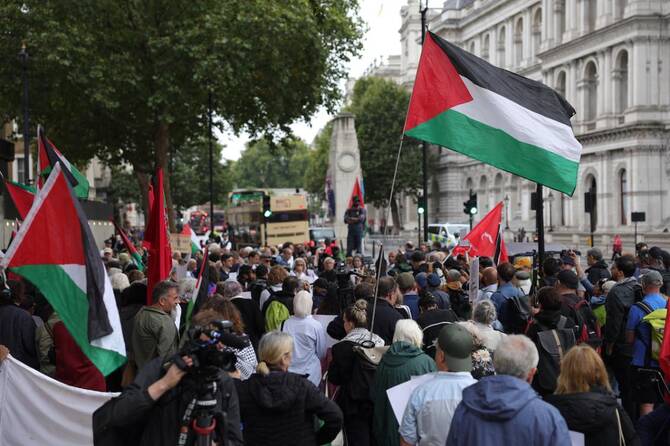
Protests are anticipated to peak on Tuesday morning when the fair opens, with estimates suggesting that between 500 to 1,000 demonstrators could gather. Organisers emphasise that the demonstrations are distinct from recent pro-Palestine Action events, although some participants may choose to express solidarity with the recently banned direct action group. The previous DSEI fair in 2023 saw ten arrests, requiring the deployment of more than 100 officers daily at a cost of nearly £2 million. This year’s security is expected to be even more stringent, reflecting both the high-profile nature of the exhibitors and ongoing international attention on military conflicts.
UK Defence Strategy, Economic Interests, and Industrial Growth
While the arms fair generates significant debate over ethical implications, the UK government is also using the event to promote its defence industrial strategy and highlight the economic potential of the sector. Defence Secretary John Healey is scheduled to deliver a keynote address, detailing plans to position the UK as a global hub for defence innovation and growth. The government intends to establish a £250 million fund to support five defence growth deals, which aim to strengthen sub-sectors across the country by integrating industry, local and national government, and academic institutions. An additional £182 million has been allocated to create five defence technical excellence colleges, further enhancing skills and employment opportunities within the sector.
The strategy underscores the government’s commitment to making defence a driver for economic development. Healey described the plan as an effort to make the UK “the best place in the world to start and grow a defence firm,” emphasising both job creation and technological innovation. Labour has indicated plans to increase military spending in response to international security challenges, including Russia’s invasion of Ukraine, while the government stresses the dual objectives of supporting the economy and maintaining national security. The DSEI fair, therefore, serves as a showcase for both strategic defence initiatives and the UK’s industrial ambitions.
The fair’s timing is particularly sensitive, coming amid renewed global scrutiny of arms sales to conflict zones. With Israel engaged in military operations in Gaza, the presence of Israeli companies and the display of weapons used in recent bombings have drawn criticism from human rights organisations. Caat and other campaign groups argue that the exhibition normalises the sale of arms used in humanitarian crises, raising ethical questions about the international arms trade and the UK’s role in facilitating it. Demonstrators are expected to highlight these concerns, calling for increased transparency, stricter regulations, and accountability in defence exports.
Participants in the DSEI fair include a wide array of defence contractors and technology providers, reflecting the scale and complexity of modern arms markets. Exhibitors showcase advanced weaponry, surveillance systems, and cutting-edge military technology, aiming to attract international buyers and forge commercial partnerships. While the UK has taken steps to regulate arms exports and maintain legal and ethical standards, the inclusion of controversial companies has intensified debate over the government’s responsibilities and the balance between economic interests and humanitarian obligations.
The fair is also significant in terms of the UK’s diplomatic and industrial strategy. As the government launches its defence industrial plan, it seeks to highlight the sector’s contribution to employment, innovation, and international competitiveness. The collaboration between government, industry, and academia aims to foster a resilient and technologically advanced defence ecosystem, capable of meeting both domestic security needs and global market demands. However, the juxtaposition of economic ambitions with ethical controversies underscores the challenges faced by policymakers in reconciling national interests with international human rights norms.
In addition to the high-profile Israeli exhibitors, the fair hosts dozens of other international defence companies, offering participants opportunities to explore partnerships, technology transfers, and strategic collaborations. The UK’s approach to the arms trade emphasises both economic benefits and legal compliance, yet critics argue that existing frameworks are insufficient to prevent complicity in conflicts abroad. The DSEI fair, therefore, serves as both an industrial showcase and a focal point for advocacy, public scrutiny, and civil society activism.
The broader context of protests and demonstrations highlights the increasing public concern over global arms sales and the humanitarian implications of military operations. Campaign groups like Caat aim to raise awareness about the human cost of conflict and the role of defence contractors in perpetuating violence. By coordinating protests, issuing reports, and engaging with media, they seek to influence government policy, promote ethical trade practices, and ensure that arms exports are aligned with international law.
Security arrangements for the DSEI fair will be extensive, with police and private security teams overseeing access, monitoring demonstrations, and ensuring the safety of both exhibitors and the public. Previous fairs have demonstrated the logistical challenges of balancing security, free expression, and industrial activity, with authorities prepared for potential clashes or civil disobedience. Organisers of protests anticipate significant turnout, reflecting growing public engagement with defence ethics and international accountability.
The DSEI trade fair also underscores the broader strategic and geopolitical dynamics shaping global defence markets. The presence of Israeli companies, combined with the participation of US defence contractors, highlights the interconnected nature of military supply chains and the role of multinational corporations in modern warfare. Governments and companies navigate complex regulatory environments to maintain compliance while pursuing commercial opportunities, often raising ethical and diplomatic tensions.
The UK’s defence industrial strategy, to be launched during the fair, aims to strengthen domestic capabilities, foster innovation, and promote sustainable growth within the sector. By providing funding for industrial growth deals, technical colleges, and collaborative initiatives, the government seeks to ensure that the UK remains competitive in the global arms market. However, these initiatives are juxtaposed against significant ethical controversies, particularly concerning sales to conflict zones, illustrating the tension between economic development and human rights obligations.
As the DSEI fair unfolds, demonstrators, policymakers, and industry participants will engage in a complex interplay of commercial, ethical, and political considerations. The UK government’s dual objectives – promoting industrial growth and defending human rights standards – will be closely scrutinised by media, campaign groups, and international observers. The fair represents a microcosm of global defence politics, where trade, diplomacy, and advocacy intersect, raising fundamental questions about the responsibilities of states, corporations, and civil society in regulating the global arms trade.
This year’s DSEI trade show is particularly significant given recent geopolitical tensions and the ethical spotlight on arms exports. With Israeli firms and US contractors exhibiting weapons implicated in ongoing conflicts, the fair becomes both a platform for industrial promotion and a forum for public protest. Campaign groups are expected to maintain a visible presence, highlighting human rights concerns and advocating for stronger regulatory oversight. The event exemplifies the challenges governments face in balancing economic, security, and ethical imperatives in an increasingly interconnected world.
The DSEI arms fair in London has become a focal point for debate over international defence trade, human rights, and government accountability. The participation of Israeli and US defence companies has intensified scrutiny, while protests and civil society activism reflect growing public engagement with ethical issues in military commerce. Simultaneously, the UK government leverages the event to promote industrial growth, skills development, and strategic partnerships, highlighting the tension between economic opportunity and ethical responsibility.
Through extensive security measures, diplomatic engagement, and industry showcases, the DSEI fair continues to function as a key event in the global defence calendar. The fair illuminates the challenges and complexities of regulating arms sales, reconciling national interests with international law, and ensuring that technological innovation in defence aligns with broader humanitarian standards. Stakeholders across government, industry, and civil society are closely monitoring the event, underscoring its significance as both an economic and ethical benchmark for future arms trade practices worldwide.
Israel’s three largest defence companies – Elbit Systems, Rafael, and Israel Aerospace Industries (IAI) – are confirmed to attend the DSEI fair, despite the UK government having previously barred an official Israeli delegation. These companies are key suppliers to the Israel Defense Forces and have been linked to military operations in Gaza, where recent escalations have forced hundreds of thousands to seek shelter. The Campaign Against Arms Trade (Caat) has sharply criticised the UK for allowing Israeli firms to participate, accusing the government of reaching “peak complicity in genocide” by enabling these companies to market weapons that have been used in conflict zones. Emily Apple, Caat’s media coordinator, noted that the exhibition provides an international platform for companies whose arms have been tested in real-life warfare, thereby facilitating global sales.
Elbit Systems, Israel’s largest private defence contractor, is attending through its Swedish subsidiary, while Rafael and IAI, both state-owned, are directly present. IAI’s promotional materials assert that the company shapes “the future of global security” through its strategic capabilities and operational superiority. Lockheed Martin, another major exhibitor, is the primary contractor for the F-35 fighter jet, which has been employed by the Israeli military in airstrikes on Gaza. Despite the UK halting most arms exports to Israel due to humanitarian concerns, it allows British firms to supply components for F-35 jets as part of a global programme, which cannot be segregated for legal purposes. Caat estimates that UK companies, including BAE Systems, have supplied approximately £572 million worth of F-35 parts to Israel since 2016, comprising around 15 percent of the overall jet value.
Protests are anticipated to peak on Tuesday morning when the fair opens, with estimates suggesting that between 500 to 1,000 demonstrators could gather. Organisers emphasise that the demonstrations are distinct from recent pro-Palestine Action events, although some participants may choose to express solidarity with the recently banned direct action group. The previous DSEI fair in 2023 saw ten arrests, requiring the deployment of more than 100 officers daily at a cost of nearly £2 million. This year’s security is expected to be even more stringent, reflecting both the high-profile nature of the exhibitors and ongoing international attention on military conflicts.
UK Defence Strategy, Economic Interests, and Industrial Growth
While the arms fair generates significant debate over ethical implications, the UK government is also using the event to promote its defence industrial strategy and highlight the economic potential of the sector. Defence Secretary John Healey is scheduled to deliver a keynote address, detailing plans to position the UK as a global hub for defence innovation and growth. The government intends to establish a £250 million fund to support five defence growth deals, which aim to strengthen sub-sectors across the country by integrating industry, local and national government, and academic institutions. An additional £182 million has been allocated to create five defence technical excellence colleges, further enhancing skills and employment opportunities within the sector.
The strategy underscores the government’s commitment to making defence a driver for economic development. Healey described the plan as an effort to make the UK “the best place in the world to start and grow a defence firm,” emphasising both job creation and technological innovation. Labour has indicated plans to increase military spending in response to international security challenges, including Russia’s invasion of Ukraine, while the government stresses the dual objectives of supporting the economy and maintaining national security. The DSEI fair, therefore, serves as a showcase for both strategic defence initiatives and the UK’s industrial ambitions.
The fair’s timing is particularly sensitive, coming amid renewed global scrutiny of arms sales to conflict zones. With Israel engaged in military operations in Gaza, the presence of Israeli companies and the display of weapons used in recent bombings have drawn criticism from human rights organisations. Caat and other campaign groups argue that the exhibition normalises the sale of arms used in humanitarian crises, raising ethical questions about the international arms trade and the UK’s role in facilitating it. Demonstrators are expected to highlight these concerns, calling for increased transparency, stricter regulations, and accountability in defence exports.
Participants in the DSEI fair include a wide array of defence contractors and technology providers, reflecting the scale and complexity of modern arms markets. Exhibitors showcase advanced weaponry, surveillance systems, and cutting-edge military technology, aiming to attract international buyers and forge commercial partnerships. While the UK has taken steps to regulate arms exports and maintain legal and ethical standards, the inclusion of controversial companies has intensified debate over the government’s responsibilities and the balance between economic interests and humanitarian obligations.
The fair is also significant in terms of the UK’s diplomatic and industrial strategy. As the government launches its defence industrial plan, it seeks to highlight the sector’s contribution to employment, innovation, and international competitiveness. The collaboration between government, industry, and academia aims to foster a resilient and technologically advanced defence ecosystem, capable of meeting both domestic security needs and global market demands. However, the juxtaposition of economic ambitions with ethical controversies underscores the challenges faced by policymakers in reconciling national interests with international human rights norms.
In addition to the high-profile Israeli exhibitors, the fair hosts dozens of other international defence companies, offering participants opportunities to explore partnerships, technology transfers, and strategic collaborations. The UK’s approach to the arms trade emphasises both economic benefits and legal compliance, yet critics argue that existing frameworks are insufficient to prevent complicity in conflicts abroad. The DSEI fair, therefore, serves as both an industrial showcase and a focal point for advocacy, public scrutiny, and civil society activism.
The broader context of protests and demonstrations highlights the increasing public concern over global arms sales and the humanitarian implications of military operations. Campaign groups like Caat aim to raise awareness about the human cost of conflict and the role of defence contractors in perpetuating violence. By coordinating protests, issuing reports, and engaging with media, they seek to influence government policy, promote ethical trade practices, and ensure that arms exports are aligned with international law.
Security arrangements for the DSEI fair will be extensive, with police and private security teams overseeing access, monitoring demonstrations, and ensuring the safety of both exhibitors and the public. Previous fairs have demonstrated the logistical challenges of balancing security, free expression, and industrial activity, with authorities prepared for potential clashes or civil disobedience. Organisers of protests anticipate significant turnout, reflecting growing public engagement with defence ethics and international accountability.
The DSEI trade fair also underscores the broader strategic and geopolitical dynamics shaping global defence markets. The presence of Israeli companies, combined with the participation of US defence contractors, highlights the interconnected nature of military supply chains and the role of multinational corporations in modern warfare. Governments and companies navigate complex regulatory environments to maintain compliance while pursuing commercial opportunities, often raising ethical and diplomatic tensions.
The UK’s defence industrial strategy, to be launched during the fair, aims to strengthen domestic capabilities, foster innovation, and promote sustainable growth within the sector. By providing funding for industrial growth deals, technical colleges, and collaborative initiatives, the government seeks to ensure that the UK remains competitive in the global arms market. However, these initiatives are juxtaposed against significant ethical controversies, particularly concerning sales to conflict zones, illustrating the tension between economic development and human rights obligations.
As the DSEI fair unfolds, demonstrators, policymakers, and industry participants will engage in a complex interplay of commercial, ethical, and political considerations. The UK government’s dual objectives – promoting industrial growth and defending human rights standards – will be closely scrutinised by media, campaign groups, and international observers. The fair represents a microcosm of global defence politics, where trade, diplomacy, and advocacy intersect, raising fundamental questions about the responsibilities of states, corporations, and civil society in regulating the global arms trade.
This year’s DSEI trade show is particularly significant given recent geopolitical tensions and the ethical spotlight on arms exports. With Israeli firms and US contractors exhibiting weapons implicated in ongoing conflicts, the fair becomes both a platform for industrial promotion and a forum for public protest. Campaign groups are expected to maintain a visible presence, highlighting human rights concerns and advocating for stronger regulatory oversight. The event exemplifies the challenges governments face in balancing economic, security, and ethical imperatives in an increasingly interconnected world.
In sum, the DSEI arms fair in London has become a focal point for debate over international defence trade, human rights, and government accountability. The participation of Israeli and US defence companies has intensified scrutiny, while protests and civil society activism reflect growing public engagement with ethical issues in military commerce. Simultaneously, the UK government leverages the event to promote industrial growth, skills development, and strategic partnerships, highlighting the tension between economic opportunity and ethical responsibility.
Through extensive security measures, diplomatic engagement, and industry showcases, the DSEI fair continues to function as a key event in the global defence calendar. The fair illuminates the challenges and complexities of regulating arms sales, reconciling national interests with international law, and ensuring that technological innovation in defence aligns with broader humanitarian standards. Stakeholders across government, industry, and civil society are closely monitoring the event, underscoring its significance as both an economic and ethical benchmark for future arms trade practices worldwide.