The Bharatiya Janata Party (BJP) recently announced the cancellation of its planned dinner meetings for NDA MPs with Prime Minister Narendra Modi and BJP National President J.P. Nadda, expressing solidarity with the millions affected by severe flooding across Punjab and several northern states. Union Minister Kiren Rijiju explained that holding such formal gatherings during a time of national distress would be inappropriate. While the dinners were called off, the BJP’s ongoing two-day workshop for its MPs in Delhi continues as planned, with PM Modi actively participating from start to finish. This event aims to provide strategic guidance to lawmakers, enhancing their understanding of governance, public engagement, and constituency-level issues while simultaneously preparing the party for the high-stakes Vice-Presidential elections scheduled for September 9.
Solidarity With Flood Victims and BJP’s Commitment to Ground-Level Engagement
The floods in Punjab and northern India have affected lakhs of citizens, causing widespread devastation and compelling the BJP leadership to take a conscious decision to cancel the formal dinner meetings originally intended for NDA MPs. Speaking to the media, Kiren Rijiju emphasized that at such a sensitive time, organizing grand dinners would not be appropriate. The decision reflects the party’s commitment to public welfare and its sensitivity toward the hardships faced by the people. “We are passing through a very sensitive time when millions of people are suffering due to floods in Punjab and several other northern states. In such a situation, we cannot organize dinner parties,” Rijiju remarked. Similarly, J.P. Nadda’s planned dinner for BJP MPs was also called off in line with the leadership’s sense of responsibility.
Despite these cancellations, the BJP’s ongoing workshop in Delhi continues with full participation. PM Modi, known for his hands-on approach, attends the sessions in entirety, engaging directly with MPs, both from the Lok Sabha and Rajya Sabha. Rijiju highlighted that the BJP’s approach is informal and inclusive, where every participant, whether a leader or party worker, shares equal footing, and even the Prime Minister often sits at the back. This environment encourages open discussion, mentorship, and strategic guidance rather than adherence to formal hierarchy. PM Modi’s active presence underscores the importance of continuous engagement between political leaders and citizens, particularly during times of crisis.
During the workshop, PM Modi emphasized the need for MPs to maintain close contact with their constituents. He suggested holding monthly “tiffin meetings” with the people in every Assembly segment of their parliamentary constituencies. These sessions are intended to provide lawmakers with a detailed understanding of public grievances, allowing them to respond effectively and with greater accuracy. Additionally, PM Modi urged MPs to coordinate with concerned ministers and officials before and after Parliamentary committee meetings, ensuring that their interventions and recommendations are well-informed. He also stressed that ministers must maintain professional conduct and respect toward officials to facilitate smoother governance.
The Prime Minister further encouraged party members to think innovatively about public welfare and governance, citing Singapore’s cleanliness campaign as an example. Leaders were urged to adopt creative solutions and out-of-the-box thinking to improve administrative efficiency and citizen satisfaction. This emphasis on innovation is part of the BJP’s broader vision to align governance with citizen-centric policies while fostering leadership that is proactive and engaged.
Vice-Presidential Election Preparations and Strategic Political Briefings
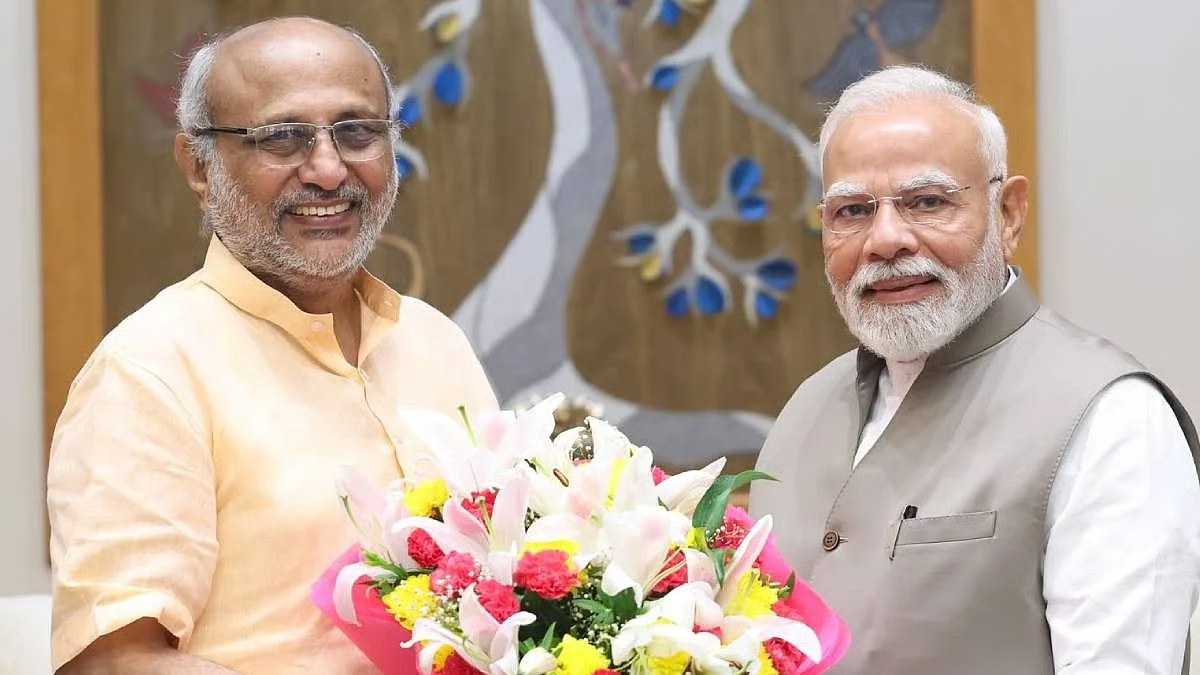
The timing of this two-day workshop is critical, coming just days before the Vice-Presidential election on September 9, 2025. The workshop also functions as a strategic briefing session for MPs, including a mock polling exercise to train members on the vote-casting process. Given the high political stakes, the BJP-led NDA is leaving no stone unturned to ensure thorough preparedness and coordinated efforts across party members. The Vice-Presidential election this year has been framed as a contest between two southern states: the NDA nominee C.P. Radhakrishnan from Tamil Nadu, who has longstanding ties with the Rashtriya Swayamsevak Sangh (RSS), and the opposition’s candidate B. Sudarshan Reddy from Telangana, a former Supreme Court judge.
The Vice President’s role carries significant political weight, not only serving as the ex-officio Chairman of the Rajya Sabha but also influencing parliamentary proceedings and legislative coordination. This makes strategic alignment and preparation critical for party success. The electoral college responsible for electing the Vice President includes 788 members: 233 elected and 12 nominated members of the Rajya Sabha (with five current vacancies) and 543 elected members of the Lok Sabha (with one vacancy), bringing the total to 782 active voters. The election follows a secret ballot process with proportional representation and a single transferable vote system, making disciplined voting and coordination essential for any candidate to succeed.
During the Delhi workshop, PM Modi underscored the importance of direct engagement with party MPs, NDA allies, and other stakeholders. He emphasized that MPs should understand the people’s issues, address concerns with precise knowledge, and coordinate with officials to ensure seamless administration. This is intended to not only improve governance outcomes but also to solidify the NDA’s position in the upcoming Vice-Presidential election. Rijiju confirmed that all NDA MPs would participate in these sessions, demonstrating collective focus and unity in political strategy.
The workshop also covered broader aspects of leadership and governance. PM Modi emphasized the necessity of fostering citizen-centric governance through practical measures, continuous engagement, and ethical conduct. Leaders were advised to learn from global best practices and innovate solutions that are contextually relevant to India. In particular, he encouraged party members to consider examples from countries like Singapore for campaigns related to cleanliness and public welfare, suggesting that learning from international models can improve domestic policy implementation. The PM’s guidance highlights the BJP’s broader focus on disciplined, efficient, and citizen-oriented governance.
Furthermore, the workshop’s sessions were designed to integrate practical political training with broader discussions on leadership ethics, administrative efficiency, and civic responsibility. The mock poll and training exercises help MPs understand procedural intricacies, while the sessions on public engagement provide insights into managing constituency-level issues effectively. This dual focus strengthens the party’s internal cohesion while preparing its members for electoral success and strategic policymaking.
Kiren Rijiju’s statements also highlighted that the BJP’s internal culture emphasizes equality, mentorship, and active participation from all members. Whether senior leaders or grassroots workers, the party encourages an inclusive approach that values every contribution. PM Modi’s choice to sit at the back during sessions symbolizes the party’s ethos of humility, accessibility, and collective leadership. These informal settings enable MPs to interact candidly, discuss challenges, and receive practical guidance, which is particularly valuable during high-pressure periods like elections or national emergencies.
In addition to political preparations, the workshop sessions addressed ongoing public welfare concerns, including the severe floods impacting Punjab and northern states. The party’s leadership conveyed empathy and solidarity, highlighting the importance of prioritizing citizens’ welfare over ceremonial events or formal gatherings. By canceling the planned dinners, the BJP demonstrated sensitivity and responsibility, aligning its public image with ethical governance and social awareness.
The combination of disaster response awareness, governance training, and electoral preparation reflects a holistic approach to political strategy. PM Modi’s guidance ensures that party MPs are equipped to manage both immediate citizen concerns and long-term strategic objectives. This dual focus reinforces the BJP’s positioning as a responsive, disciplined, and well-prepared political entity capable of addressing diverse challenges while maintaining internal cohesion.
Finally, the workshop’s design facilitates knowledge-sharing between MPs from both houses and NDA allies, fostering a sense of unity and collective purpose. The leadership’s approach emphasizes mentorship, ethical engagement, and accountability, enabling lawmakers to represent their constituents effectively while remaining aligned with party priorities. These comprehensive sessions ensure that MPs are well-prepared for the Vice-Presidential election while staying grounded in the party’s broader commitment to governance, public welfare, and national development.
The two-day event concludes with a clear focus on actionable guidance, strategic preparedness, and constituency engagement. Through structured sessions, mock polling exercises, and leadership briefings, the BJP aims to create a cadre of informed, responsive, and proactive MPs who can effectively navigate both electoral responsibilities and governance challenges. The workshop exemplifies a blend of political strategy, public service ethos, and ethical leadership, providing MPs with the tools, insights, and mentorship necessary to perform effectively in their roles while maintaining sensitivity to public concerns.
By integrating public welfare awareness, disaster response sensitivity, electoral training, and leadership development into a single program, the BJP has created a unique platform for capacity-building and strategic preparedness. PM Modi’s hands-on involvement ensures that the sessions are not only educational but also motivational, reinforcing the values of accountability, empathy, and innovation in governance. This approach is expected to enhance the party’s ability to perform effectively in both parliamentary functions and upcoming elections, ensuring that leadership remains grounded in citizen-centric priorities while maintaining political focus and cohesion.
The workshop’s focus on Vice-Presidential election preparation, constituency engagement, and responsive governance underscores the party’s broader commitment to ethical, disciplined, and citizen-focused political strategy. By balancing electoral imperatives with disaster response and governance ethics, the BJP demonstrates a holistic understanding of political responsibility, preparing its MPs for both immediate and long-term challenges in a complex democratic environment.