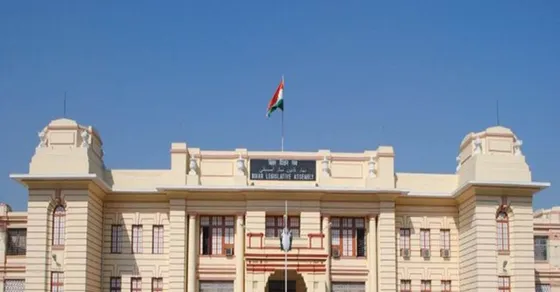
The newly elected members of the eighteenth Bihar legislative assembly will take oath on Monday as the five-day first session of the new assembly begins under heavy security arrangements in Patna, marking the formal commencement of legislative proceedings following the formation of the new NDA government after the recent state elections.
Oath ceremony, speaker election and governor’s address to shape the first session
The first sitting of the eighteenth Bihar assembly, scheduled from December 1 to December 5, is set to begin with the swearing-in of the newly elected MLAs. Pro-tem speaker Narendra Narain Yadav will administer the oath in the central hall of the assembly, officially inducting the legislators who secured victory in the two-phase state elections held on November 6 and 11. The session marks the beginning of the legislative functioning of the new assembly and sets the tone for the political events that will unfold over the next several days.
On Tuesday, the second day of the session, the house will elect a new speaker—a decision that has already become the centre of political attention in Bihar. The election of the speaker will be followed on Wednesday by a joint address from Governor Arif Mohammed Khan to members of both the legislative assembly and the legislative council, to be held in the central hall of the annexe building. His address will outline the new government’s vision and priorities.
The session has been convened following the formation of the National Democratic Alliance government under chief minister Nitish Kumar. The NDA scored a sweeping victory in the latest elections, securing 202 out of 243 assembly seats. The opposition’s Mahagathbandhan, once a major political force in Bihar, found itself drastically weakened, winning only 35 seats, of which the Rashtriya Janata Dal claimed 25. Among the other parties in the fray, the AIMIM won five seats and the Bahujan Samaj Party won one seat.
With the assembly now fully constituted, attention has turned to the composition of the new leadership, especially the question of who will occupy the speaker’s chair. The Bharatiya Janata Party, now the single largest party in the ruling coalition, is widely believed to be preparing to put forward its own candidate for the top post. The Janata Dal (United), despite being the second largest NDA ally with 85 MLAs, is also interested in the position. Senior coalition leaders, speaking on the condition of anonymity, have indicated that an understanding within the alliance may allow the BJP to field its nominee. Former minister Prem Kumar, a senior BJP leader who has been elected from the Gaya town seat for the ninth consecutive term, is being seen as one of the frontrunners for the post.
Political observers note that the election of the speaker may ultimately take place without a contest. With the opposition significantly reduced in strength, there is very little likelihood that the Mahagathbandhan will field a candidate for the position. Leaders within the RJD have acknowledged that their current numbers in the assembly leave them with limited strategic options, making it unlikely that they will challenge the ruling alliance in the speaker election.
Inside the assembly, the remainder of the week will be devoted to the customary plenary activities that follow a governor’s address. The motion of thanks to the governor’s address will be taken up for discussion on Thursday, where legislators will respond to the statements and policy outlines presented by the governor. Friday will focus on the debate over the supplementary budget, which will allow the house to discuss and vote on the state’s immediate financial requirements.
Outside the formal proceedings, the first session is expected to be politically charged, with the opposition preparing to raise several contentious issues. The Rashtriya Janata Dal and other constituents of the Grand Alliance have declared their intention to highlight concerns regarding the alleged irregularities in the special intensive revision of electoral rolls conducted before the state election. The opposition claims that large-scale discrepancies in the voter list revision process affected transparency and fairness in the electoral cycle. They also plan to bring up the recent demolition of houses belonging to economically weaker sections in Rahui block of Nalanda district. According to RJD spokesperson Chittaranjan Gagan, these actions represent broader governance concerns that the opposition intends to raise forcefully during the session.
The functioning of the legislature is expected to be under tight security throughout the five days. The assembly complex has been cordoned off with layers of security checks, reflecting the heightened political energy that typically accompanies the start of a new legislative term. Colourful lighting and decorative arrangements have also illuminated the Vidhan Mandal building, adding a ceremonial atmosphere on the eve of the session.
Political implications of the NDA victory, coalition equations and the challenges before the new assembly
The inauguration of the eighteenth Bihar assembly through the oath-taking ceremony is more than a ceremonial beginning; it underscores the dramatic shift in Bihar’s political landscape. The NDA’s landslide victory has altered the balance of power in the state’s legislative politics, leaving the opposition with limited leverage and raising questions about how effectively it can present a unified counter-narrative. The RJD, which dominated Bihar’s political scene for decades, now finds itself reduced to its smallest legislative presence in several years.
The BJP’s emergence as the single largest party within the ruling coalition gives it significant influence in shaping the legislative agenda. The party’s interest in having its nominee elected as speaker reflects its desire to consolidate institutional control within the assembly. The JD(U), while retaining substantial political weight through its chief ministership and organisational reach, may need to accommodate the BJP’s larger role in determining the assembly’s internal leadership.
Political analysts suggest that the selection of the speaker is not merely a procedural appointment but a signal of how power will be negotiated within the coalition. The speaker’s role in managing floor proceedings, deciding on admissibility of motions and maintaining order during debates makes the position crucial, especially in a politically active state like Bihar. While the NDA leadership appears to be aligned in principle, developments on Monday may clarify whether the speaker election will proceed smoothly or spark fresh negotiations among the ruling partners.
The opposition, though numerically weak, is preparing to use the session to spotlight issues it claims reflect governance failures. The controversy over the special intensive revision of the electoral rolls is likely to be a major theme. Opposition leaders argue that the revision, carried out hurriedly before the elections, led to alleged exclusion of eligible voters and discrepancies in multiple constituencies. Although the Election Commission has defended the process as routine and legally mandated, the opposition intends to press for a debate within the assembly.
Similarly, the demolition of houses belonging to economically weaker communities in Rahui block is expected to generate sharp exchanges. Opposition leaders say that the demolitions were carried out without proper rehabilitation arrangements or adequate notice, and they plan to demand accountability from the government during the session. Issues concerning social justice, land rights and administrative transparency are expected to feature prominently in their interventions.
The state legislative council will also meet during this period, holding three sittings between December 3 and December 5. The synchronised schedules of both legislative houses are intended to ensure coordinated debate on matters such as the governor’s address, the supplementary budget and ongoing policy issues.
As the eighteenth Bihar assembly convenes, the coming days will not only establish the institutional leadership of the house but also provide a glimpse of how the ruling alliance intends to govern and how the opposition plans to assert its limited but important role. The first session, therefore, holds significant symbolic and political value as Bihar enters a new legislative term shaped by a decisive electoral mandate, shifting alliances and heightened expectations from the public.