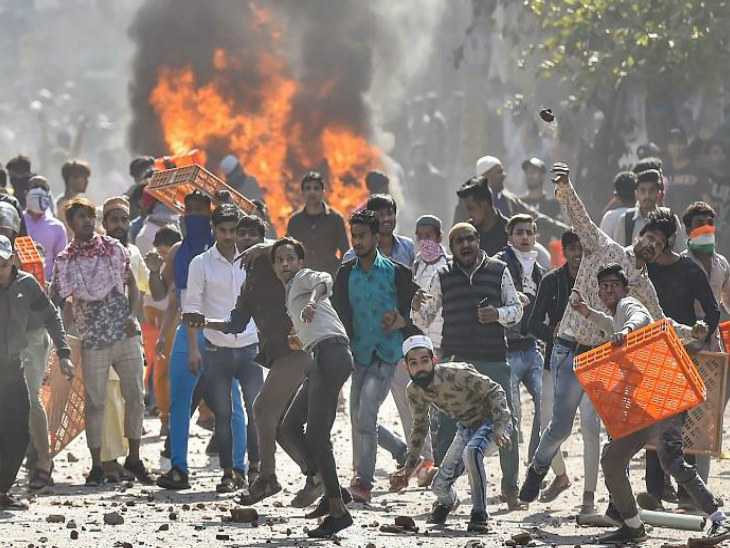
The Delhi Police are preparing to present a new set of documents, digital material, and investigative findings before the Supreme Court in connection with the 2020 Delhi riots, which shook the national capital between February 23 and February 25. As the court continues to hear the bail petitions of several accused individuals, the police have claimed that the riots were not an outcome of spontaneous anger but a carefully orchestrated and financially supported conspiracy aimed at creating large-scale disruption in North-East Delhi, and even attempting to isolate the region from the rest of India. The case has drawn national attention once again as the police assert that terror funding, coordinated planning, and deliberate escalation of protests played a central role in the violence.
Delhi Police Describe the Riots as Pre-Planned, Coordinated, and Fuelled by Strategic Funding
During the hearing held on Friday, November 21, the police informed the Supreme Court bench of Justice Aravind Kumar and Justice NV Anjaria that the violence in February 2020 did not erupt spontaneously. Instead, according to the police, the chain of events reflected systematic preparation, strategic mobilisation, and intentional use of protest sites to create blockades, trigger clashes, and amplify unrest. The authorities argued that the protests, which began as demonstrations against the Citizenship Amendment Act, were used as a platform to organise and execute a larger plan that eventually spiralled into three days of deadly violence across North-East Delhi.
The police have asserted that the primary objective behind the road blockades was not only to obstruct traffic but to paralyse essential services in the city. According to the investigation, groups involved in the mobilisation allegedly identified key roads and intersections where blockades would cause maximum disruption, creating an atmosphere of panic and destabilisation. The police further claimed that scenes from December 13 and December 15, 2019, when violent incidents led to injuries to 45 policemen and more than 100 civilians and substantial damage to public property, were early indicators of a larger pattern that later unfolded in February 2020.
Officials stated that several meetings were held before the riots, during which participants discussed strategies aimed at separating North-East Delhi from the rest of the city. This separation, according to the police, was considered essential to create an environment of chaos and to keep law enforcement out of certain areas, thereby enabling the escalation of violence. The police suggested that these meetings demonstrated that there was a clear intent to turn protest sites into conflict zones, converting what began as civil demonstrations into coordinated acts of aggression.
A detailed set of WhatsApp chats, which the police say are crucial to understanding the coordination behind the violence, has been cited in court. These chats allegedly show that certain organisers insisted on amplifying confrontation even when others advocated purely peaceful demonstrations. According to the police, the messages reveal discussions about mobilising crowds, controlling protest sites, and responding assertively to law enforcement interventions. The chats, investigators claim, expose internal disagreements but also highlight a core group that remained determined to escalate tensions.
Additional Solicitor General SV Raju, representing the police, played a video in court that reportedly shows a crowd marching with sticks, which he said is evidence of organised mobilisation rather than a spontaneous outburst. The footage, he argued, captures the deliberate attempt to create situations that would naturally result in clashes with law enforcement and opposing groups.
In addition to asserting strategic planning, the Delhi Police have highlighted significant financial transactions that they believe were used to organise, coordinate, and fuel the unrest. According to the investigation, large sums of money were raised and spent by several accused individuals. The police claimed that Tahir Hussain spent approximately ₹1.30 crore, while Shifa-ur-Rehman allegedly spent around ₹8.90 lakh. Ishrat Jahan was associated with key organisational roles, while Khalid Saifi was linked to planning and communication. According to investigators, Meeran Haider spent ₹2.86 lakh and raised an additional ₹4.82 lakh. The police argue that these funds were not utilised for legitimate protest activities but for strategic mobilisation, material procurement, and logistical support aimed at escalating unrest.
The financial trail, according to the authorities, reflects a network of supporters, intermediaries, and organisers who reportedly contributed funds to sustain the protests and expand their impact. The police maintain that such systematic and sizeable financial activity supports the argument that the violence was not incidental but calculated. They have also alleged that several transactions were concealed or routed through informal channels to obscure their origins and purpose.
The police have also suggested the involvement of a segment of individuals whom they describe as playing a decisive role in transforming the protests. According to the police narrative, these individuals pressed for intensifying the resistance, even when some protesters advocated maintaining the strictly peaceful nature of the demonstrations. The presence of such factions, authorities claim, contributed to the eventual breakdown of order and the outbreak of violence.
Supreme Court Asks for a Complete Record Before Considering Bail Petitions
During the hearing, the Supreme Court made it clear that it would only consider the bail applications after examining all relevant documents, including the charge sheet, supplementary materials, witness statements, and digital evidence cited by the police. The bench emphasised that a case of this magnitude and complexity requires a thorough evaluation before decisions affecting the liberty of the accused can be taken.
The justices directed the Delhi Police to formally place all cited documents on record before the next hearing. This includes WhatsApp chats, videos, detailed timelines of events, witness testimonies, the financial investigation report, and other investigative material. The court underscored that transparency in presenting evidence is essential to ensuring fairness in the judicial process, particularly when serious allegations such as terror funding and conspiracy are involved.
One of the central challenges highlighted during the hearing was the sheer volume of documents associated with the case. The primary charge sheet alone spans nearly 20,000 pages, and additional documents, including supplementary investigations, have been filed recently. The court noted that understanding the role of each accused requires careful navigation through these extensive records, and it requested the police to organise the material systematically to support judicial review.
The court has also decided that it will first hear the testimony of protected witnesses, individuals whose identity and security require special safeguards. These witnesses reportedly provided key accounts related to meetings, mobilisations, and actions taken before and during the riots. The Supreme Court indicated that their statements are critical for establishing the sequence of events and for verifying the claims made by the Delhi Police.
The next hearing has been scheduled for Monday afternoon, during which the police are expected to submit the complete set of documents cited during previous submissions. The judges emphasised that they intend to examine the evidence thoroughly before determining whether bail can be granted to any of the accused. The bench acknowledged that the case is both sensitive and significant, requiring careful judicial oversight.