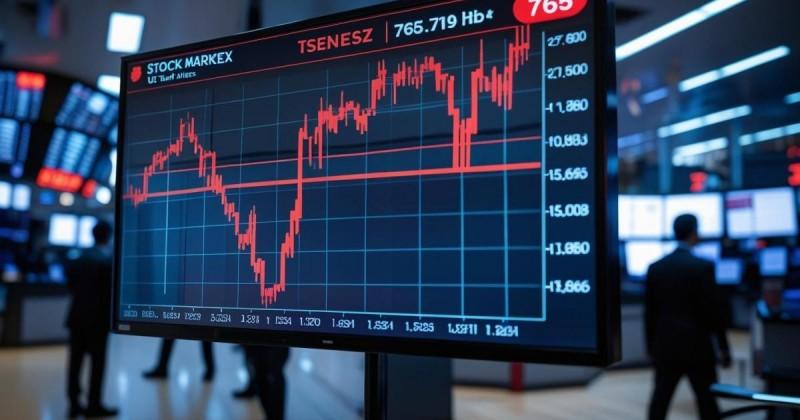
The Indian stock market on February 11, 2026, witnessed a largely flat trading session, reflecting investor caution amid mixed domestic and global cues. The benchmark Sensex closed 40 points lower at 84,234, while the Nifty managed a modest gain of 19 points to settle at 25,954. Trading activity reflected selective buying in sectors such as automobiles and healthcare, contrasting with weakness in information technology and private banking stocks. Of the 30 Sensex constituents, 17 ended in the red, indicating uneven investor sentiment, whereas on the Nifty-50 index, 26 stocks saw declines, showcasing the broad-based consolidation in the market. Analysts noted that investor behavior was influenced by ongoing macroeconomic developments, global market trends, and domestic institutional flows, with particular attention on IPOs and corporate earnings announcements. Despite the modest movement in benchmark indices, sector-specific buying suggested that market participants were positioning themselves strategically ahead of key economic and corporate developments, keeping a cautious but opportunistic approach to portfolio management.
Sectoral Performance and Domestic Institutional Activity
The session was characterized by buying in the auto and healthcare sectors, which helped cushion broader market weakness. Automobile stocks witnessed robust interest as investors anticipated strong sales momentum and stable demand indicators, reflecting optimism about domestic consumption patterns. Healthcare shares also attracted buying, driven by favorable policy support and expectations of steady revenue growth from both domestic and international markets. In contrast, IT and private banking sectors faced selling pressure, with investors taking profits following recent gains. The IT sector, which had benefited from steady overseas demand, saw consolidation, as concerns about global economic conditions and currency fluctuations prompted cautious positioning. Private banks were impacted by cautious lending sentiment and anticipation of policy shifts, leading investors to reduce exposure in these stocks temporarily. Analysts pointed out that such sectoral divergences reflect a market that is selectively optimistic, with investors carefully weighing opportunities against potential risks in a period marked by geopolitical uncertainties, fluctuating commodity prices, and evolving fiscal policies.
Domestic institutional investors played a crucial role in sustaining market stability. On February 10, domestic institutional investors injected ₹1,174 crore into equities, significantly offsetting selling pressure from other segments. Foreign institutional investors contributed to buying, albeit on a smaller scale, with net purchases worth ₹69 crore. This contrasted with December 2025 trends, when FIIs had sold shares worth ₹34,350 crore while DIIs had supported the market with ₹79,620 crore in purchases, indicating a persistent pattern of domestic investor leadership in propping up the markets. Analysts highlighted that the continuous support from DIIs underscores confidence in long-term growth prospects of the Indian economy and strategic positioning in fundamentally strong stocks, even amid short-term volatility. The combination of selective sectoral buying and sustained domestic institutional inflows provided a cushion against broader market pressures and maintained a delicate equilibrium between optimism and caution.
The market’s recent activity was also influenced by upcoming IPOs, which have garnered considerable attention among retail and institutional investors. February 11 marked the final day to apply for the public offerings of NBFC Aay Finance and analytics firm Fractal Analytics. Aay Finance’s IPO aims to raise ₹1,010 crore, while Fractal Analytics seeks to mobilize ₹2,833.90 crore through its issue. Investor interest in these IPOs has been robust, reflecting growing enthusiasm for high-quality, growth-oriented companies in emerging sectors. With the closing of applications, the focus now shifts to share allotment on February 12, refunds and share credits on February 13, and eventual listing on February 16. Analysts suggest that the successful subscription of these IPOs could boost sentiment in the broader market, particularly for mid-cap and technology-related stocks, reinforcing the role of new-age companies in shaping investment patterns in India.
Global Cues and Market Sentiment
Global markets displayed a mixed performance on February 10, influencing domestic sentiment. South Korea’s Kospi gained 1% to close at 5,354, indicating strength in technology and export-oriented sectors, whereas Japan’s Nikkei closed lower amid concerns about corporate earnings and domestic economic indicators. In Hong Kong, the Hang Seng advanced 0.31% to 27,266, while China’s Shanghai Composite inched up 0.08% to 4,131, reflecting measured optimism in the Chinese market. In the United States, the Dow Jones Industrial Average closed 0.10% higher at 50,188, while the Nasdaq and S&P 500 declined by 0.59% and 0.33%, respectively. Market analysts noted that such mixed global cues, including concerns about interest rate policy, corporate earnings, and geopolitical tensions, contributed to cautious trading in India, as investors sought to balance domestic opportunities against international uncertainties.
Within India, investor sentiment was further influenced by sectoral themes and recent performance trends. On February 10, the market had remained bullish, with Sensex gaining 208 points to close at 84,274 and Nifty adding 68 points to reach 25,935. Auto, IT, and media shares had led the gains, with the auto sector rising the most at 1.37%, reflecting optimism in domestic consumption and economic growth. The prior session’s bullish momentum provided a foundation for selective buying, even as February 11 witnessed consolidation in benchmark indices. Market observers suggested that this pattern indicates a cautious market, where investors are willing to accumulate quality stocks in sectors with strong growth prospects while reducing exposure to areas perceived as vulnerable to global headwinds.
The domestic stock market’s flat trend on February 11 also reflects an ongoing balancing act between domestic and foreign investor flows. While FIIs bought shares worth ₹69 crore, DIIs injected ₹1,174 crore, highlighting the pivotal role of domestic investors in shaping market direction. This interplay between institutional investors underscores a broader trend in Indian equity markets, where domestic participation is critical in sustaining stability during periods of global uncertainty. Analysts argue that consistent DII participation provides confidence to retail investors and mitigates excessive volatility that could arise from short-term global factors. Furthermore, the concentrated buying in select sectors such as automobiles and healthcare demonstrates that market participants are focusing on fundamentals and long-term growth, rather than speculative trends, which enhances overall market resilience.
Another factor influencing market activity is the performance of mid-cap and small-cap stocks. On February 10, the Nifty Midcap 100 gained 294 points, closing at 60,735, while the Nifty Smallcap 100 rose 65 points to 17,451. Such performance indicates that investor interest is not confined to large-cap blue-chip stocks but extends to emerging companies with strong growth potential. Analysts note that this trend supports the broader narrative of portfolio diversification, as investors seek opportunities across market capitalization segments to maximize risk-adjusted returns. Additionally, the strong performance of mid-cap and small-cap indices suggests that investors are confident about the resilience of these companies amid changing macroeconomic and global conditions, reinforcing optimism about India’s domestic growth story.
Market watchers also emphasized the importance of liquidity and sector-specific developments in shaping the flat trading session. While broader indices remained largely unchanged, investors actively rotated funds into sectors showing relative strength, such as auto and healthcare, while reducing holdings in IT and private banking. This selective allocation strategy reflects market participants’ focus on value and risk management, rather than broad speculative positioning. Analysts believe that such rotation is a healthy sign, indicating that investors are not blindly chasing market direction but are carefully evaluating sectoral and stock-level fundamentals. This behavior supports the notion that Indian equity markets are maturing, with investors increasingly emphasizing strategy, valuation, and risk management over short-term volatility.
Finally, the upcoming IPOs, ongoing corporate earnings releases, and macroeconomic indicators are expected to influence market sentiment in the coming days. The IPOs of Aay Finance and Fractal Analytics, closing on February 11, have attracted substantial participation, highlighting investor appetite for high-quality growth stocks. At the same time, domestic investor activity, global market trends, and sector-specific developments will continue to dictate the market’s direction, ensuring that volatility remains contained while providing selective opportunities for investors to optimize their portfolios. Analysts advise that investors focus on fundamentals, diversification, and prudent risk management as they navigate the current market environment, which remains sensitive to both domestic policy developments and global economic conditions.