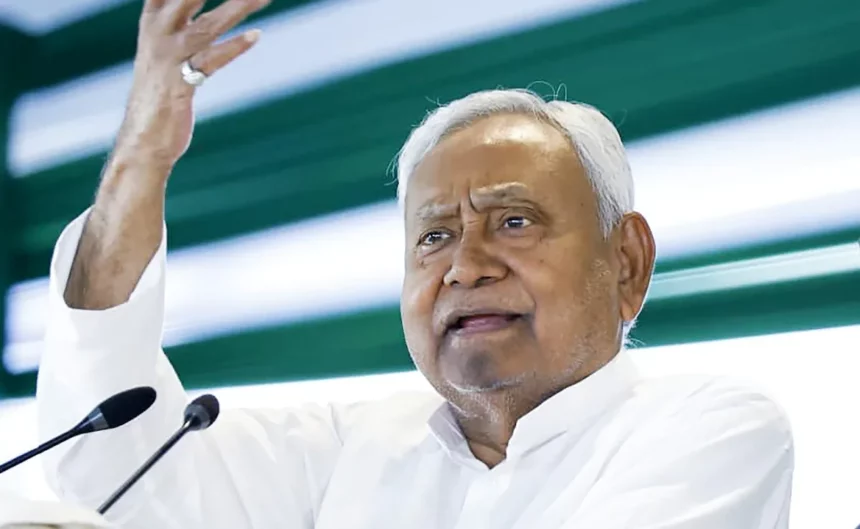
In a significant development ahead of the Bihar Assembly elections, Janata Dal (United) appears to have recalibrated its political strategy by drastically reducing its engagement with Muslim candidates, reflecting both a strategic shift and the party’s struggle to reconcile its traditional secular image with political realities. Once considered a bastion of inclusive politics under Chief Minister Nitish Kumar, the party has this time fielded only four Muslim candidates out of the 101 constituencies it is contesting, a sharp decline from previous elections. The decision underscores a growing realization within the party that despite years of outreach and welfare measures aimed at minority communities, electoral gains from Muslim votes have been inconsistent, prompting a reassessment of political priorities and alliances. Analysts and political observers argue that this move represents not merely an adjustment in candidate selection but a deeper shift in JD-U’s ideological and electoral approach, potentially redefining Bihar’s political landscape ahead of the polls.
JD-U’s Historical Engagement with Muslim Voters and Electoral Performance
Historically, JD-U under Nitish Kumar made deliberate efforts to cultivate a secular image and consolidate minority support through a range of policies and welfare schemes. Since assuming power in 2005, Nitish Kumar attempted to ensure that Muslims remained integral to his voter base, even as JD-U largely aligned itself with the Bharatiya Janata Party in various electoral cycles. Despite these efforts, the results from past elections reveal a consistent struggle to translate goodwill into actual votes. In the 2010 Assembly elections, JD-U offered tickets to 14 Muslim candidates, yet none secured a win, illustrating a recurring disconnect between candidate representation and electoral success. By 2015, an improved performance saw five out of seven Muslim candidates from JD-U win, but this coincided with the party’s alliance with the RJD and Congress, highlighting that minority support was conditional upon JD-U distancing itself from the BJP.
The 2020 elections further emphasized the challenge, as JD-U fielded 11 Muslim candidates without securing a single victory. Meanwhile, other political forces such as AIMIM, led by Hyderabad MP Asaduddin Owaisi, successfully captured five seats by mobilizing voters around protests against the Citizenship Amendment Act. These outcomes suggest that while JD-U’s minority-oriented outreach was well-intentioned, it often failed to resonate with Muslim voters, particularly when the party’s political alignment was perceived as closely tied to the BJP. Analysts note that this consistent underperformance has eroded confidence within JD-U regarding the electoral viability of Muslim candidates, informing the party’s current strategy of significantly reducing minority representation.
A critical element in JD-U’s approach has been Nitish Kumar’s consistent efforts to maintain his secular credentials while participating in NDA politics. The Chief Minister implemented a variety of schemes targeting minority welfare, ensuring that his secular image remained intact despite association with a party traditionally viewed as majoritarian. However, repeated electoral setbacks, combined with recent legislative developments such as JD-U’s support for the controversial Waqf Amendment Bill, appear to have accelerated a strategic shift. Social analysts argue that the party, having experienced limited gains from minority votes, has concluded that extensive engagement with Muslim candidates may no longer be politically expedient, particularly when considering past trends and the party’s broader alignment within the NDA framework.
Statements from senior JD-U leaders provide further insight into this evolving strategy. Former MLC Ghulaam Rasool Baliyawi, during a function in Kishanganj, emphasized that not voting for Nitish Kumar would reflect negatively on Muslims, reinforcing the perception that support for the Chief Minister was a matter of justice rather than political alignment. Similarly, senior leader Rajiv Ranjan alias Lalan Singh highlighted that Muslims historically did not consistently vote for JD-U, suggesting that attempts to cultivate minority support had yielded limited results. JD-U MP Devesh Chandra Thakur also reflected on the complex relationship between caste and community-based voting, noting the difficulties in converting minority support into electoral victories. Collectively, these statements illustrate both the party’s awareness of its historical limitations and its rationale for curtailing Muslim representation in the upcoming elections.
Political Implications of Reduced Minority Representation in JD-U
The decision to field only four Muslim candidates in the 2025 Bihar Assembly elections carries significant political implications, both for JD-U and the broader electoral environment. By drastically reducing minority representation, the party signals a shift away from its historically secular positioning, potentially reshaping voter perceptions and influencing electoral alliances. Analysts contend that the move reflects a pragmatic acknowledgment that despite efforts to engage Muslim voters through welfare measures, development initiatives, and symbolic gestures, the party has struggled to position itself as the primary choice for these communities.
The impact of JD-U’s reduced minority representation is compounded by the growing presence of alternative political forces capable of consolidating Muslim votes, such as AIMIM and the RJD. In constituencies with significant minority populations, the limited number of Muslim candidates fielded by JD-U may constrain the party’s ability to mobilize support effectively, potentially influencing outcomes in closely contested seats. Furthermore, the alignment with BJP within the NDA framework continues to create a perception among minority voters that JD-U’s secular credentials are compromised, despite Nitish Kumar’s personal efforts to maintain an inclusive image.
Recent controversies surrounding the Waqf Bill have further eroded confidence in JD-U’s appeal to minority communities. Analysts suggest that legislative decisions, combined with historical electoral underperformance, have contributed to a growing belief within the party that prioritizing Muslim candidates is unlikely to yield significant political dividends. Consequently, JD-U has adopted a strategy of selective representation, focusing on constituencies where minority votes are either less decisive or where other factors may offset the diminished appeal among Muslim voters. This approach reflects an evolving understanding within the party that minority outreach must be balanced against broader electoral calculations and alliance dynamics.
Experts argue that this strategic shift is indicative of a broader recalibration of Bihar’s political landscape, where caste, community affiliation, and party alliances play a decisive role in shaping electoral outcomes. JD-U’s reduced emphasis on Muslim representation underscores the challenges of maintaining a secular profile while operating within a coalition dominated by the BJP. Political analysts contend that the party is now attempting to navigate the delicate balance between demonstrating inclusivity and pursuing pragmatic electoral strategies that maximize its chances of winning key constituencies.
The implications extend beyond JD-U’s internal calculations, as reduced minority representation may influence the strategies of rival parties, voter mobilization efforts, and overall campaign narratives in the 2025 elections. Parties such as RJD and Congress may seek to consolidate minority support, while emerging players like AIMIM continue to build momentum by presenting themselves as authentic advocates for Muslim communities. In this context, JD-U’s decision signals not only a shift in candidate selection but also a broader realignment of political messaging, electoral priorities, and alliance dynamics in Bihar.
Analysts highlight that Nitish Kumar’s personal influence remains significant, and while the reduction in Muslim representation may create challenges, his longstanding reputation for governance and development initiatives continues to resonate across diverse communities. Nevertheless, the decision to limit minority candidates underscores a recognition within JD-U that electoral success increasingly depends on strategic constituency selection, alliance management, and targeted outreach rather than broad symbolic gestures of inclusivity. This nuanced recalibration reflects the party’s evolving understanding of voter behavior, historical trends, and the complexities of coalition politics in Bihar.
The JD-U’s shift also raises questions about the future of minority political engagement in Bihar, particularly in the context of growing polarization and the consolidation of votes along caste and community lines. By limiting Muslim representation, the party risks alienating a section of voters who have traditionally formed part of its support base, potentially creating space for other political actors to gain influence. Analysts contend that this strategic decision may have long-term ramifications, shaping not only the immediate electoral outcome but also the broader trajectory of political participation, minority representation, and party dynamics in the state.
The reduction in Muslim candidates also reflects a pragmatic approach to electoral mathematics, where JD-U is prioritizing winnability over symbolic gestures. While previous efforts to engage minority communities through ticket distribution and welfare initiatives were rooted in both principle and political strategy, the repeated inability to secure consistent support has prompted a reassessment. By focusing on constituencies where Muslim votes are less decisive or where alternative strategies can offset reduced minority engagement, JD-U aims to optimize its overall performance while minimizing electoral risks.
JD-U’s strategy illustrates the broader challenges faced by regional parties in balancing ideological commitments with practical political calculations. Nitish Kumar’s attempts to maintain secular credentials, coupled with years of targeted welfare schemes, underscore a historical commitment to inclusivity. However, the current approach reflects a growing emphasis on pragmatism, strategic constituency selection, and coalition considerations, signaling a shift in the party’s overall electoral philosophy.
In addition, the party’s recalibration has implications for intra-party dynamics, candidate morale, and local-level political mobilization. Limiting Muslim representation may affect grassroots engagement, influence voter perceptions, and shape campaign strategies at the constituency level. Analysts note that while JD-U continues to benefit from Nitish Kumar’s personal influence and administrative reputation, the decision to reduce minority candidates reflects a strategic acknowledgment that symbolic gestures of inclusivity alone are insufficient to secure electoral victories in Bihar’s complex political environment.
Finally, social and political commentators suggest that JD-U’s shift highlights broader trends in Bihar politics, where caste, religion, and coalition alignment continue to play a decisive role. By reducing Muslim representation, the party is signaling a departure from its historical secular posture, reflecting both practical electoral calculations and the challenges of navigating coalition politics. As Bihar prepares for the 2025 Assembly elections, this strategic decision will likely shape campaign narratives, voter engagement, and the broader dynamics of minority political participation across the state.
Through this recalibration, JD-U appears to be prioritizing winnability, alliance coherence, and strategic constituency management over historical commitments to minority representation. The party’s approach provides a lens into the complexities of Bihar’s electoral politics, illustrating the delicate balance between ideological positioning, practical strategy, and coalition dynamics. Analysts argue that while Nitish Kumar’s personal image remains influential, the party’s recalibrated approach underscores a pragmatic acknowledgment of historical voting trends, minority behavior, and the strategic imperatives of contemporary electoral competition in Bihar.