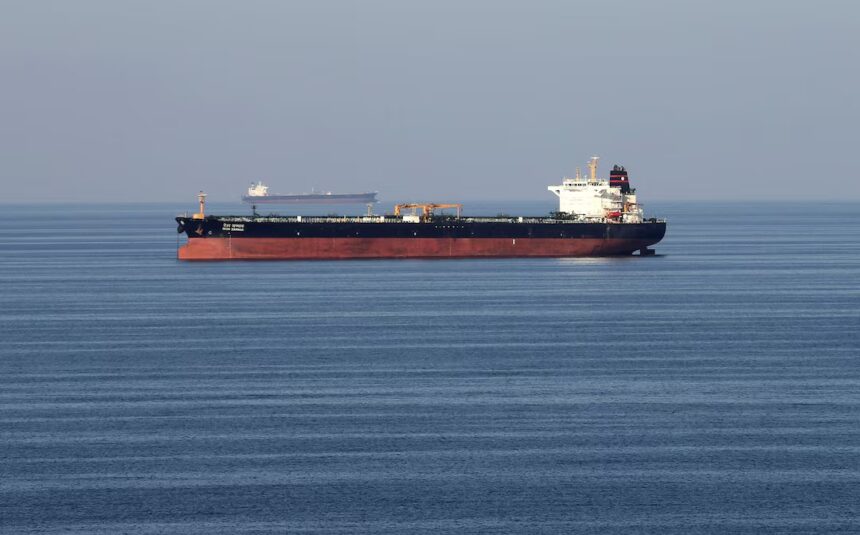
Iran reportedly loaded naval mines onto vessels in the Persian Gulf last month, intensifying US concerns that Tehran was preparing to blockade the Strait of Hormuz following Israeli airstrikes across Iran. According to two US officials who spoke on condition of anonymity due to the sensitivity of the intelligence, these preparations were detected by US intelligence sometime after Israel launched its initial missile attack on Iran on June 13.
The mines, although not deployed in the strait, suggested that Iran may have been ready to close one of the world’s busiest shipping lanes, a move that could have escalated regional tensions and disrupted global commerce. Approximately one-fifth of global oil and gas shipments pass through the Strait of Hormuz, and a blockade could have significantly increased global energy prices.
Concerns Over Global Energy Disruptions
Despite fears, global benchmark oil prices have fallen by more than 10% since the US strikes on Iran’s nuclear facilities, partly due to relief that the conflict did not trigger major disruptions in oil trade. On June 22, following US strikes on three key Iranian nuclear sites, Iran’s parliament reportedly backed a measure to block the strait, but the decision was not binding and required the approval of Iran’s Supreme National Security Council.
Iran has frequently threatened to close the strait in the past but has never acted on those threats. It remains unclear when exactly during the Israel-Iran tensions the mines were loaded onto Iranian vessels or whether they have since been removed. The US did not disclose the methods used to detect the mines, though such intelligence is often gathered through satellite imagery and human sources.
Strategic Significance of the Strait of Hormuz
The Strait of Hormuz, located between Oman and Iran, is a critical waterway linking the Persian Gulf with the Gulf of Oman and the Arabian Sea. At its narrowest, it is 21 miles wide, with a shipping lane just two miles wide in each direction. The strait is essential for OPEC members like Saudi Arabia, the UAE, Kuwait, and Iraq, which export most of their crude oil through it, primarily to Asia. Qatar also relies heavily on the strait for its liquefied natural gas exports.
Iran, too, exports most of its crude oil through the strait, which theoretically limits its willingness to close the passage despite its capability to do so. According to the US Defense Intelligence Agency, Iran had more than 5,000 naval mines as of 2019, which could be rapidly deployed using small, high-speed boats.
The US Fifth Fleet, based in Bahrain, is responsible for protecting maritime commerce in the region. The fleet typically maintains four mine countermeasure vessels in Bahrain, though these have been gradually replaced with littoral combat ships equipped with anti-mine capabilities. Before the US strikes on Iran, these mine countermeasure ships were temporarily moved from Bahrain in anticipation of potential Iranian retaliatory attacks.
Iran’s immediate retaliation following the US strikes was limited to a missile attack on a US military base in Qatar, but US officials have not ruled out the possibility of further retaliatory actions by Tehran. Meanwhile, a White House official stated that “Operation Midnight Hammer,” along with successful campaigns against the Houthis and pressure on Iran, has kept the Strait of Hormuz open, ensuring freedom of navigation while weakening Iran’s capabilities in the region.