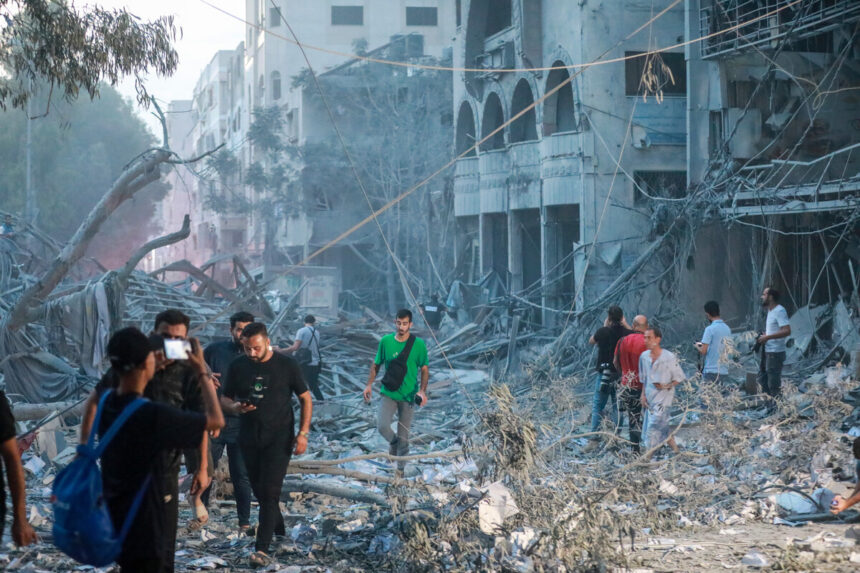
The desperate hunger in Gaza has driven thousands of Palestinians to flock to a US- and Israel-backed aid distribution center despite concerns over biometric screening and fears of political interference. After an 11-week blockade by Israel that has devastated Gaza, many residents have chosen to risk biometric checks and other security procedures just to receive essential food supplies. This massive response to the aid operation reflects the dire humanitarian situation in Gaza, where access to food and resources has become critical amid ongoing conflict and restrictions.
Aid Distribution Amid Tensions
On Tuesday, thousands gathered at the Gaza Humanitarian Foundation (GHF) distribution sites in the southern city of Rafah, which is under full Israeli military control. Families, including women and children, arrived by foot, carts, and vehicles, all eager to collect food packages. Videos from the site showed large crowds moving through fenced corridors into open fields stacked with aid supplies. However, the scenes also included parts of the fencing being torn down as people jostled to reach the food.
Despite the high demand for aid, the operation has been marred by accusations and counter-accusations. Israel and the GHF claimed that Hamas, Gaza’s dominant militant group, attempted to block civilians from accessing the distribution centers, a charge denied by Hamas. Later on the same day, Hamas accused the Israeli military of killing three Palestinians and injuring dozens near the aid sites, allegations the GHF dismissed as “totally false.” The foundation said it temporarily paused aid distribution to ensure safety and prevent any casualties, but normal operations resumed later.
Controversy Over Screening and Aid Neutrality
A major point of concern among Palestinians is the biometric screening process required at the GHF sites, involving facial recognition technology. Many fear that such data could be misused by Israeli authorities to monitor or target individuals. This skepticism is amplified by Hamas’ warnings against attending the aid centers, and the foundation’s ties to Israeli and US endorsement have led to boycotts by international humanitarian organizations.
The United Nations and several aid groups have refused to participate in the foundation’s efforts, citing concerns over politicization and lack of neutrality. The Israeli military has highlighted the screening as a way to prevent Hamas militants from accessing aid supplies, which Israel accuses Hamas of stealing and using for military purposes—charges Hamas denies.
Aid deliveries to Gaza have only recently resumed on a small scale after weeks of blockade, with hundreds of trucks waiting at crossings but limited amounts entering. The humanitarian crisis continues to worsen, with thousands of Palestinians suffering severe shortages of food and basic necessities amid ongoing conflict.