In a major security decision that underscores the heightened threat perception in Jammu and Kashmir, the Ministry of Home Affairs (MHA) has approved the continuation and expansion of Central Armed Police Forces (CAPF) deployment in the Union Territory following the completion of the Amarnath Yatra. The move comes against the backdrop of the April Pahalgam massacre and intelligence warnings of potential militant strikes during the upcoming festival season. Officials confirmed that 99 CAPF companies will remain stationed in the Valley, while two companies of the elite CoBRA commandos will also be deployed in sensitive areas as part of a larger post-Amarnath Yatra security restructuring.
Centre Approves Large-Scale Troop Continuation and Fresh Deployment Requests
The decision to retain a formidable security presence in Jammu and Kashmir highlights the government’s intent to prevent a repeat of violence similar to the Pahalgam massacre, which shook the Valley earlier this year. Sources in the security establishment disclosed that the Union Home Ministry has formally sanctioned the request made by the J&K Police on August 7, 2025, urging continued CAPF deployment even after the Amarnath Yatra’s conclusion.
The official order, issued on Tuesday, lays out a detailed plan to keep 99 CAPF companies stationed in J&K until September, with the possibility of further extension. Out of these, 85 companies belong to the Central Reserve Police Force (CRPF) and 14 to the Border Security Force (BSF). Notably, there has been no extension order for other forces such as the Central Industrial Security Force (CISF), the Sashastra Seema Bal (SSB), and the Indo-Tibetan Border Police (ITBP).
In addition to the standard CAPF deployment, the government has sanctioned the deployment of two companies of the Commando Battalion for Resolute Action (CoBRA). The CoBRA is CRPF’s elite anti-Naxal commando unit, trained in jungle warfare, counterinsurgency, and high-intensity combat. While the unit is primarily known for its operations against Maoist insurgents, its skill set in guerrilla warfare makes it highly suited for Jammu and Kashmir’s forested terrains, where militant groups often seek refuge and establish operational bases.
A senior government official explained that this deployment is not merely a continuation of troop presence but rather a strategic realignment of security architecture in the Valley. “In parts of the jungle areas of J&K, CRPF is now actively creating its footprints. Senior officers are being deployed with their troops for longer spans of time to ensure operational efficiency. The tactical area of responsibility will expand further with the support of the J&K Police. Rashtriya Rifles, already dominant in counterinsurgency, is expected to receive additional roles and wider responsibilities in this restructuring,” the official revealed.
The timing of the decision is significant, coinciding with the upcoming festival season when public gatherings, religious processions, and tourist inflows traditionally increase. Intelligence inputs have consistently warned of militant attempts to target civilian areas and religious congregations, necessitating preventive measures on a large scale. Officials admitted that the retention of such a massive force, even after the Yatra, is unprecedented in recent years and reflects the gravity of the current security situation.
Post-Amarnath Yatra Security Strategy and Implications for Tourism, Policing, and Local Communities
The decision to keep 10,000 more troops in the Union Territory also fits into what officials describe as the post-Amarnath Yatra security realignment plan, first hinted at in internal communications between the J&K Police and the Ministry of Home Affairs. Under this strategy, security deployment is no longer viewed as a seasonal requirement tied to pilgrimage or tourist inflow but rather as a permanent, flexible grid capable of responding to evolving threats year-round.
Tourist hotspots, which form a critical component of Kashmir’s economy, are set to witness a revised deployment strategy. Authorities confirmed that areas like Baisaran Valley, which remain under the protection of CRPF personnel, have not yet been reopened for visitors. The phased reopening of such tourist destinations will be closely linked to the introduction of upgraded security protocols that combine physical troop presence with modern surveillance systems and stricter access controls.
Officials emphasized that tourism cannot be separated from security in the current environment. “The phased reopening of closed sites across Jammu and Kashmir will happen, but it must be accompanied by protocols that inspire confidence among visitors as well as locals. That means more technology-driven surveillance, smarter crowd management, and visible troop presence in and around tourist zones,” a security official explained.
The new plan also aims to integrate multiple forces under a streamlined command system, minimizing overlaps and confusion over operational responsibilities. The Rashtriya Rifles, a specialized counterinsurgency force under the Indian Army, is expected to be assigned additional sectors of responsibility as part of this restructuring. Meanwhile, CAPF units will increasingly coordinate with J&K Police for intelligence gathering, area domination, and long-duration operations in rural and jungle areas.
Interestingly, the inclusion of CoBRA commandos marks a shift toward preparing for long-term engagements in jungle belts that have often served as transit or hiding zones for militants. With their training in jungle warfare and ambush tactics, CoBRA teams are expected to conduct aggressive area domination exercises, thereby reducing safe havens for insurgents.
Another significant aspect of the security overhaul is the emphasis on longer deployments for senior officers. Unlike the rotational approach often used in CAPF operations, where commanding officers would frequently change locations, the new plan envisions senior officers staying longer in operational zones. This continuity is expected to strengthen local coordination, enhance familiarity with terrain and population, and improve accountability in field operations.
The broader plan, which sources link to the post-Operation Sindoor framework, indicates that the government is rethinking security management in Kashmir in both tactical and strategic terms. The use of the word “realignment” suggests not just troop increases but a complete reconfiguration of roles, responsibilities, and operational areas. “This is about building a layered, resilient security grid that works in sync with local policing, intelligence gathering, and military oversight,” one senior policymaker remarked.
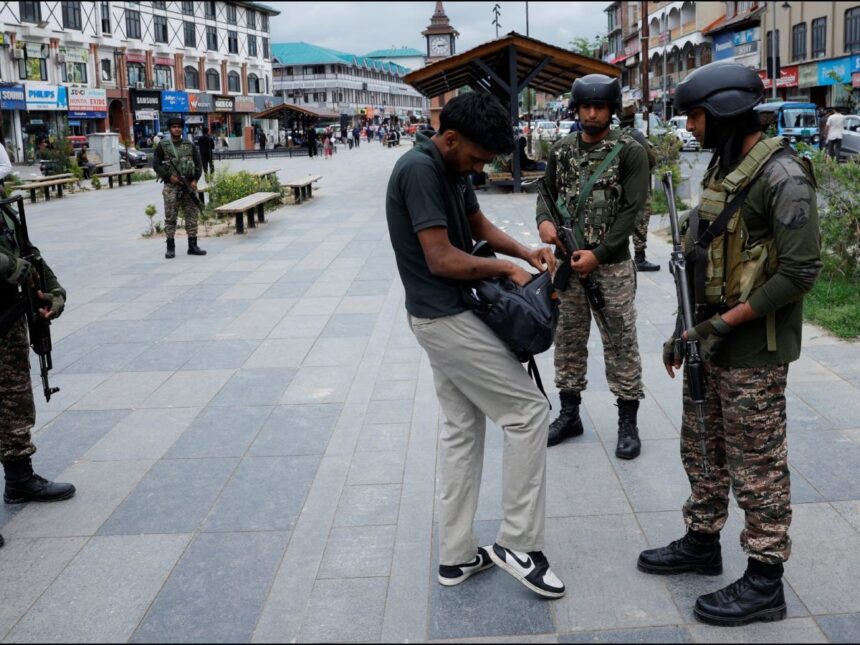
For local communities, this intensified security presence presents a dual reality. On the one hand, it promises greater safety in the wake of deadly attacks like the Pahalgam massacre. On the other hand, the heavy footprint of security forces often brings restrictions, extended checkpoints, and tighter monitoring of civilian movements. Policymakers acknowledge that balancing security imperatives with public sentiment will remain a sensitive challenge in the months ahead.