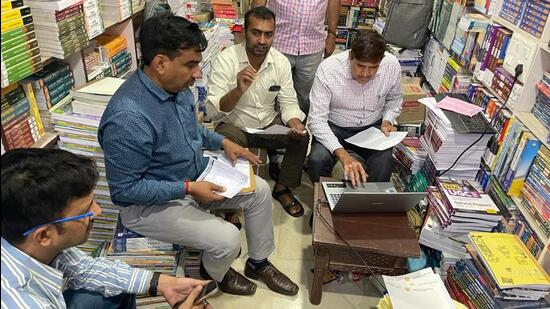
A Delhi Police inspector has been suspended and two assistant sub-inspectors (ASIs) are under departmental enquiry following allegations of extortion during raids on a large-scale fake NCERT books racket. The case, which initially led to a significant seizure of pirated textbooks worth ₹2.4 crore and the arrest of a father-son duo, has now taken a controversial turn after claims surfaced that police officials involved in the raid acted with dishonest intent and extorted money from the accused.
Major Piracy Bust Turns Controversial
The original operation took place on May 16, when Delhi Police reportedly received a tip-off about counterfeit NCERT books being sold in the Mandoli Road area. Following standard procedure, the police informed NCERT officials and launched a raid which resulted in the arrest of a 48-year-old bookseller and his 26-year-old son. The team then carried out follow-up raids at other locations, including Hiranki, where they recovered approximately 160,000 fake textbooks estimated to be worth ₹2.4 crore.
The arrests initially appeared to be a major breakthrough against textbook piracy, a persistent issue in India’s education sector. However, the case took a dramatic shift when allegations surfaced that the lead investigator—an inspector from the Shahdara district’s special staff—and his two team members had conducted the raids selectively and with a “malafide intention.” The accusations included claims that the officers had extorted significant sums of money from the accused and their associates under the guise of investigation.
Internal Inquiry and Procedural Violations
Deputy Commissioner of Police (Shahdara) Prashant Gautam confirmed the suspension of the inspector following a formal complaint. He also said that a departmental enquiry has been initiated to investigate the role of the two ASIs who were part of the operation. According to a senior officer from the eastern range, preliminary findings suggest that the inspector bypassed required protocol by not involving the District Investigation Unit (DIU), which is typically responsible for conducting raids under the Copyright Act.
The officer further revealed that the inspector not only failed to coordinate with the appropriate authorities but also deliberately kept his senior officers uninformed about the locations and outcomes of the raids. These actions have raised suspicions that the raids were carried out with ulterior motives, and not purely for law enforcement.
The inspector’s choice of raid locations and selective targeting have added to the credibility of the extortion allegations. Police sources indicated that lakhs of rupees may have been extracted from the accused and others involved in the racket. The complaint, currently under review at the Delhi Police headquarters, has prompted a broader probe to determine the extent of misconduct and ensure accountability within the force.