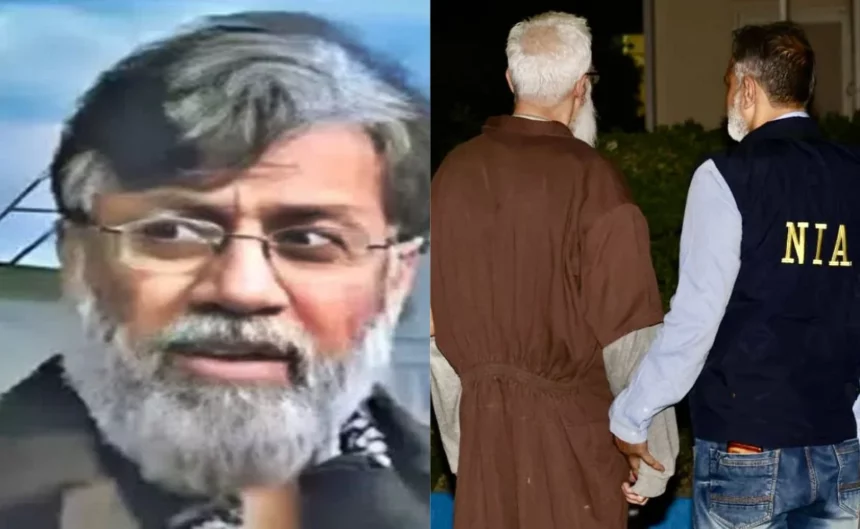
Seventeen years after the devastating 26/11 Mumbai terror attacks, India finally has a major conspirator in its custody. Tahawwur Hussain Rana, a former Pakistani Army doctor and childhood friend of David Coleman Headley, is now being interrogated by the National Investigation Agency (NIA) in Delhi. While Tahawwur Hussain Rana never fired a bullet, his role in enabling the attacks was significant. This development marks the first extradition directly linked to the 2008 attacks and presents India with a crucial opportunity to uncover the extent of Pakistan’s involvement in state-sponsored terrorism.
Tahawwur Hussain Rana’s Role in the Mumbai Attacks
Tahawwur Hussain Rana played a critical support role in the 26/11 attacks by helping Headley, the Lashkar-e-Taiba (LeT) operative, to gain cover in India. In 2006, Tahawwur Hussain Rana opened a branch of his Chicago-based immigration consultancy in Mumbai, allowing Headley to pose as a businessman and conduct reconnaissance missions. Headley visited India eight times, even after the 26/11 attacks, scouting targets like the Taj Mahal Palace Hotel, CST railway station, and Nariman House. Tahawwur Hussain Rana not only financed these missions but also offered logistical support, thus becoming a key enabler of the attacks.
Though India had previously secured the custody of Ajmal Kasab and plotter Abu Jundal, Tahawwur Hussain Rana’s extradition is unique due to the scale of his involvement and the intelligence he potentially holds. Officials believe that Tahawwur Hussain Rana’s background and links to LeT and the Pakistani military establishment could provide undeniable proof of the Pakistani state’s complicity. His past statements glorifying the attackers and condemning India add further weight to the seriousness of his role.
What the NIA Wants to Uncover
The NIA is now focused on decoding Tahawwur Hussain Rana’s movements and associations during his trip to India just days before the attacks in 2008. He visited several cities including Delhi, Cochin, Hapur, Ahmedabad, and Mumbai. The agency also suspects Tahawwur Hussain Rana met a Lashkar operative in Dubai after Headley advised him to leave India. A protected witness has also come forward, claiming to have assisted Headley with accommodation in Mumbai at Tahawwur Hussain Rana’s request.
Tahawwur Hussain Rana’s extradition was secured after a prolonged five-year legal battle in the US, initiated by India in 2020 under the Narendra Modi government. Despite Pakistan distancing itself from Tahawwur Hussain Rana by calling him a Canadian citizen who hadn’t renewed Pakistani documents in decades, the revelations he may now share could tighten global pressure on Pakistan and highlight the long-denied nexus between its military and terror outfits.