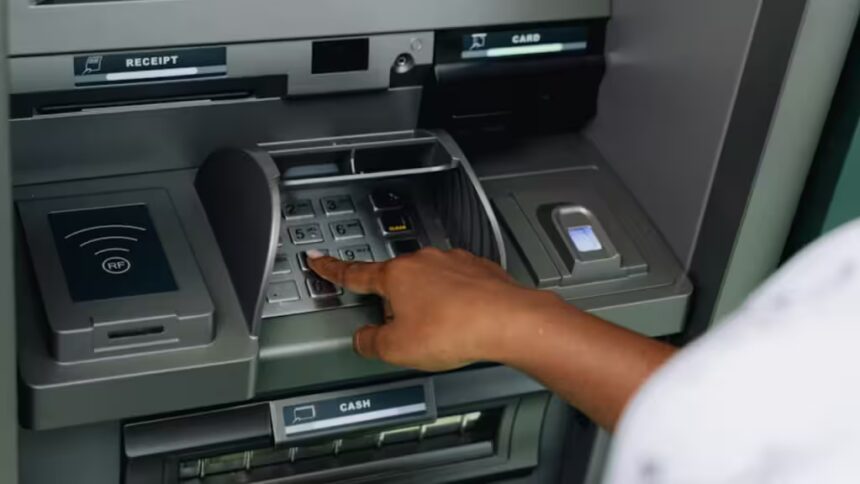
India’s banking landscape is undergoing a structural shift as the rapid adoption of digital payments reduces reliance on cash, leading to a decline in atm numbers even as banks, particularly in the public sector, continue to expand their physical branch networks across the country.
digital payments drive atm closures across banking sector
India now has a total of 2.51 lakh atms, reflecting a net reduction of 2,360 cash machines during the financial year 2025. According to data from the Reserve Bank of India, the number of atms declined from 2,53,417 in financial year 2024 to 2,51,057 as of March 31, 2025. The central bank attributed this trend largely to the growing preference among customers for digital channels to meet everyday banking and payment needs.
With widespread use of upi, mobile wallets, internet banking, and card-based payments, customers are withdrawing less cash than before. This behavioural change has reduced footfall at atms, prompting banks to reassess the viability of maintaining large atm networks, especially in high-cost urban locations. The rbi observed that banks are increasingly rationalising infrastructure by shutting down underutilised machines rather than expanding cash distribution points.
Private sector banks led the contraction in atm numbers over the past year. Their combined network declined sharply, falling from 79,884 machines to 77,117. Analysts note that private banks have been quicker to adapt to changing consumer behaviour, relying more heavily on digital-first strategies and partnerships with fintech platforms. As a result, they have scaled back physical cash access points where transaction volumes no longer justify operational expenses.
Public sector banks, which still operate the largest share of atms nationwide, also recorded a modest decline. Their atm count reduced from 1,34,694 to 1,33,544 during the same period. The rbi pointed out that closures were concentrated mainly in off-site atms, particularly in urban and metropolitan areas where customers have easy access to multiple banking channels and alternative cash withdrawal options.
While the overall number of bank-owned atms declined, the fall was partially offset by growth in white-label atms operated by independent service providers. These atms increased from 34,602 to 36,216, reflecting continued demand for cash access in select locations where banks prefer outsourcing rather than direct ownership. White-label atms are often deployed in semi-urban and rural areas, helping maintain basic cash availability despite bank-level consolidation.
branch expansion and focus on financial inclusion
In contrast to the declining atm network, the number of bank branches in India continued to rise, highlighting a nuanced shift rather than a simple retreat from physical banking. As of March 31, 2025, India had approximately 1.64 lakh bank branches, marking a growth of 2.8 percent over the previous year. This expansion underscores the continued relevance of branches for customer engagement, credit delivery, and financial inclusion, particularly beyond major cities.
Public sector banks were the primary drivers of branch expansion during the year. They increased their presence significantly, especially in rural and semi-urban regions, aligning with broader policy goals of inclusive growth and last-mile banking access. More than two-thirds of new branches opened by public sector banks were located outside urban centres, reinforcing their role in serving agricultural communities, small businesses, and first-time banking customers.
Private banks, by contrast, showed a more selective approach to branch expansion. Their share of new branch openings declined from 67.3 percent in the previous year to 51.8 percent in financial year 2025. Only about 37.5 percent of branches opened by private banks were in rural and semi-urban areas, with most new outlets concentrated in metropolitan and urban markets where higher-value customers and commercial activity are concentrated.
This divergence reflects differing strategic priorities. While private banks continue to emphasise digital onboarding, app-based services, and urban profitability, public sector banks are balancing digital adoption with physical expansion to support government programmes, direct benefit transfers, and credit outreach in underserved regions. Branches in rural areas also serve as critical touchpoints for customers who may be less comfortable with fully digital banking.
The rbi’s assessment suggests that India’s banking infrastructure is evolving rather than shrinking. Atms are gradually giving way to digital payment systems, while branches are being repositioned as service and relationship hubs rather than mere cash points. This dual trend highlights how banks are responding to changing customer behaviour while still addressing the need for physical access in a diverse and geographically vast country.
As digital payments continue to gain momentum, experts expect further optimisation of atm networks in coming years. However, the sustained growth in bank branches, particularly in rural India, indicates that physical banking will remain an important pillar of the financial system, complementing the rapid expansion of digital finance rather than being replaced by it.