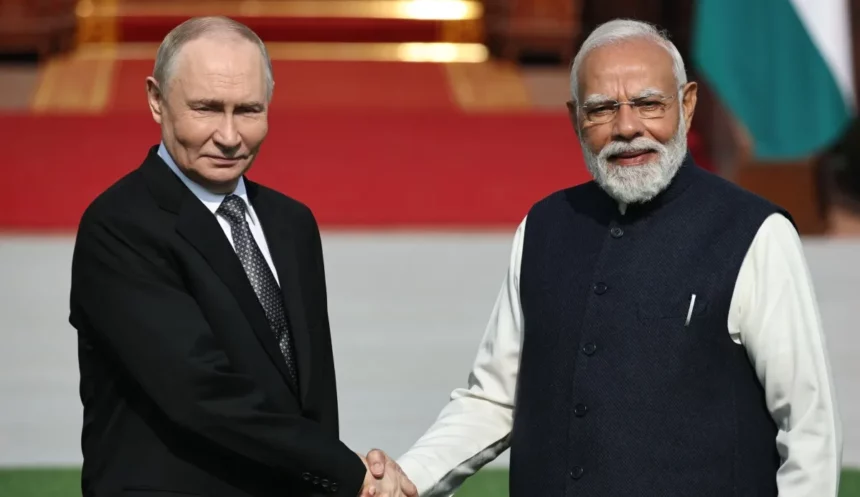
New Delhi/Moscow: Russia on Wednesday said that India is free to purchase crude oil from any country and that New Delhi’s efforts to diversify its energy imports are not new. The statement came in response to claims by US President Donald Trump that Prime Minister Narendra Modi had agreed to stop buying Russian oil following a recent conversation between the two leaders.
Kremlin spokesperson Dmitry Peskov said India has never relied on a single supplier for its crude oil needs and has historically sourced petroleum products from multiple countries. “We, along with all other international energy experts, are well aware that Russia is not the only supplier of oil and petroleum products to India. India has always purchased these products from other countries. Therefore, we see nothing new here,” he said.
Peskov was responding to Trump’s assertion that India had agreed to shift oil purchases away from Russia towards the United States and possibly Venezuela. A day earlier, the Kremlin had stated that it had not received any official communication from India indicating a halt in imports of Russian crude.
Russian media reports noted that, unlike Trump’s remarks, Prime Minister Modi did not publicly refer to any agreement on ending Russian oil imports during or after the call.
Limits to replacing Russian crude
Energy experts have also expressed scepticism over the possibility of India fully replacing Russian oil with supplies from the US. Igor Yushkov, an expert at the National Energy Security Fund, said Indian refiners cannot completely stop importing Russian crude due to differences in oil grades.
He pointed out that US shale oil exports largely consist of light crude, whereas Russia supplies Urals crude, which has a different composition. “This requires blending with other grades, increasing costs for refiners,” Yushkov said. He added that Russia typically exports between 1.5 million and 2 million barrels per day to India, a volume that US suppliers would struggle to match.
According to Yushkov, Trump’s remarks appeared aimed at projecting a political victory in trade negotiations rather than reflecting practical realities of the global oil market. He also recalled that when Russia redirected oil exports to India from European and American markets in 2022, it cut production by about 1 million barrels per day, pushing crude prices to around USD 120 a barrel and leading to record fuel prices in the US.
Imports, tariffs and recent trends
India currently imports nearly 88 per cent of its crude oil requirements. Until 2021, Russian oil accounted for only about 0.2 per cent of India’s total crude imports. However, after Western countries sharply reduced purchases of Russian oil following the February 2022 invasion of Ukraine, India emerged as the largest buyer of Russian crude.
Under Trump’s presidency, the US had imposed 50 per cent tariffs on certain Indian exports, including additional levies linked to India’s purchases of Russian energy. Despite this, India continued sourcing oil based on price competitiveness and supply security.
Data from analytics firm Kpler shows that India’s imports of Russian crude declined to around 1.1 million barrels per day in the first three weeks of January, down from 1.21 million barrels per day in the previous month and more than 2 million barrels per day in mid-2025.
Overall, Russia’s response underlines that India’s oil procurement strategy remains guided by market conditions and national interest, rather than exclusive dependence on any single supplier.