New Delhi/Washington: Months before India and the United States announced a new trade agreement, India’s National Security Adviser Ajit Doval conveyed a firm message to Washington that New Delhi would not be rushed or pressured into a deal, even if that meant waiting out the term of US President Donald Trump, according to a report.
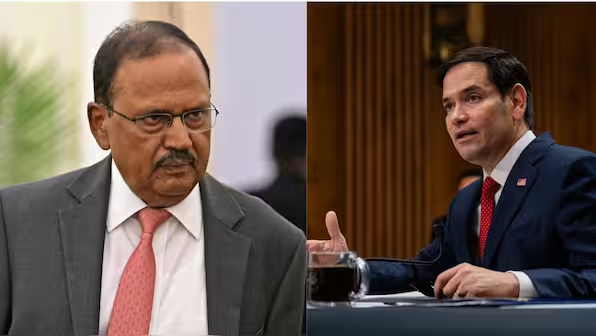
The message was delivered during a meeting between Doval and US Secretary of State Marco Rubio in Washington in early September 2025, at a time when bilateral trade relations were under significant strain.
According to officials familiar with the discussion, Doval told Rubio that India “would not be bullied” by the Trump administration or its senior aides over trade negotiations. The remarks came amid heightened tensions after the US imposed punitive tariffs of up to 50 per cent on a range of Indian goods, citing concerns over India’s trade policies and energy imports.
Willingness to wait
During the meeting, Doval made it clear that India was prepared to allow negotiations to proceed at its own pace rather than accept terms it considered unfavourable. He indicated that New Delhi was willing to wait until the end of Trump’s presidency if necessary, underscoring India’s view that it had the diplomatic capacity to withstand external pressure.
Officials said Doval also urged the US administration to moderate its public criticism of India, arguing that a less confrontational tone would help restore trust and create a more constructive environment for negotiations.
At the time, the Trump administration’s sharp rhetoric and tariff measures had raised concerns in New Delhi about the broader trajectory of India–US relations. Indian officials viewed the tariffs not only as an economic challenge but also as a test of strategic autonomy in policymaking.
Gradual easing of tensions
Following the September meeting, the tone between the two countries began to ease. Later that month, President Trump called Indian Prime Minister Narendra Modi to wish him on his birthday, a gesture that was widely interpreted as an attempt to reset diplomatic engagement.
By the end of 2025, Trump and Modi had spoken several times by phone as trade negotiations continued. These interactions were seen as helping to stabilise ties and keep channels of communication open despite unresolved differences.
Trade deal announced in 2026
In early February 2026, President Trump announced that the US and India had reached a trade agreement. The deal includes reductions in tariffs on Indian exports to the US and expanded market access for American goods. Trump described the agreement as a significant achievement for his administration.
New Delhi subsequently confirmed that tariffs on Indian exports had been reduced. However, Indian officials have been more cautious in publicly detailing other elements of the agreement, signalling that the focus remains on implementation rather than political messaging.
The reported exchange between Doval and Rubio highlights India’s negotiating posture during the talks—one that emphasised strategic patience, resistance to external pressure, and the importance of maintaining diplomatic balance even amid sharp disagreements.