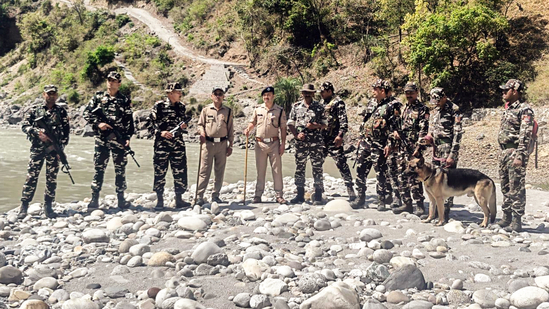
In a swift and coordinated response to intelligence inputs about suspected Pakistani terrorists near the India-Nepal border, both countries carried out a joint search operation in the dense forest stretch of the no-man’s land. The operation involved India’s Sashastra Seema Bal (SSB) and Nepal’s Armed Police Force (APF), reflecting a growing sense of cooperation between the two neighbours in the fight against terrorism.
Bilateral Coordination in Anti-Terror Measures
SSB commandant Ganga Singh confirmed that the joint patrolling was part of a strategic effort to monitor the international border, which stretches over 1,700 kilometers. Ganga Singh noted that Nepalese forces have been playing an active role in coordinating intelligence and operations with Indian personnel. “During joint patrolling, soldiers from Nepal are with us in the fight against terrorism. We have very good relations with the Nepali forces,” he said, emphasizing the regularity of monthly coordination meetings between the border security agencies of both nations.
Ganga Singh also mentioned that intelligence sharing has become more streamlined, especially in light of activities involving a markaz (Islamic religious center) in the Nepalgunj region, often frequented by Pakistani nationals. “If something goes wrong, then these people inform us,” he added, referring to local channels of intelligence that help flag any suspicious movement.
Nepal Stands With India on Terrorism
Amid heightened tensions between India and Pakistan, Nepal’s government made a public declaration of solidarity with India. In a statement, the Ministry of Foreign Affairs in Kathmandu reiterated its commitment to not allow its soil to be used for any activity against neighboring countries. “Nepal stands together with all in the fight against terrorism,” the statement read. This position has gained urgency following the April 22 terror attack in Pahalgam where 26 civilians, including a Nepali national, were killed.
The security alert on the Indo-Nepal border also came in the backdrop of India’s assertive posture during Operation Sindoor, which included precision strikes on terrorist camps in Pakistan. The Indian Navy, too, was prepared to strike the Karachi Naval Port on May 10, but Pakistan’s Director General of Military Operations (DGMO) intervened to warn of retaliation. Despite the threat, the Indian armed forces stood firm. By the afternoon of May 10, Pakistan’s DGMO was seeking a ceasefire agreement, indicating the pressure New Delhi’s actions had mounted.