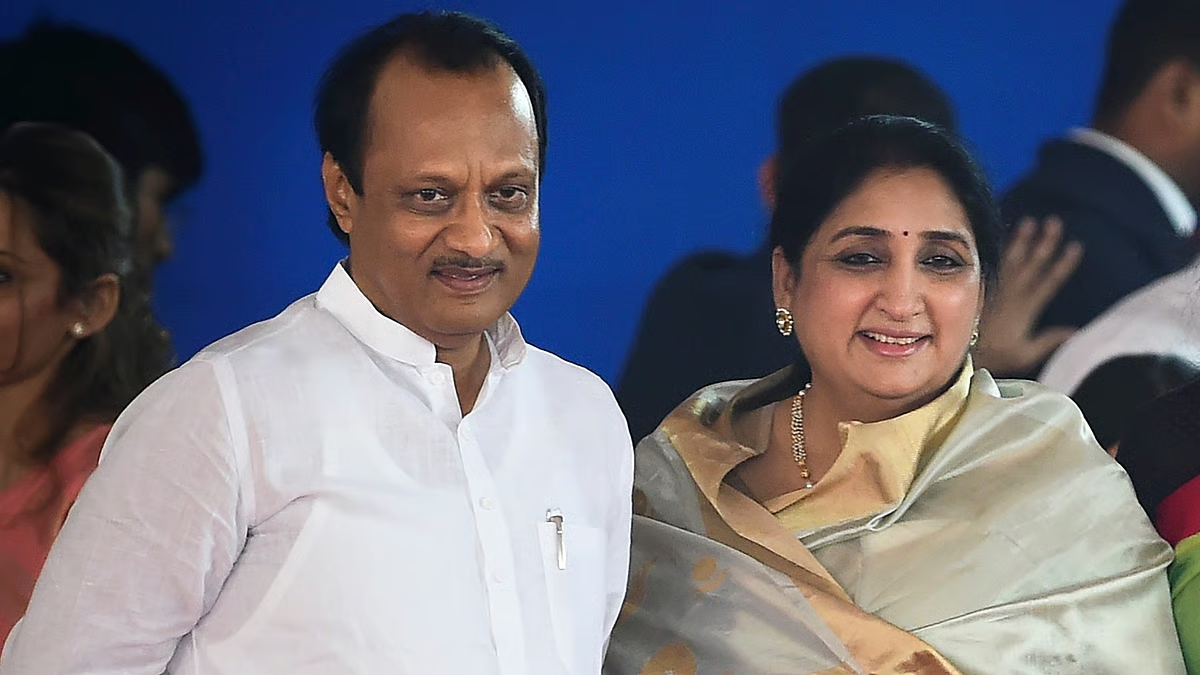
The sudden and tragic death of Maharashtra’s Deputy Chief Minister Ajit Pawar in a plane crash has left the state’s political landscape in a state of flux, prompting urgent discussions within the Nationalist Congress Party (NCP) to fill the void and maintain stability in the party and government. Senior party leaders moved swiftly to address the uncertainty and ensure that the legacy and influence of the Pawar family, central to the party’s identity, remain intact. Amid growing speculation and political maneuvering, attention has turned to Sunetra Pawar, Ajit Pawar’s wife and a Rajya Sabha MP, who is being courted by senior leaders to return to state politics and potentially assume a pivotal position in the Mahayuti government, possibly even stepping into the role of deputy chief minister. The unfolding developments underline both the challenges and opportunities facing the NCP as it seeks to balance internal unity with the practical demands of governance.
Strategic Moves by NCP Seniors to Stabilize Leadership and Retain Influence
In the immediate aftermath of Ajit Pawar’s death, senior NCP functionaries convened at Sunetra Pawar’s residence in Pune, extending condolences while simultaneously pressing her to consider a larger role in the party and the state government. The meeting, attended by influential figures such as working president Praful Patel, state chief Sunil Tatkare, and cabinet minister Chhagan Bhujbal, signaled the party’s determination to maintain continuity in leadership and prevent potential fragmentation. Sunetra Pawar, aged 62, has been a respected presence within the party, and her political acumen, combined with her deep understanding of party dynamics, makes her a natural choice to step into a leadership role at this critical juncture. The gathering highlighted the urgency of consolidating support for the Ajit Pawar faction within the Mahayuti alliance, reinforcing the importance of presenting a united front both in the legislature and at the grassroots level.
Public endorsement of this initiative came from cabinet minister and Ajit Pawar confidant Narhari Zirwal, who openly voiced his support for Sunetra Pawar joining the state cabinet. Speaking in Baramati, Zirwal emphasized that party supporters across various regions had expressed a strong desire to see Sunetra Pawar assume a leadership position, reflecting both respect for her late husband’s legacy and confidence in her abilities. Zirwal also stated his intention to discuss the matter with senior party leaders, indicating that her involvement would be central to maintaining political cohesion and navigating the transitional phase. This overt backing by key allies within the party underscores the strategic calculations driving the NCP’s leadership decisions and the role of familial influence in shaping political continuity.
The party’s immediate priority, as articulated by senior members, is to stabilize governance while preparing for the selection of a new NCP legislature party leader, a process expected to be formalized in an upcoming meeting in Mumbai. The urgency of the situation is compounded by the need to ensure that the Mahayuti coalition remains functional and that legislative and administrative responsibilities are managed effectively. Within this context, Sunetra Pawar’s potential involvement is being framed not merely as a symbolic gesture but as a pragmatic step toward maintaining administrative equilibrium and consolidating the party’s political capital in Maharashtra.
Grassroots Considerations and Succession Dynamics in Baramati
At the local level, particularly in Baramati, the focus has turned to ensuring that the party’s presence remains robust following Ajit Pawar’s untimely demise. Party office bearers and local functionaries are reportedly keen on having one of Ajit Pawar’s sons, Parth or Jay, contest the bypolls necessitated by his passing. This strategy is seen as a means to sustain the Pawar family’s enduring influence in the region and to prevent any erosion of the party’s electoral base. The Baramati constituency has long been a stronghold of the Pawar family, and the succession planning at the grassroots level is being carefully managed to balance continuity with electoral pragmatism.
Within the broader party structure, discussions emphasize the centrality of the Pawar family to the NCP’s identity, a factor repeatedly highlighted by senior functionaries. The family’s political legacy is considered inseparable from the party itself, influencing strategic decisions on leadership roles, legislative representation, and coalition negotiations. Sunetra Pawar’s potential assumption of a leadership position is therefore viewed not only as a stabilizing measure but also as a reaffirmation of the party’s historical ethos, which has been deeply intertwined with the Pawar family’s political journey. The alignment of party functionaries, both at the state and grassroots levels, reflects a calculated effort to preserve institutional cohesion while honoring the legacy of a figure whose influence shaped Maharashtra politics for decades.
Beyond immediate leadership considerations, the NCP is also navigating broader coalition dynamics within the Mahayuti government. Senior leaders are acutely aware that the absence of Ajit Pawar could create fissures both within the party and across the alliance, necessitating proactive measures to prevent destabilization. The integration of Sunetra Pawar into state politics, coupled with careful management of legislative succession and bypoll strategies, represents a comprehensive approach aimed at sustaining political equilibrium. In this context, Sunetra Pawar’s role is being framed not just in ceremonial terms but as a functional and strategic necessity, with the capacity to unify party factions and reinforce the NCP’s negotiating position within the coalition.
As the party prepares for critical meetings and legislative deliberations, the immediate focus remains on balancing continuity with responsiveness to the political environment. The confluence of grassroots priorities, alliance imperatives, and leadership succession has created a complex landscape that demands both strategic foresight and adaptive management. By positioning Sunetra Pawar at the helm of these efforts, the NCP seeks to navigate the transitional period with both stability and symbolic resonance, projecting an image of continuity while addressing the practical demands of governance and electoral preparedness.
The unfolding developments in Maharashtra politics underscore the enduring influence of familial networks in shaping party strategy and leadership decisions. As senior leaders engage in discussions, the emphasis remains on consolidating support across regions, ensuring cohesion among party members, and leveraging the Pawar family’s legacy as a unifying factor. Sunetra Pawar’s involvement is likely to influence not only legislative decisions and coalition dynamics but also the broader political narrative, signaling the party’s capacity to manage crises while safeguarding its institutional and electoral interests.
With the stakes elevated both in Mumbai and in Baramati, the NCP’s approach reflects a careful balancing act, combining political pragmatism with a commitment to continuity. The strategic deployment of Sunetra Pawar, the grooming of potential successors in key constituencies, and the coordination among senior party figures illustrate the depth of planning underlying the party’s response to an unforeseen leadership vacuum. These efforts collectively aim to stabilize governance, preserve electoral strength, and reaffirm the party’s long-standing identity anchored in the Pawar family’s legacy, positioning the NCP to navigate the complex political terrain of Maharashtra in the months ahead.