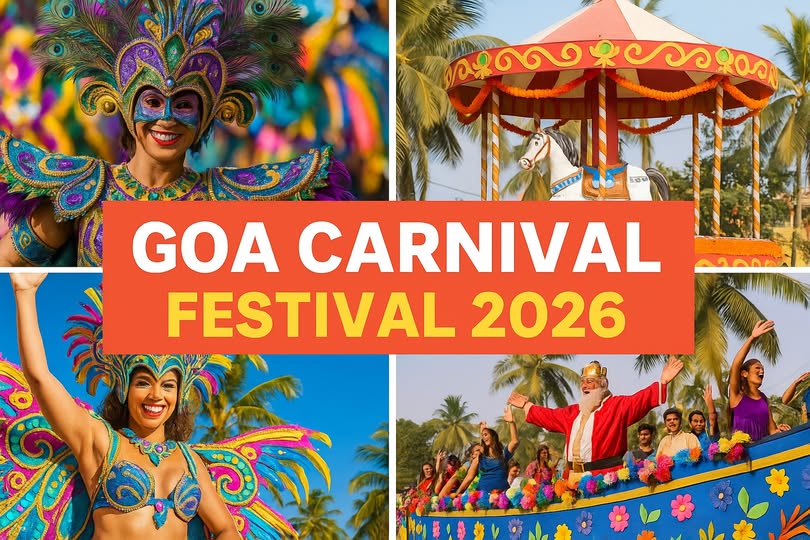
Goa enters its most colorful and lively season as the highly anticipated Goa Carnaval 2026 officially begins today, February 13. The festival promises five days of music, dance, parades, and cultural festivities across Panaji, Margao, Vasco, Mapusa, Morjim, and Porvorim, marking a spectacular celebration of the state’s traditions, community spirit, and evolving approach to tourism. Organised by the Department of Tourism, Government of Goa, the annual event transforms multiple towns into hubs of energy, showcasing local creativity while encouraging visitors to experience a festive atmosphere that blends tradition with contemporary culture. Over the next five days, towns across Goa will come alive with rhythmic beats, elaborate float processions, street performances, and cultural displays, offering locals and tourists alike an immersive experience into Goan heritage and the joyous spirit of Carnaval.
Goa Carnaval 2026 stands out as more than just a celebration; it reflects the state’s focus on cultural inclusivity, sustainability, and responsible tourism practices. By hosting events in multiple centres, organisers aim to ensure that the festival remains accessible to a wide audience while managing crowds effectively and maintaining environmental harmony. With a combination of traditional parades, live performances, and community engagement activities, Carnaval 2026 positions itself as both a cultural showcase and a platform to promote Goa’s identity as a destination rich in heritage and community pride.
Curtain Raiser and Multi-City Parades
The festival begins with a curtain-raiser event in Porvorim today, setting the festive tone for the days ahead. This initial gathering introduces visitors to the energy and excitement of Carnaval, featuring music, dance, and small-scale performances that preview the grandeur to come. From tomorrow, the main parades will roll through different towns, offering attendees a series of vibrant floats, live bands, street performers, and choreographed dance displays. The festival schedule includes Panaji on February 14, Margao on February 15, Vasco on February 16, and Mapusa and Morjim for the grand finale on February 17. By spreading celebrations across multiple locations, the festival allows more participants to enjoy the events without overcrowding a single city, ensuring a safer and more enjoyable experience for all.
Each parade is meticulously planned to highlight Goa’s diverse artistic traditions, incorporating elements of local folklore, contemporary creativity, and community participation. Performers, musicians, and artists collaborate to create visually stunning floats, thematic displays, and synchronized performances that entertain spectators while celebrating Goan culture. Street celebrations, spontaneous dance performances, and live music stages complement the parades, offering visitors opportunities to engage with the festival beyond the floats. Organisers have worked closely with local authorities to manage traffic, ensure safety, and maintain cleanliness across all venues, reflecting the state’s commitment to responsible tourism alongside cultural celebration.
The multi-centre approach also amplifies community engagement. Residents of smaller towns, who may not traditionally participate in large-scale events, are now active contributors to Carnaval. Local artists, schools, cultural groups, and community associations participate in the parades and competitions, creating a sense of ownership and pride. This inclusive model allows both locals and tourists to experience authentic Goan festivities while highlighting the region’s cultural diversity and talent. The allocation of prize money encourages creativity and innovation, ensuring that each float, performance, and presentation meets high standards of artistry and visual impact.
Theme, Culture, and Sustainable Celebration
The theme of Goa Carnaval 2026, symbolized by the festival’s iconic King Momo, is captured in the slogan: “Amche Goem, Amche Lok, Amcho Carnaval – Viva Goa, Viva Carnaval.” This slogan celebrates community pride, inclusivity, and the cultural identity of the state, emphasizing the importance of participation and collective celebration. It conveys that Carnaval is not just a festival of entertainment but also a celebration of the Goan spirit, traditions, and social cohesion. Every performance, parade, and event is crafted to reflect this ethos, connecting spectators to local heritage while creating a joyful and immersive experience.
State Tourism Minister Rohan A Khaunte emphasized that Carnaval 2026 integrates culture with sustainability, focusing on safe and responsible tourism practices. Organisers have implemented measures to ensure cleanliness, manage crowds efficiently, and reduce environmental impact, while maintaining a lively and festive atmosphere. Attention to detail in waste management, public safety, and accessibility ensures that the celebrations are enjoyable for everyone, including families, elderly participants, and international visitors. The festival’s infrastructure planning includes temporary stages, security arrangements, medical facilities, and transportation management to support the smooth execution of large-scale events across all five days.
Financial and operational planning has been a critical aspect of Carnaval 2026. Goa Tourism Development Corporation (GTDC) has allocated a total budget of Rs 1.5 crore, with Rs 48 lakh reserved for prizes to reward creativity and excellence in performances, and Rs 1.04 crore dedicated to logistical support, infrastructure, and festival coordination. This investment ensures that all venues are equipped with the necessary facilities to handle large crowds and provide a high-quality experience for visitors. The comprehensive approach reflects Goa’s intent to showcase its cultural wealth responsibly while promoting tourism growth in a sustainable manner.
While Goa is globally renowned for its beaches and nightlife, Carnaval 2026 reinforces the state’s identity as a destination rooted in culture and community traditions. By expanding festivities across Panaji, Margao, Vasco, Mapusa, Morjim, and Porvorim, the government and organisers create a broader engagement opportunity for residents and tourists. The festival encourages visitors to explore beyond the coastline, interact with local communities, and immerse themselves in the rich cultural tapestry of Goa. Performances, parades, and street celebrations emphasize traditional music, dance forms, and visual arts, while incorporating contemporary influences, thereby bridging historical heritage with modern creativity.
Goa Carnaval 2026 also exemplifies the state’s commitment to responsible tourism. From sustainable waste management and environmentally friendly float construction to crowd control and public safety protocols, the festival is designed to minimize negative impact while maximizing enjoyment and cultural exchange. Visitors are encouraged to participate actively, respect local traditions, and contribute to maintaining the festival’s festive yet responsible character. This approach positions Goa as a global example of how large-scale cultural festivals can combine entertainment, inclusivity, and sustainability.
The multi-day celebration enhances economic and social engagement across the state. Local vendors, artists, performers, and businesses benefit from increased footfall and tourism activity, while residents enjoy entertainment and cultural enrichment. Schools, cultural societies, and local associations play a prominent role in the festival, fostering community pride and promoting arts education. Through these efforts, Carnaval becomes a platform for talent recognition, artistic development, and social cohesion, reinforcing Goa’s unique cultural identity on both a national and international stage.
Through its five-day journey, Goa Carnaval 2026 highlights the state’s evolution as a culturally vibrant, inclusive, and environmentally conscious destination. The combination of traditional parades, music, dance, and contemporary artistic innovation ensures that each participant—whether local or visiting—experiences the joy, energy, and heritage of Goa in its full spectrum. By blending tradition with modernity and fun with responsibility, Carnaval 2026 promises an unforgettable cultural experience that sets a benchmark for future festivals.
Across all venues, the festival invites tourists to engage with local culture in interactive ways, from watching elaborate float parades and street performances to participating in community events, workshops, and live music sessions. The planning ensures that visitors can enjoy safe, immersive, and enjoyable experiences while witnessing Goa’s cultural richness unfold in real time. This five-day extravaganza serves as a reminder that Goa’s identity extends beyond beaches and nightlife—it is a destination of heritage, celebration, and vibrant community life.
Goa Carnaval 2026 thus embodies a vision of celebration where culture, community, and sustainable tourism converge. Through meticulous planning, creative expression, and public engagement, the festival demonstrates how tradition and modernity can coexist in harmony, offering a model for cultural festivals across India and the world. Visitors and residents alike are encouraged to step into the streets, experience the music, color, and performances, and celebrate Goa’s identity in all its vibrancy over the next five days.